Introduction to Photoelectric Sensor Connectors
The selection of a photoelectric sensor for an industrial automation system extends beyond its sensing principle and performance specifications. A critical, yet sometimes overlooked, component is the electrical connector. The connector type dictates the physical interface, cable compatibility, and installation robustness. Among the myriad of standardized connector forms, the M12 and S12 (also commonly known as M8) connectors are two of the most prevalent in factory automation environments. This article provides a detailed technical comparison between photoelectric sensors equipped with M12 and S12 connectors, aiding engineers and system integrators in making an informed choice based on application requirements.
Physical Dimensions and Form Factor
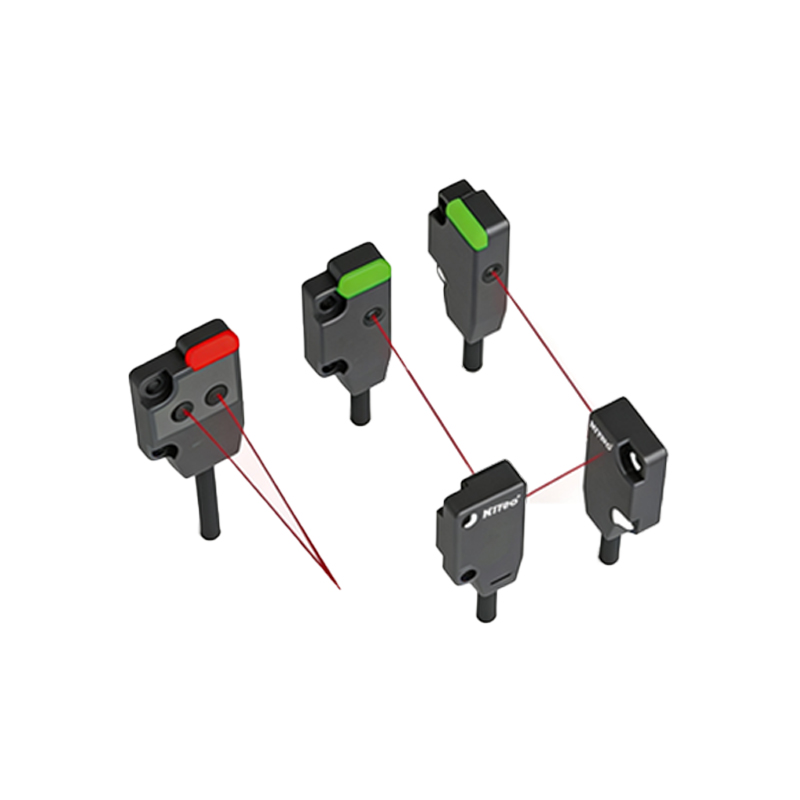
The most apparent difference lies in their physical size. The M12 connector, as defined by IEC 61076-2-101, features a 12-millimeter threaded locking nut diameter. This makes it a relatively robust and standard-sized connector widely adopted across industrial sensors, actuators, and fieldbus systems. In contrast, the S12 or M8 connector is significantly smaller, with an 8-millimeter threaded locking nut diameter. This compact form factor is a key advantage of the S12, allowing for the design of extremely space-constrained photoelectric sensors. These miniature sensors are ideal for applications on small machinery, within tight robotic grippers, or on PCBs where every millimeter counts. The M12, while larger, offers a more substantial feel and is generally perceived as more durable for high-vibration environments.
Pin Configurations and Electrical Ratings
Both connector families support various pin configurations, but their standard offerings differ. M12 connectors are commonly available in 3-pin, 4-pin, 5-pin, and 8-pin versions. A standard 3-pin M12 is typically used for DC sensors (+, -, signal), while 4-pin versions often accommodate both PNP and NPN outputs or devices requiring a separate shield connection. The S12 connector is most frequently found in a 3-pin configuration, which is sufficient for the majority of compact DC photoelectric sensors. Electrically, M12 connectors are generally rated for higher currents and voltages. A standard M12 can handle up to 4 Amps and 250V, whereas the smaller S12 is typically rated for lower currents, often around 2 Amps, and similar voltage ratings. This makes the M12 more suitable for sensors with higher power consumption or those integrated into power-heavy networks.
Cable Gland and Strain Relief
The size of the connector directly influences the cable gland and the overall strain relief mechanism. The M12 connector's larger housing allows for a more robust cable gland that can secure thicker, more industrial-grade cables. This provides superior protection against cable pull-out, torsion, and environmental ingress when paired with appropriately rated cables. The S12 connector, due to its miniature size, is paired with thinner, more flexible cables. While effective, the strain relief on an S12-equipped sensor is inherently less massive. For applications with constant flexing, twisting, or high mechanical stress on the cable, the M12 connection often provides a longer service life and greater reliability.
Environmental Protection and IP Ratings
Both M12 and S12 connectors can achieve high levels of environmental sealing. It is common to find photoelectric sensors with both connector types boasting IP67, IP68, or IP69K ratings. The IP rating is a function of the sensor housing design and the seal between the connector and the housing, not solely the connector itself. However, the larger sealing surfaces and O-rings on the M12 connector can sometimes be easier to manufacture to consistently high tolerances, potentially contributing to long-term sealing integrity in harsh conditions involving high-pressure washdowns, oils, and coolants. The S12 connector, when properly designed and assembled, is equally capable but may be more sensitive to installation torque and cable stress at the entry point.
Application-Specific Recommendations
Choosing between M12 and S12 often boils down to the specific application. For general-purpose industrial sensing on conveyors, packaging machines, or material handling equipment, the M12 connector is the de facto standard. Its robustness, widespread availability of pre-wired cables and cordsets, and higher current capacity make it a versatile and reliable choice. The S12 connector is the specialist for miniaturization. Select an S12-based photoelectric sensor for applications inside compact electronic assemblies, on small-scale pick-and-place units, in semiconductor manufacturing equipment, or for embedding into consumer product automation lines where sensor size is the primary constraint. Always cross-reference the sensor's datasheet for the exact electrical ratings and cable specifications associated with its specific connector.
Summary and Conclusion
In summary, the M12 and S12 connectors serve distinct niches within industrial photoelectric sensing. The M12 connector offers greater physical robustness, higher electrical current capacity, and is the universal standard for most factory floor applications. The S12 (M8) connector enables extreme miniaturization, allowing sensor designers to create products for space-critical environments. There is no universally "better" option; the optimal choice is dictated by the mechanical space available, the electrical requirements of the sensor, the cable stress expected, and the overall environmental conditions. By understanding these key differences, engineers can specify the most appropriate and reliable photoelectric sensor solution for their automation challenges.