What Are Proximity Sensors?
Proximity sensors are electronic devices designed to detect the presence or absence of an object within a specific range without any physical contact. They operate by emitting an electromagnetic field or a beam of radiation and then monitoring for changes in the field or return signal. Widely used in industrial automation, robotics, automotive systems, and consumer electronics, these sensors enhance safety, efficiency, and reliability. Their non-contact nature minimizes wear and tear, making them ideal for harsh environments where dirt, oil, or moisture may interfere with mechanical switches. Understanding the various types of proximity sensors is crucial for selecting the right sensor for a given application, ensuring optimal performance and cost-effectiveness.
Inductive Proximity Sensors
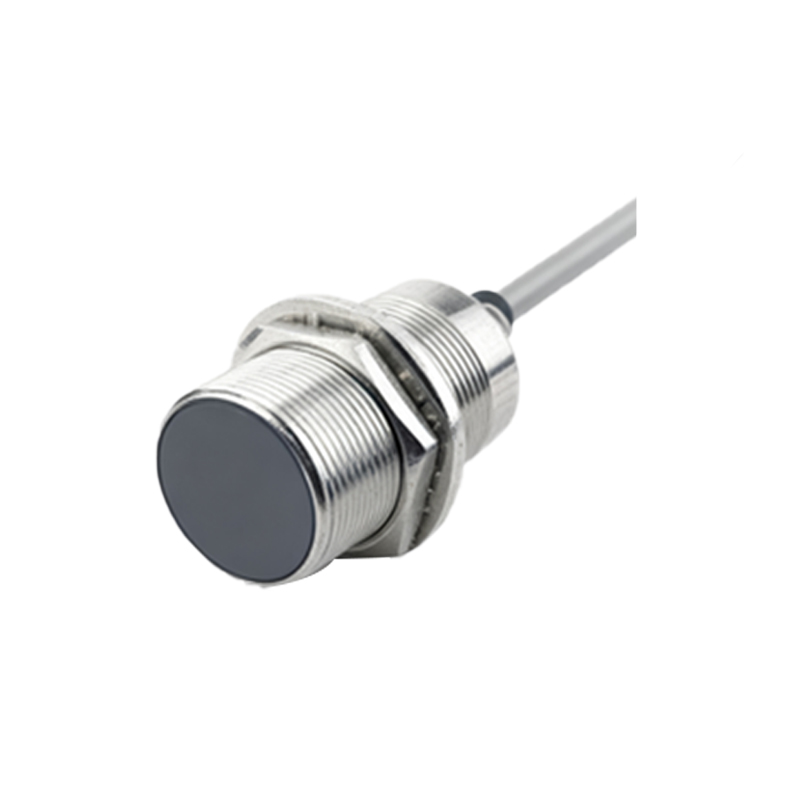
Inductive proximity sensors are specifically designed to detect metallic objects. They generate an oscillating electromagnetic field from a coil at the sensor's face. When a metal object enters this field, eddy currents are induced in the target, causing a change in the oscillation amplitude. This change is detected by the sensor's circuitry, triggering an output signal. These sensors are highly reliable and resistant to environmental factors like dust, dirt, and liquids, making them perfect for manufacturing and machinery applications. Common types include shielded (flush-mountable) and unshielded versions, with sensing ranges typically up to 60 mm. They are not suitable for non-metallic materials.
Capacitive Proximity Sensors
Capacitive proximity sensors can detect both metallic and non-metallic objects, including liquids, powders, and plastics. They work by generating an electrostatic field between two electrodes. When an object enters this field, it alters the capacitance, which is measured by the sensor to determine presence. These sensors are versatile and can sense through non-metallic containers, allowing for level detection of materials inside tanks or hoppers. Typical sensing ranges extend up to 40 mm. They are sensitive to environmental changes like humidity and temperature, so careful calibration is needed. Applications include material handling, food processing, and packaging industries.
Ultrasonic Proximity Sensors
Ultrasonic proximity sensors use sound waves at frequencies above human hearing (typically 20 kHz to 200 kHz) to detect objects. They emit ultrasonic pulses and measure the time taken for the echo to return after bouncing off a target. By calculating this time-of-flight, the sensor determines the distance to the object. These sensors are effective for detecting a wide variety of materials, regardless of color, transparency, or surface texture, and they work well in challenging conditions like fog or dust. Sensing ranges can be from a few centimeters to several meters. Common uses include distance measurement, object counting, and liquid level sensing in automotive and industrial settings.
Photoelectric Proximity Sensors
Photoelectric proximity sensors operate by emitting a light beam (usually infrared, visible, or laser) and detecting changes in the received light. They come in three main configurations: through-beam, retro-reflective, and diffuse reflective. Through-beam sensors have separate emitter and receiver units, offering long ranges and high accuracy. Retro-reflective sensors use a reflector to bounce light back to the receiver, suitable for medium distances. Diffuse reflective sensors detect light reflected directly from the target, ideal for short ranges. These sensors can detect objects of various materials and colors, with ranges up to tens of meters. They are widely used in packaging, printing, and assembly lines.
Magnetic Proximity Sensors
Magnetic proximity sensors detect the presence of magnetic fields, typically from permanent magnets. They often use reed switches or Hall effect elements. Reed switches consist of two ferromagnetic blades sealed in a glass tube; when a magnet approaches, the blades attract and close the circuit. Hall effect sensors generate a voltage proportional to the magnetic field strength. These sensors are compact, reliable, and consume low power, with sensing ranges usually limited to a few centimeters. They are commonly applied in position sensing, door and window sensors, and automotive systems for detecting gear position or speed.
Comparison and Selection Guidelines
Choosing the right proximity sensor depends on factors like target material, sensing distance, environmental conditions, and cost. Inductive sensors are best for metals in dirty environments, while capacitive sensors handle non-metallics and liquids. Ultrasonic sensors excel in long-range detection and harsh atmospheres, and photoelectric sensors offer versatility for various surfaces. Magnetic sensors are ideal for simple, low-power applications with magnets. Consider response time, output type (digital or analog), and installation requirements. Always refer to manufacturer datasheets for specific details, and test in real conditions if possible to ensure compatibility and performance.