Understanding the 2mm Sensing Range
A 2mm proximity sensor represents a highly precise category of non-contact detection devices. This specific sensing distance is engineered for applications demanding exact positioning and detection of small objects or minute positional changes. Unlike sensors with larger ranges, a 2mm variant operates with minimal tolerance, making it ideal for tight spaces and high-accuracy automation tasks. The core principle involves generating an electromagnetic field or beam; when a target enters this predefined 2mm zone, it causes a detectable change in the sensor's oscillation or signal, triggering an output switch. This ultra-short range minimizes interference from background objects, ensuring reliable operation in complex machinery.
Key Technologies and Operating Principles
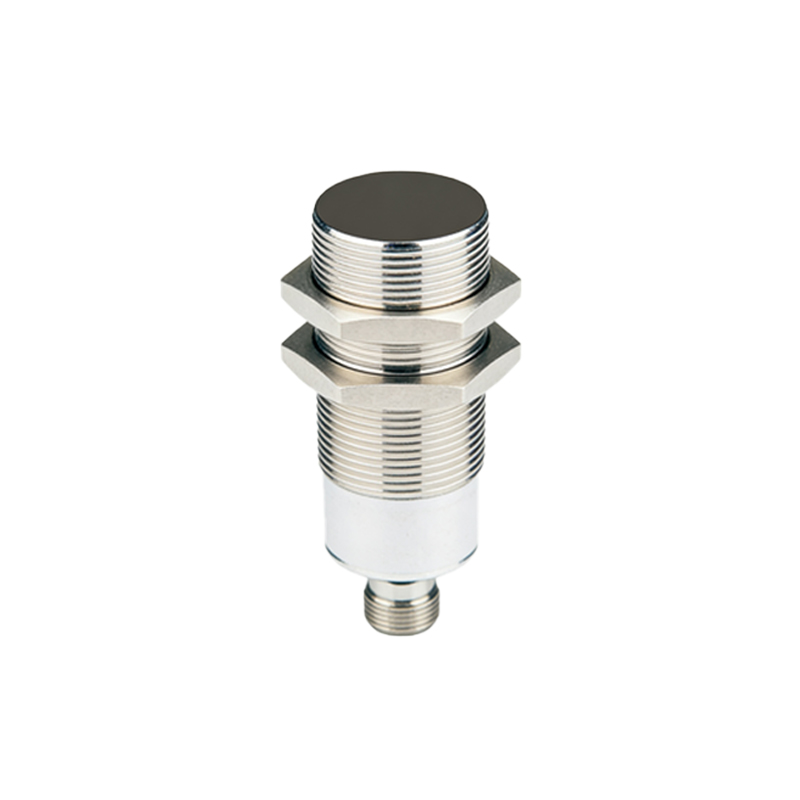
Two primary technologies dominate the 2mm proximity sensor market: inductive and capacitive. Inductive sensors are the most common, detecting metallic objects—typically ferrous metals like steel and iron with the highest sensitivity, and non-ferrous metals like aluminum or copper at a reduced range. They generate a high-frequency oscillating electromagnetic field. A metallic target entering the 2mm field induces eddy currents, dampening the oscillation and causing the output state to change. Capacitive sensors, on the other hand, can detect both metallic and non-metallic materials (plastics, liquids, wood) by measuring changes in capacitance. The sensor forms one plate of a capacitor, and the target forms the other; as the target approaches within 2mm, the capacitance increases until a threshold is reached.
Critical Performance Specifications
When selecting a 2mm proximity sensor, several specifications are paramount. The rated operating distance is precisely 2mm, but engineers must consider the assured operating distance, which accounts for factors like supply voltage tolerance and temperature drift, typically 70-80% of the rated distance. Repeatability, often in the micron range, is crucial for precision assembly. Switching frequency defines how quickly the sensor can detect objects passing by. Housing material (often nickel-plated brass or stainless steel) and protection class (IP67/IP68 for washdown environments) are vital for durability. Finally, output type (PNP/NPN, NO/NC) must match the control system's PLC or input card requirements.
Primary Industrial Applications
The application spectrum for 2mm proximity sensors is vast within precision industries. In semiconductor manufacturing and micro-electronics assembly, they verify the presence of tiny components on circuit boards or confirm the position of wafer cassettes. In automated watchmaking and medical device production, they detect miniature gears or syringe plungers. They are integral to robotic end-effectors for gripper position feedback, ensuring a part is correctly grasped before movement. In metal stamping presses, they provide final-stage confirmation that a sheet metal part is correctly positioned within a 2mm tolerance before the stamping cycle initiates, preventing costly tool damage.
Installation and Mounting Considerations
Proper installation is critical to achieving reliable 2mm detection. Flush-mountable sensors can be installed embedded in metal without loss of sensing range, while non-flush models require a clearance zone around the sensing face. The sensor must be mounted rigidly to prevent vibration from altering the effective gap. Engineers must account for the target material, size, and shape. The standard target is a square of mild steel equal to the sensor's face diameter. For smaller targets or different materials, a reduction factor must be applied, potentially requiring sensor adjustment or a closer mounting distance than 2mm. Alignment between the sensor face and the target plane is also essential for consistent operation.
Troubleshooting Common Issues
Even with precise sensors, issues can arise. Failure to detect often stems from an incorrect target material, a target smaller than specified, or the actual gap exceeding the assured operating distance due to mechanical wear or misalignment. Electrical interference in noisy environments can cause erratic switching; using shielded cables and proper grounding is essential. Constant output activation may indicate a buildup of metallic debris on the sensor face (for inductive types) or contamination by conductive fluids (for capacitive types). Regular maintenance, including cleaning the sensing face and verifying the mechanical gap with a feeler gauge, is recommended for critical applications.
Selection Criteria for Optimal Performance
Selecting the right 2mm sensor requires a methodical approach. First, define the target material to choose between inductive and capacitive technology. Second, analyze the environmental conditions: temperature, presence of coolants or chemicals, and potential for physical impact. Third, determine the required electrical interface and housing shape (threaded barrel, rectangular block). Fourth, consider any special needs like analog output for distance measurement, high-temperature resistance, or weld-field immunity for use near robotic welders. Consulting with sensor manufacturers' technical