Introduction to P68 Waterproof Proximity Sensors
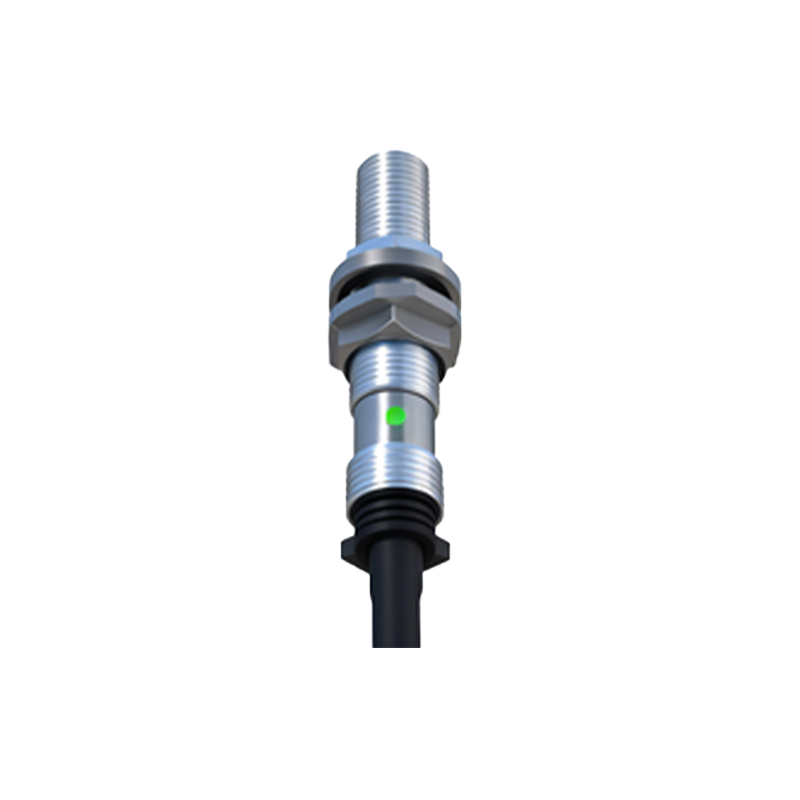
In the demanding landscape of industrial automation, reliable sensing is paramount. Among the various sensor technologies available, the 2-wire P68 waterproof proximity switch sensor stands out for its robustness and simplicity. This type of sensor is specifically engineered to detect the presence or absence of metallic objects without any physical contact. The "P68" designation refers to its ingress protection rating, signifying complete protection against dust ingress and protection against long-term immersion in water under specified pressure. The 2-wire configuration simplifies installation by combining the power supply and signal output into the same pair of wires, making it a cost-effective and space-saving solution for numerous applications, from food processing to heavy machinery.
Core Operating Principle and Technology
The fundamental operation of a 2-wire inductive proximity sensor relies on electromagnetic fields. The sensor's face contains an oscillator circuit that generates a high-frequency alternating magnetic field. When a metallic target enters this field, eddy currents are induced on the target's surface. This causes a change in the oscillation amplitude within the sensor. An integrated evaluation circuit detects this change and triggers a switching action. In a 2-wire DC sensor, this switching action directly modulates the current flow in the same two wires used for power. Typically, the sensor presents a high impedance (off state, allowing only a small leakage current) when no target is present and switches to a low impedance (on state, allowing a higher current to flow, representing the signal) when a target is detected. This simplicity is a key advantage, though it requires careful consideration of voltage drop and load compatibility.
Deciphering the IP68 Protection Standard
The IP68 rating is a critical feature defining the sensor's environmental resilience. The "IP" stands for Ingress Protection, governed by the international standard IEC 60529. The first digit, "6," denotes the highest level of protection against solid particles, making the sensor dust-tight. The second digit, "8," indicates protection against the effects of continuous immersion in water. Specifically, an IP68-rated sensor like this is tested to withstand immersion in water deeper than 1 meter, as specified by the manufacturer (common specifications are 1-3 meters for 30 minutes or more). This makes it ideal for environments subject to high-pressure washdowns, outdoor weather, or even submersion in liquids, common in industries such as marine, wastewater treatment, and automated cleaning systems.
Key Advantages of the 2-Wire Design
The 2-wire design offers significant practical benefits. Firstly, installation is greatly simplified, reducing wiring time and potential errors. It connects similarly to a traditional mechanical switch, requiring only a power supply and the load (e.g., a PLC input, relay, or indicator lamp) in series. This reduces cabinet space and component count. Secondly, it often proves more cost-effective by eliminating the need for a separate signal wire and sometimes reducing requirements for interface modules. The inherent design also means there is no polarity to observe for AC versions, though DC versions do require correct polarity. Its straightforward nature makes it a preferred choice for retrofitting older systems or in applications where wiring simplicity is a priority.
Critical Application Considerations
Selecting and implementing a 2-wire P68 sensor requires attention to several parameters. The operating voltage range (e.g., 10-30V DC or 20-250V AC) must match the control system. The voltage drop across the sensor in the "on" state is important, as it reduces the voltage available to the load. The residual current (leakage current) in the "off" state must be low enough not to accidentally trigger the connected control device. Furthermore, the switching frequency, sensing range, housing material (often stainless steel or PBT plastic), and temperature range must be suitable for the specific environment. For IP68 applications, ensuring the integrity of the cable gland or connector is as crucial as the sensor housing itself.
Typical Industrial Use Cases
The durability and reliability of P68 2-wire proximity sensors make them indispensable across diverse sectors. In food and beverage production, they withstand frequent high-temperature, high-pressure cleaning cycles while detecting metal containers or machine parts. In material handling and packaging, they monitor the position of metallic components on conveyors. Automotive manufacturing lines utilize them for part presence verification in robotic cells that may be subject to coolants or oils. They are also widely used in agricultural machinery, mining equipment, and offshore platforms where exposure to dust, mud, and water is constant. Their role in ensuring safety and process continuity in these harsh conditions cannot be overstated.