Introduction to Proteus Photoelectric Sensors
Proteus photoelectric sensors represent a critical category of industrial sensing technology, designed to detect the presence, absence, or distance of objects using a light beam. These sensors operate on the fundamental principle of converting light signals into electrical outputs. Typically, they consist of an emitter, which projects a light beam (often infrared, visible red, or laser), and a receiver, which detects the light. When an object interrupts or reflects this beam, the sensor's internal circuitry triggers a change in its output state. This reliable and non-contact method of detection makes Proteus sensors indispensable in environments demanding precision, speed, and durability. Their versatility allows for integration into complex automation systems, quality control checkpoints, and safety interlocks across various sectors including manufacturing, packaging, and material handling.
Key Operating Modes and Technologies
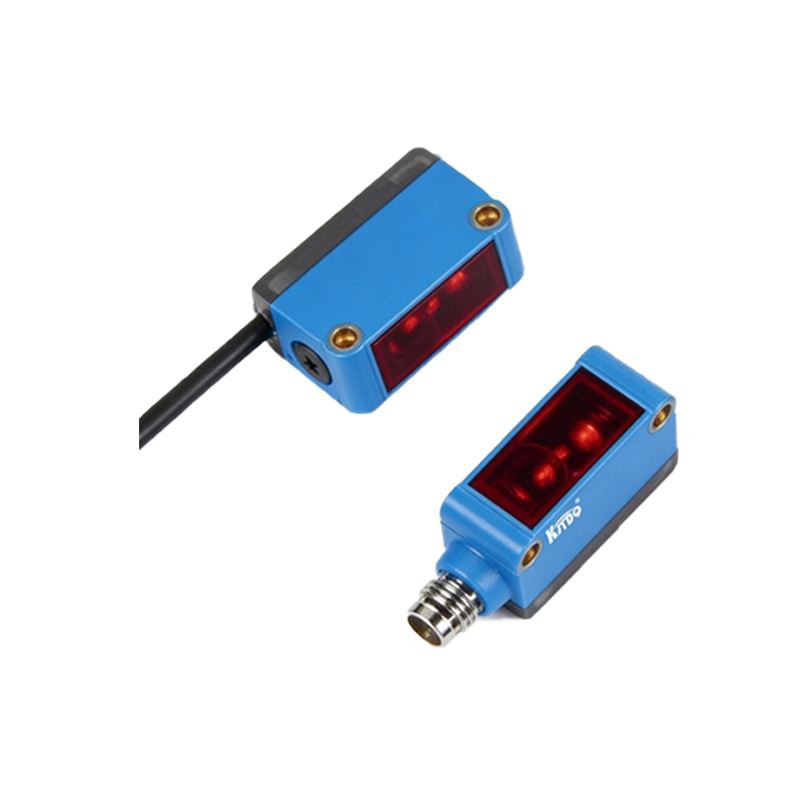
Proteus photoelectric sensors are available in several primary operating modes, each suited for specific application challenges. The through-beam (or opposed) mode features separate emitter and receiver units positioned opposite each other. Detection occurs when an object breaks the beam, offering the longest sensing ranges and highest reliability. Retro-reflective mode uses a single unit that emits light towards a reflector; the object is detected when it blocks the reflected beam. Diffuse (or proximity) mode employs a single housing where the emitter and receiver are side-by-side. Detection happens when the target object reflects the emitted light back to the receiver. Advanced versions incorporate background suppression or fixed-field teaching to ignore objects beyond a set distance. Furthermore, fiber optic versions of Proteus sensors enable detection in extremely tight spaces or harsh conditions by guiding light through flexible cables.
Critical Technical Specifications and Selection Criteria
Selecting the appropriate Proteus photoelectric sensor requires careful analysis of technical parameters. Sensing range is paramount, varying from a few millimeters in diffuse mode to several meters in through-beam configurations. Response time, often in milliseconds, determines how quickly the sensor can detect a passing object in high-speed applications. The light source type (e.g., LED, laser) affects spot size, energy consumption, and range. Environmental ratings, such as IP67 or IP69K for ingress protection and robust housing materials (stainless steel, PBT plastic), are crucial for operation in washdown, dusty, or corrosive environments. Output types include discrete NPN/PNP transistors, analog current/voltage, and IO-Link for digital communication, enabling seamless integration with PLCs and control systems. Engineers must also consider the target object's properties—size, color, material, and surface finish—as these significantly influence the sensor's performance.
Installation, Alignment, and Configuration Best Practices
Proper installation is vital for optimal sensor performance. Mounting must be secure to prevent vibration-induced misalignment. For through-beam sensors, precise alignment of the emitter and receiver is critical; built-in alignment indicators or audible signals can aid this process. For diffuse sensors, the mounting angle relative to the target must be considered to avoid false triggers from background objects. Many modern Proteus sensors feature teach-in functionality, allowing users to easily set sensitivity thresholds by presenting the target object. Configuration via pushbuttons or software interfaces enables adjustment of parameters like light-on/dark-on operation, output delay timers, and switching hysteresis. Regular maintenance, including lens cleaning and verification of alignment, ensures long-term reliability and prevents downtime in automated lines.
Common Industrial Applications and Use Cases
The application scope for Proteus photoelectric sensors is vast. In packaging machinery, they count bottles, detect labels, and verify cap presence on filling lines. In automotive assembly, they position robotic arms and confirm part placement. On conveyor systems, they provide object detection for sorting and control logic. They are essential in electronic manufacturing for PCB presence verification and component insertion checks. Safety applications include perimeter guarding on machinery, where a broken beam triggers an emergency stop. In logistics and warehousing, they facilitate parcel dimensioning and automated guided vehicle (AGV) navigation. The non-contact nature prevents product damage and allows for sensing of delicate or hot objects where physical contact is impossible or undesirable.
Troubleshooting and Diagnostic Techniques
Even robust systems may encounter issues. Common problems include false triggering, failure to detect, or unstable output. Troubleshooting begins with verifying power supply voltage and polarity. Inspection for physical damage, contamination on lenses, or misalignment is next. Using the sensor's built-in diagnostic LED is a quick method; a steady light often indicates proper operation, while a blinking pattern may signal an error or alignment issue. For erratic behavior, environmental factors like ambient light interference, acoustic noise, or electrical noise on the supply lines should be investigated. Shielding cables, using sensors with modulated light sources to resist ambient light, and ensuring proper grounding can mitigate these issues. Consulting the sensor's datasheet for specific error codes and operational thresholds is always recommended for systematic diagnosis.
Future Trends and Advancements in Sensing Technology
The evolution of Proteus photoelectric sensors is closely tied to Industry 4.0 and smart factory trends. Future sensors will feature enhanced connectivity through IO-Link and Ethernet-APL, providing detailed diagnostic data, parameterization capabilities, and integration into plant-wide digital twins. Miniaturization will continue, enabling installation in increasingly compact machinery. Advances in laser diode and receiver technology will yield sensors with longer ranges, higher precision, and improved performance on challenging surfaces like transparent glass or black matte finishes. Furthermore, the integration of multi-functional sensing—combining distance measurement, color detection, and contrast recognition in a single device—will simplify system design and reduce the total number of sensors required on a line, driving efficiency and intelligence in industrial automation.