Introduction to Photoelectric Sensors
Photoelectric sensors are pivotal components in modern industrial automation, utilizing light beams to detect the presence, absence, or distance of objects. These sensors operate by emitting a light source—typically infrared, visible, or laser light—and measuring changes in the received light intensity or reflection patterns. The core principle involves a transmitter and receiver; when an object interrupts or reflects the light beam, the sensor triggers an output signal. This technology has become integral across diverse sectors, including manufacturing, packaging, automotive, and robotics, due to its non-contact nature and high precision. Unlike mechanical switches, photoelectric sensors minimize wear and tear, ensuring longevity and reliability in harsh environments. Their adaptability to various materials and surfaces, from transparent glass to opaque metals, underscores their versatility. As industries evolve toward smarter and more connected systems, photoelectric sensors continue to advance, incorporating digital interfaces and enhanced sensing capabilities to meet complex application demands.
Key Advantages of Photoelectric Sensors
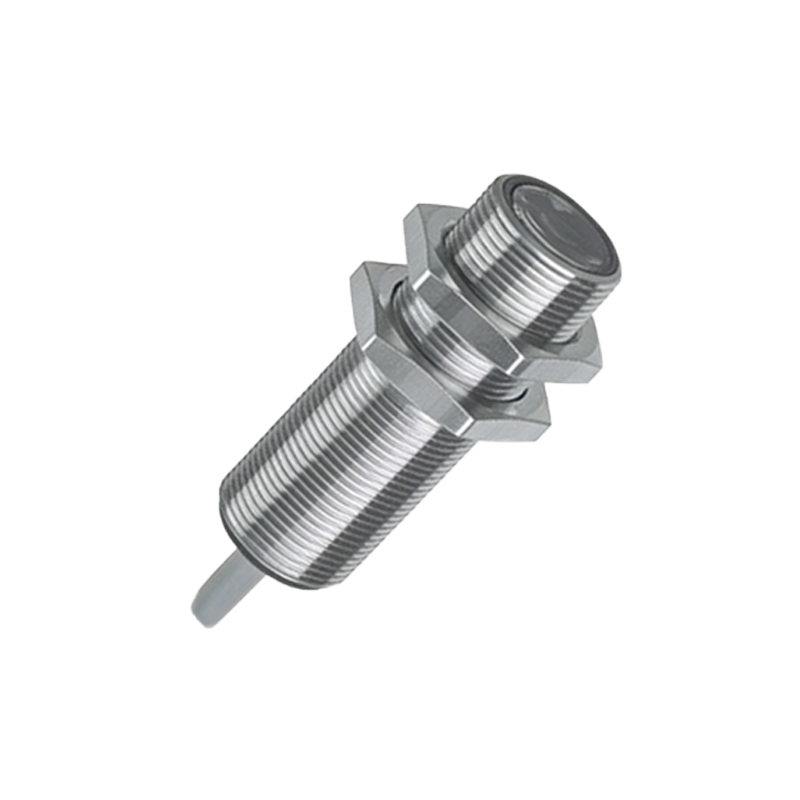
The primary advantage of photoelectric sensors lies in their non-contact operation, which eliminates physical interaction with detected objects, reducing maintenance costs and preventing contamination in sterile settings like food processing or pharmaceuticals. They offer high-speed detection, capable of sensing objects at rates exceeding milliseconds, crucial for high-throughput production lines. Additionally, these sensors provide exceptional accuracy and repeatability, with detection ranges spanning from a few millimeters to several meters, depending on the model and light type. For instance, diffuse reflection sensors are ideal for short-range applications, while through-beam sensors excel in long-distance detection with high immunity to environmental interference. Energy efficiency is another benefit, as modern sensors consume minimal power while delivering robust performance. Their durability in extreme conditions—such as temperature fluctuations, dust, or moisture—makes them suitable for outdoor or heavy-industrial use, often featuring IP67 or higher ratings for protection.
Technological Developments and Innovations
Recent advancements in photoelectric sensor technology focus on enhancing functionality and integration with Industry 4.0 frameworks. Smart sensors now embed microprocessors and IoT connectivity, enabling real-time data transmission for predictive maintenance and process optimization. For example, sensors with IO-Link interfaces facilitate remote configuration and diagnostics, reducing downtime in automated systems. The development of background suppression sensors has improved object discrimination by ignoring distant surfaces, while color sensors can differentiate hues for quality control in printing or textile industries. Laser-based sensors offer finer resolution for precise positioning, and fiber-optic variants allow operation in confined or hazardous spaces. Furthermore, miniaturization trends have led to compact designs that fit into tight assemblies without compromising range or sensitivity. Research into energy-harvesting techniques and low-power designs aims to support wireless sensor networks, promoting sustainability in industrial ecosystems.
Applications Across Industrial Sectors
Photoelectric sensors are ubiquitous in automation, serving critical roles in material handling, assembly, and safety systems. In automotive manufacturing, they monitor part placement on conveyor belts or verify weld positions, ensuring consistency in production. Packaging lines rely on these sensors to detect labels, count items, or control filling levels, enhancing efficiency and reducing waste. Robotics applications utilize them for object recognition and navigation, enabling collaborative robots to operate safely alongside humans. In logistics, sensors track inventory in warehouses through barcode scanning or presence detection. Beyond traditional industries, emerging fields like renewable energy employ photoelectric sensors in solar panel alignment or wind turbine monitoring. Their adaptability to custom solutions—such as detecting transparent films in pharmaceutical blister packs—demonstrates their value in solving niche challenges, driving innovation across global supply chains.
Future Trends and Market Outlook
The future of photoelectric sensors is shaped by trends toward digitalization and sustainability. Integration with AI and machine learning algorithms will enable predictive analytics, allowing sensors to self-calibrate or identify anomalies in production processes. Wireless and energy-autonomous sensors are gaining traction, supporting scalable IoT deployments in smart factories. Market growth is propelled by rising automation in emerging economies and demand for quality assurance in e-commerce logistics. According to industry reports, the global photoelectric sensor market is projected to expand steadily, with innovations in multispectral sensing and hybrid technologies combining vision systems. Challenges like cost sensitivity in small-scale operations or interference from ambient light are being addressed through advanced filtering and cost-effective designs. As industries prioritize efficiency and connectivity, photoelectric sensors will remain essential, evolving into smarter, more interconnected components of the industrial landscape.