Introduction to Cylindrical Proximity Sensors
Cylindrical proximity sensors, often referred to as barrel-style sensors, are fundamental components in industrial automation. These non-contact devices detect the presence or absence of metallic objects within their sensing range without physical contact. Their robust, cylindrical housing, typically made of stainless steel or nickel-plated brass, provides excellent durability in harsh environments. The design is standardized, with common diameters such as M8, M12, M18, and M30, allowing for easy integration into machinery and fixtures. The operating principle is primarily based on electromagnetic fields, where an oscillator generates a high-frequency field from the sensor's face. When a metallic target enters this field, it induces eddy currents, causing a change in the oscillator's amplitude. This change is detected by the sensor's circuitry, triggering a solid-state output signal to control a machine function.
Key Operating Principles and Technologies
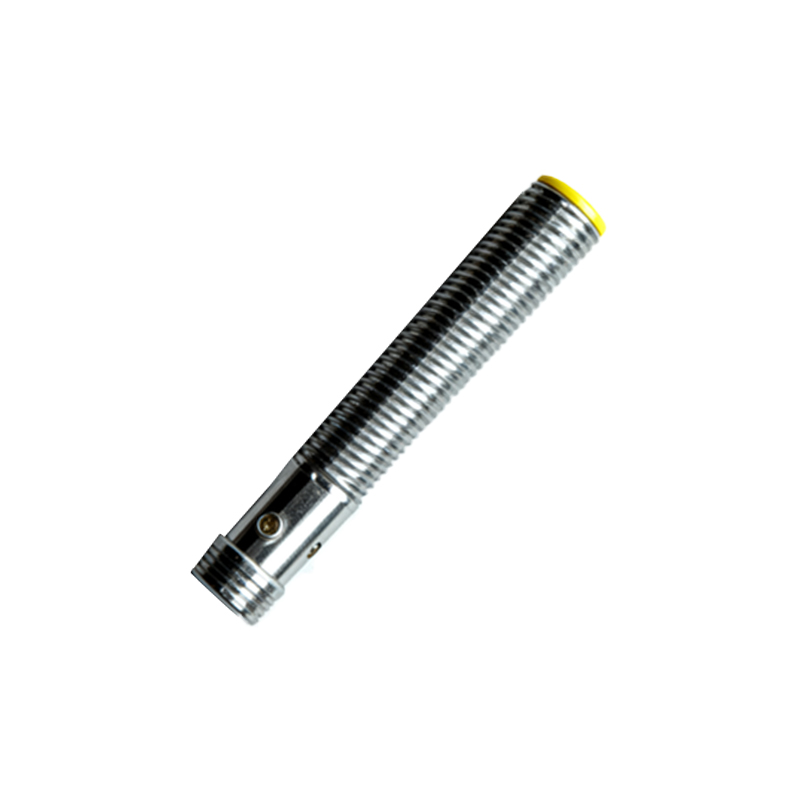
The most prevalent technology in cylindrical proximity sensors is inductive sensing. Inductive sensors are exclusively for detecting metallic objects, primarily ferrous metals like steel and iron. For non-ferrous metals, such as aluminum or copper, specialized inductive sensors with factor corrections are required. Another critical technology is the embedded magnetostrictive principle, used in specific cylinder position sensors for hydraulic applications. However, for standard barrel sensors, inductive remains king. The sensing range, a crucial specification, is defined as the nominal operating distance (Sn). It is typically 0.8 to 1.5 times the sensor's diameter, though shielded (flush-mountable) versions have a reduced range compared to unshielded (non-flush) types. The output is usually a 3-wire DC configuration (PNP or NPN sourcing) or a 2-wire AC/DC version, providing compatibility with various PLCs and control systems.
Primary Types and Their Specific Features
Cylindrical proximity sensors are categorized by several key features. First, by shielding: shielded sensors can be mounted flush in metal without affecting their performance, making them ideal for tight spaces. Unshielded sensors offer a longer sensing range but require a non-metallic surrounding area. Second, by output type: standard models provide a discrete on/off signal. Analog output versions deliver a continuous signal proportional to the distance to the target, useful for positioning applications. Third, by housing material and connection: metal-bodied sensors offer high resistance to physical impact and welding spatter, while plastic-bodied variants are used in non-harsh conditions. Connections include pre-wired cables or quick-disconnect (QD) versions with standardized M12 or M8 connectors for easy maintenance and replacement.
Critical Application Areas in Industry
These sensors are ubiquitous across manufacturing. In automotive assembly lines, they detect piston position in cylinders, verify part presence on pallets, and count metallic components on conveyors. In packaging machinery, they monitor the position of cams, detect end-of-travel for actuators, and ensure proper fill levels by sensing metal lids or caps. Metalworking and CNC machining centers rely on them for tool presence detection, workpiece positioning, and door interlocking for safety. Their robust nature makes them perfect for harsh duties like monitoring valve positions in hydraulic and pneumatic systems, where oil, coolant, and vibration are present. The ability to function without contact eliminates wear and tear, ensuring long-term reliability and reducing maintenance downtime.
Essential Selection Criteria for Engineers
Selecting the correct cylindrical proximity sensor requires careful analysis of several parameters. The target material is paramount; ensure the sensor is rated for the specific metal (ferrous, non-ferrous, stainless steel). The required sensing distance must be chosen with a safety margin, typically 75-80% of the nominal Sn, to account for temperature drift and supply voltage variations. The operating voltage (10-30V DC, 20-250V AC, or universal) must match the control system. Environmental factors are critical: IP67 or IP69K ratings for washdown areas, high-temperature models for ovens, and weld-field immune versions for robotic welding cells. Output configuration (PNP vs. NPN) must be compatible with the input card of the controller. Finally, consider mechanical aspects like housing diameter, thread type (metric), and required cable or connector style for seamless installation.
Installation Best Practices and Troubleshooting
Proper installation is key to optimal performance. Always respect the manufacturer's specified mounting clearances, especially for unshielded sensors, to prevent false triggering from adjacent metal. Ensure the target approaches the sensor head perpendicularly for maximum range and repeatability. For threaded mounting, use the correct torque to avoid damaging the housing.