Introduction to Transparent Label Photoelectric Sensors
Transparent label photoelectric sensors are specialized devices designed for detection tasks where the target object is a clear or translucent label on a contrasting background, such as on packaging lines. Unlike standard photoelectric sensors that may struggle with low-contrast or transparent materials, these sensors are engineered to reliably identify the presence, absence, or position of labels that allow light to pass through them. They are a critical component in automated manufacturing, particularly in industries like food and beverage, pharmaceuticals, and logistics, where accurate label application and verification are paramount for quality control, traceability, and operational efficiency. The core challenge they address is distinguishing a transparent material from its surroundings, often at high speeds.
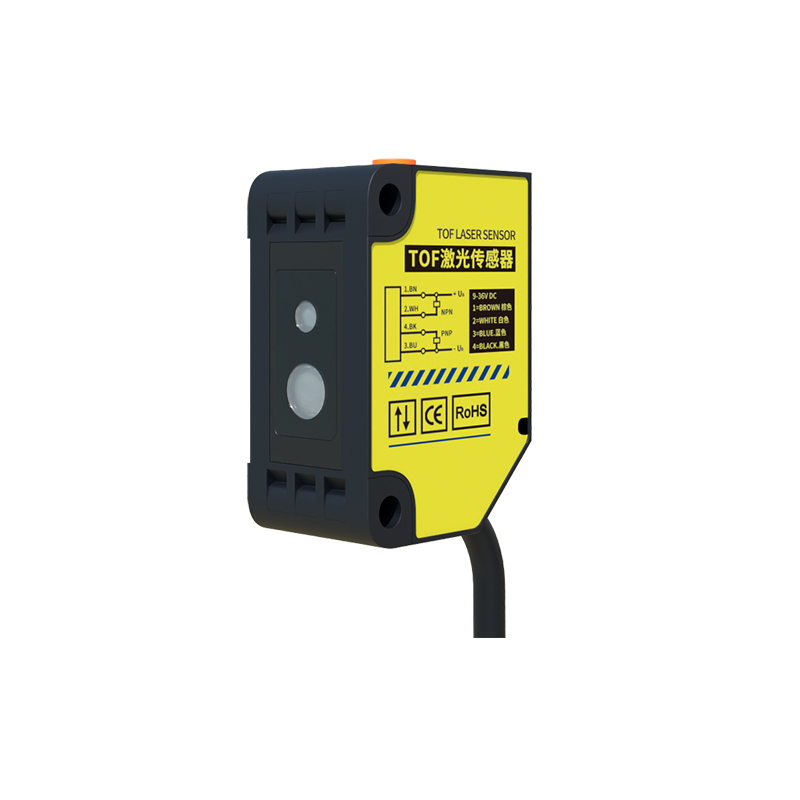
Core Operating Principle: Modulated Light and Synchronous Detection
The fundamental principle behind transparent label detection is the use of modulated (pulsed) light and synchronous detection. A standard through-beam or retro-reflective sensor uses a constant light beam. When aimed at a transparent label, this constant beam may pass through with minimal attenuation, making detection unreliable. A transparent label sensor, however, emits a high-frequency modulated light signal from its transmitter. The receiver is tuned to detect only light oscillating at that specific modulation frequency. This design provides exceptional immunity to ambient light from factory lighting (which is constant or at a different frequency), a common source of interference. When the modulated beam passes through the transparent label, even a slight change in light intensity or phase occurs.
Key Detection Method: The Through-Beam Configuration
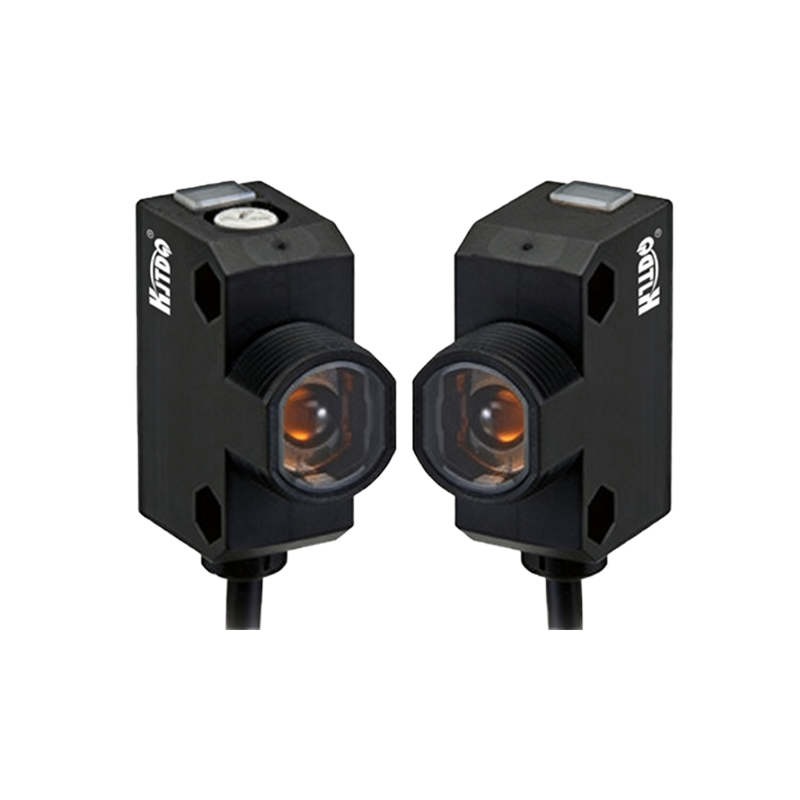
The most common and effective configuration for detecting transparent labels is the through-beam (or opposed) method. In this setup, the transmitter and receiver are housed in separate units placed directly opposite each other. The modulated light beam travels from the transmitter to the receiver. When a transparent label passes through the beam, it causes a minute but detectable reduction in the total light energy received. The sensor's sophisticated circuitry is calibrated to recognize this specific drop against the "full light" reference state when no object is present. This method offers the highest reliability and sensing distance for transparent materials because it is less susceptible to the label's angle, color variations, or slight wrinkles compared to diffuse-reflective sensors.
Signal Processing and Threshold Setting
The heart of the sensor's reliability lies in its advanced signal processing. The receiver converts the modulated light signal into an electrical signal. This signal is then amplified and filtered to eliminate noise. The processor continuously compares the received signal strength to a user-set threshold level. Setting this threshold correctly is crucial. It must be positioned between the signal level when the beam is unobstructed (background) and the signal level when the transparent label is interrupting the beam. Modern sensors often feature teach-in functions or auto-tuning, where the operator presents the sensor with both the "background" (e.g., the bottle without a label) and the "label" states, allowing the sensor to automatically calculate and set the optimal threshold for stable detection.
Overcoming Challenges: Glossy Backgrounds and Label Variations
A significant challenge arises when the background surface behind the transparent label is glossy or reflective, such as a shiny bottle. This surface can reflect the modulated beam back to the receiver, potentially mimicking the "full light" state and causing a missed detection. To combat this, premium transparent label sensors employ cross-polarization filters. The transmitter emits polarized light. The receiver has a filter that only accepts light polarized in the perpendicular direction. Ambient reflections from glossy surfaces typically maintain the original polarization and are thus blocked by the receiver's filter. However, when light passes through the transparent label, its polarization state is slightly altered (due to birefringence or scattering), allowing a component of the light to pass through the receiver's filter and be detected.
Application Examples in Industrial Automation
These sensors are deployed in numerous critical applications. On a labeling machine, they verify the presence of a transparent shrink sleeve or wrap-around label on containers before they proceed to the shrinking tunnel. In pharmaceutical packaging, they ensure an ultra-clear blister pack or a transparent safety seal is correctly applied. On bottling lines, they detect the presence of clear tamper-evident bands or transparent date-code labels. They are also used to inspect for the absence of a label where one should be, or to count transparent items on a conveyor. Their high-speed response makes them suitable for synchronizing applicators or triggering reject mechanisms for faulty products.
Selection Criteria and Best Practices
Selecting the right sensor involves several factors. First, determine the required sensing distance and choose a through-beam model with sufficient excess gain for the application. Consider the size of the label and the required beam spot size; a focused beam is better for small labels. Evaluate the sensor's response time to ensure it matches the line speed. Look for features like a robust IP rating for washdown environments, a teach-in function for easy setup, and a stable LED status indicator. During installation, ensure precise alignment of the transmitter and receiver. Regular maintenance includes keeping lenses clean from dust and moisture, and periodically verifying the detection stability as environmental conditions or label materials may change.