Introduction to Two-Wire M8 Proximity Sensors
In the realm of industrial automation, proximity sensors are indispensable components for non-contact detection of objects. Among the various form factors and wiring configurations available, the two-wire M8 proximity sensor has emerged as a particularly popular and versatile solution. Characterized by its compact cylindrical housing with an 8mm diameter threaded barrel, this sensor type simplifies installation and wiring in space-constrained environments. The "two-wire" designation refers to its simplified electrical connection system, which requires only a power line and a load line, eliminating the need for a separate output wire. This design integrates the sensor directly into the load circuit, making it functionally similar to a switch. Its widespread adoption across manufacturing, packaging, and material handling sectors is attributed to its robustness, reliability, and ease of integration into existing control systems, providing a cost-effective method for position sensing, counting, and end-of-travel detection.
Operating Principle and Sensing Technologies
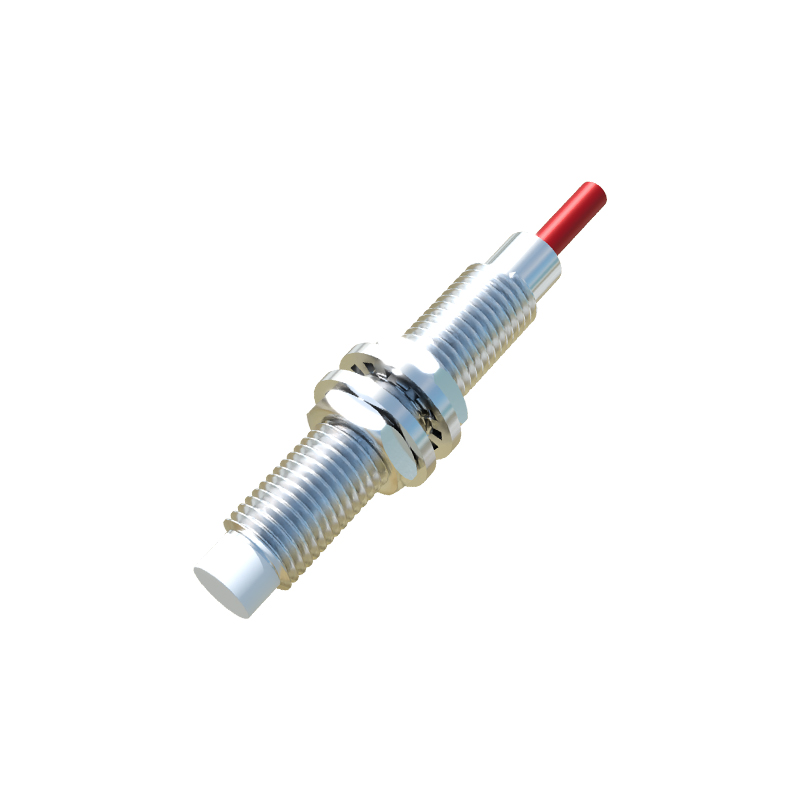
Two-wire M8 proximity sensors primarily operate on two fundamental technologies: inductive and capacitive sensing. Inductive sensors are the most common variant, designed to detect metallic objects. They generate an electromagnetic field from a coil inside the sensor head. When a ferrous or non-ferrous metal target enters this field, it induces eddy currents, causing a change in the oscillation amplitude. This change is detected by the internal circuitry, which then switches the output state. Capacitive M8 sensors, on the other hand, can detect both metallic and non-metallic materials, including liquids, plastics, and wood. They function by generating an electrostatic field. The presence of any material with a different dielectric constant than air alters the capacitance of the field, triggering the sensor's switching action. Both types in a two-wire configuration manage this detection and switching within the same two conductors used for power supply, cleverly modulating the current flow to indicate an "on" or "off" state to the connected controller like a PLC.
Key Electrical Characteristics and Wiring
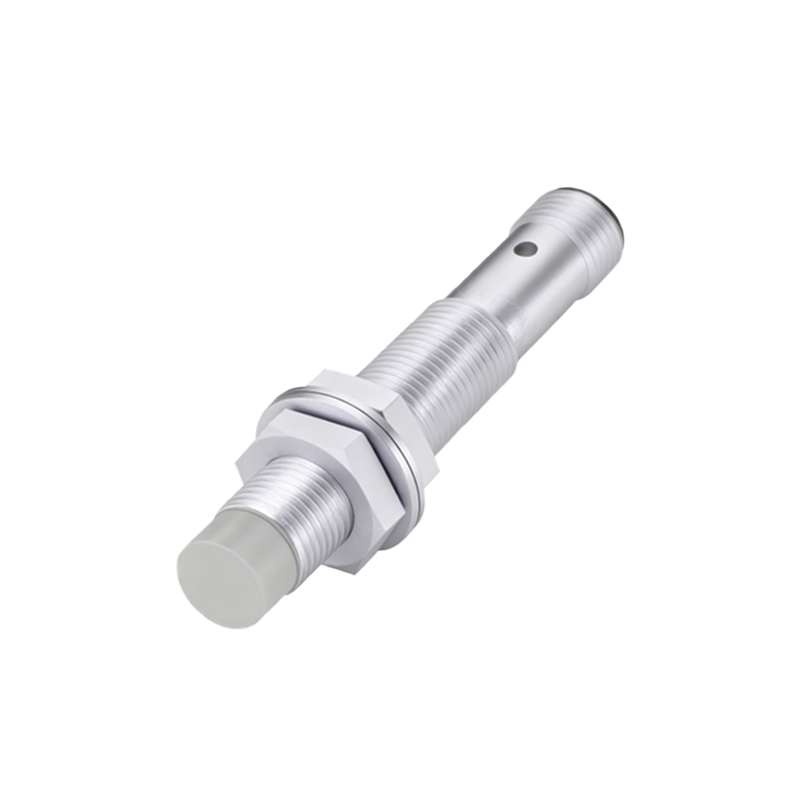
The defining feature of a two-wire sensor is its series connection within the DC circuit. Unlike three-wire or four-wire sensors, it does not have a dedicated output (NPN or PNP) or a separate ground wire. Instead, it has two wires: typically brown for positive DC voltage and blue for the load connection. In a standard setup, the brown wire connects to the positive terminal of the power supply (commonly 10-30V DC), and the blue wire connects to the input of the programmable logic controller (PLC) or relay. The PLC input's common terminal is then connected to the negative side of the power supply, completing the circuit. When the sensor is inactive (no target detected), a small leakage current (often less than 1.5mA) flows. Upon detection, the sensor "closes," allowing the full load current to pass, which the PLC interprets as a logic HIGH signal. It is crucial to note the sensor's voltage range, switching current capacity, and the required minimum load current to ensure stable operation and avoid malfunction.
Advantages of the Two-Wire M8 Design
The two-wire M8 proximity sensor offers several compelling advantages that justify its widespread use. First and foremost is wiring simplicity. The reduction from three or four wires to just two significantly cuts down on installation time, material costs, and potential wiring errors. This simplicity also translates to easier troubleshooting and maintenance. Secondly, its compact M8 housing allows for installation in extremely tight spaces where larger sensors cannot fit. The threaded barrel enables secure mounting directly into drilled and tapped holes or standard M8 nuts. Furthermore, these sensors are known for their high resistance to environmental challenges. Many models feature IP67 or higher ingress protection ratings, making them resistant to dust, oil, and temporary immersion, suitable for harsh industrial environments. Finally, the two-wire system's inherent compatibility with a wide range of PLC inputs and relay coils adds to its versatility.
Critical Considerations for Selection and Application
Selecting the correct two-wire M8 sensor requires careful analysis of the application parameters. The first consideration is the sensing technology: inductive for metals or capacitive for universal materials. Next, the sensing distance, or "switching distance," must be specified. For a standard inductive M8 sensor, this typically ranges from 1mm to 2mm, ensuring reliable detection without physical contact. The electrical specifications are paramount: the operating voltage (e.g., 10-30V DC), the maximum switching current (e.g., 200mA), and the voltage drop across the sensor when active (typically 3V or less). Engineers must also consider the sensor's switching frequency, its ability to withstand