Introduction to Proximity Sensor 112
The Proximity Sensor 112 represents a cornerstone in modern industrial automation, offering reliable, non-contact detection of metallic objects. Engineered for robustness and precision, this sensor family is designed to perform in demanding environments where accuracy and durability are paramount. Its compact form factor belies its sophisticated internal electronics, which enable consistent operation across a wide range of applications, from conveyor belt monitoring to machine tool positioning. The fundamental principle involves generating an electromagnetic field and detecting changes caused by a metallic target entering this field, allowing for detection without physical contact, thereby eliminating mechanical wear and tear.
Core Operating Principles and Technology
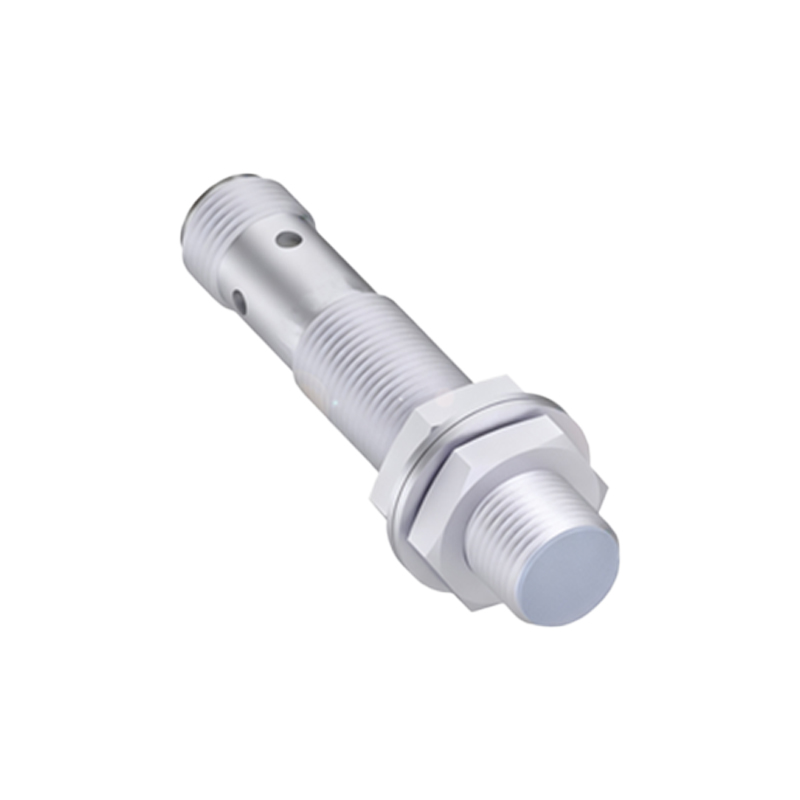
At the heart of the Proximity Sensor 112 lies an oscillator circuit that creates a high-frequency electromagnetic field at its active face. When a ferrous or non-ferrous metal target enters this sensing field, eddy currents are induced on the surface of the target. These eddy currents draw energy from the oscillator, resulting in a measurable dampening or attenuation of the oscillation amplitude. An integrated evaluation circuit continuously monitors this amplitude. Once the damping exceeds a predefined threshold, the sensor's solid-state output switches state, sending a clear signal to the connected programmable logic controller (PLC) or other control system. This all-solid-state design ensures a high switching frequency and an exceptionally long operational lifespan.
Key Technical Specifications and Variants
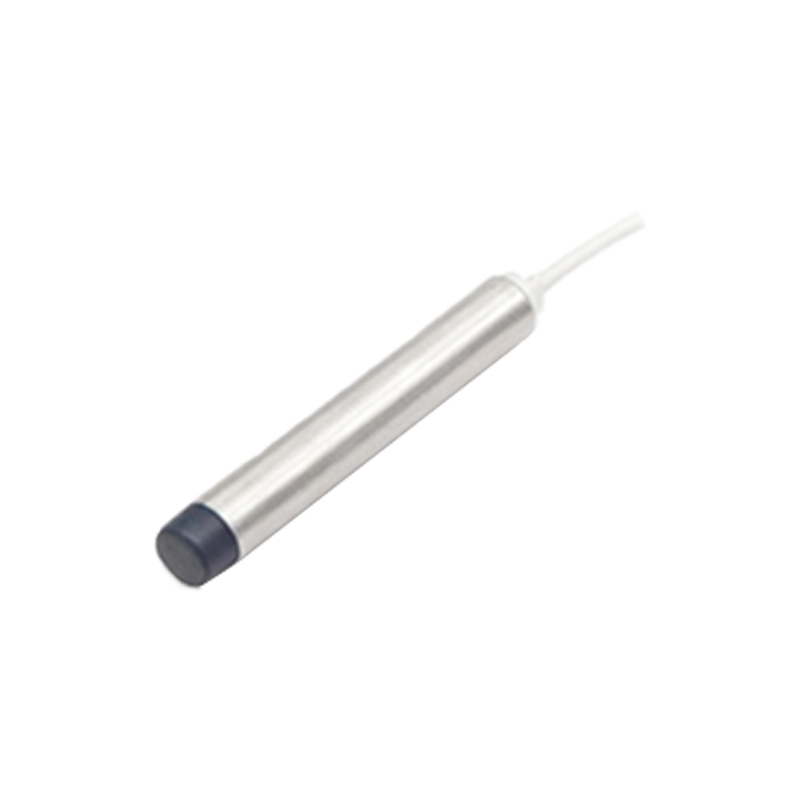
The Proximity Sensor 112 series is available in several key variants to suit specific application needs. Standard models typically offer a sensing range from 1.5mm to 15mm, with factors like target material (steel, aluminum, brass) and size influencing the effective range. They are commonly available in both Normally Open (NO) and Normally Closed (NC) output configurations. The output type is a critical specification, with models featuring 3-wire DC (PNP or NPN) transistor outputs being the most prevalent for their compatibility with modern control systems. Key ratings include a supply voltage range of 10-30V DC, a maximum switching current (e.g., 200mA), and an IP67 or higher ingress protection rating, ensuring resistance to dust and temporary immersion in water.
Installation and Configuration Best Practices
Correct installation is vital for optimal performance of the Proximity Sensor 112. A primary consideration is maintaining the proper mounting distance. Sensors should be installed so that the target approaches the active sensing face perpendicularly, avoiding skewed approaches which can reduce the effective sensing distance. It is crucial to account for the "flush-mountable" or "non-flush-mountable" design of the specific model. Non-flush sensors require a clear lateral space free of metallic objects to function correctly, while flush-mounted types can be embedded in metal without affecting their sensing characteristics. Always ensure the wiring follows the manufacturer's diagram, paying close attention to polarity for DC models, and use shielded cables in electrically noisy environments.
Typical Industrial Applications and Use Cases
The versatility of the Proximity Sensor 112 makes it indispensable across numerous sectors. In automotive manufacturing, it is used for part presence verification on assembly robots and end-of-stroke detection on pneumatic cylinders. Packaging machinery relies on these sensors for precise carton counting and fill-level control. Within material handling, they provide position feedback for automated guided vehicles (AGVs) and detect the presence of pallets on roller conveyors. A critical safety application is in machine guarding, where sensors can monitor the position of safety doors or interlocks, ensuring equipment only operates when guards are securely closed.
Troubleshooting Common Operational Issues
Even robust components like the Proximity Sensor 112 can encounter issues. A frequent problem is failure to detect the target. This can stem from an incorrect sensing distance, using an inappropriate sensor type for the target material (e.g., a standard sensor for aluminum may have a reduced range), or a misaligned sensor/target. Electrical issues include incorrect wiring, voltage supply outside the specified range, or excessive load on the output. Environmental factors such as accumulation of metallic swarf on the sensor face, extreme temperatures beyond the sensor's specification, or strong electromagnetic interference from nearby motors or welding equipment can also cause malfunctions. Systematic checks of power, alignment, target, and environment usually isolate the fault.
Advantages Over Alternative Sensing Technologies
Compared to mechanical limit switches or photoelectric sensors, the Proximity Sensor 112 offers distinct advantages. Its non-contact nature ensures virtually infinite mechanical life, as there are no moving parts to wear out. It is highly resistant to environmental contaminants like oil, grease, dust, and moisture, which often obscure optical sensors or jam mechanical switches. The sensor provides high-speed operation with