Introduction to Vogo Photoelectric Sensors
Vogo photoelectric sensors represent a cornerstone in modern industrial automation, offering unparalleled precision and reliability. These devices operate by emitting a light beam—typically infrared, visible red, or laser—and detecting changes in the received light signal. This fundamental principle allows them to sense the presence, absence, or position of objects without physical contact. The core components include an emitter, a receiver, and a signal processing unit. The emitter projects the light beam, which is then either reflected back to the receiver by the target object (in reflective models) or interrupted by it (in through-beam models). Vogo has refined this technology to achieve exceptional accuracy, even in challenging environments with dust, moisture, or variable ambient light. Their sensors are engineered to deliver consistent performance, minimizing false triggers and ensuring stable operation across millions of cycles. This reliability is critical in high-speed production lines where downtime is costly. By converting optical signals into electrical outputs, Vogo sensors provide a crucial interface between the physical world and control systems, enabling automated decision-making in complex machinery.
Key Technologies and Operating Principles
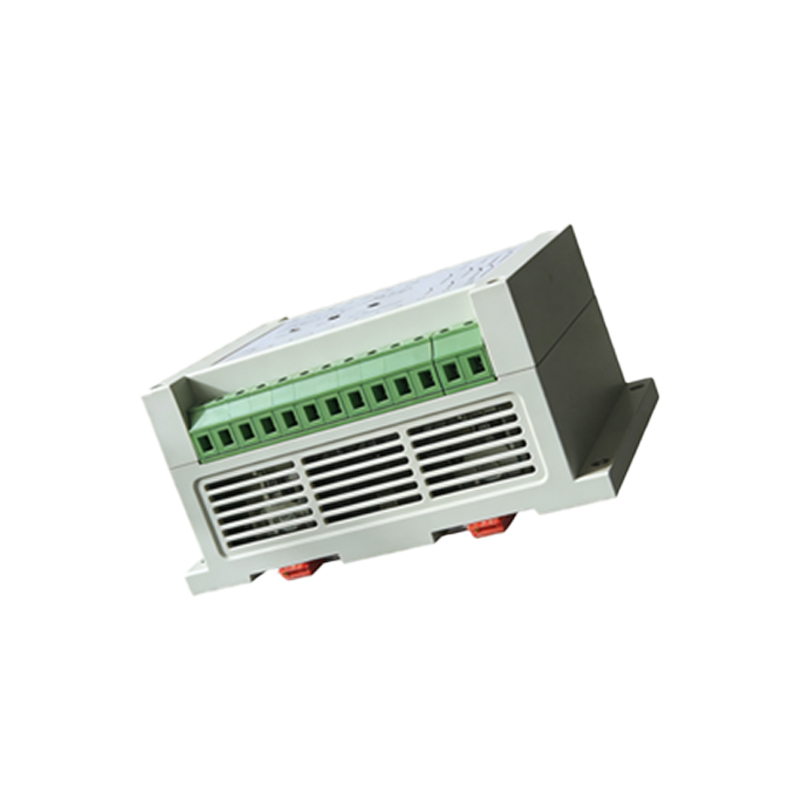
The superiority of Vogo photoelectric sensors stems from advanced technological integrations. One key feature is the use of modulated LED or laser light sources. Unlike continuous light, modulated beams are pulsed at specific frequencies, allowing the sensor's receiver to distinguish the signal from ambient light interference. This technology, known as synchronous detection, significantly enhances signal-to-noise ratio. Vogo employs various sensing modes to suit diverse applications. The through-beam type, with separate emitter and receiver units, offers the longest sensing range and highest reliability for object detection. Retro-reflective sensors use a combined unit and a reflector, ideal for detecting objects that may not have a highly reflective surface. Diffuse reflective sensors detect light reflected directly from the target, providing a compact, single-unit solution. Furthermore, Vogo integrates background suppression technology in many models. This allows the sensor to ignore objects beyond a set distance by triangulating the reflected beam's angle, ensuring it only detects targets within a precise range. For color or contrast detection, Vogo utilizes specialized models that analyze the intensity of reflected light at specific wavelengths, enabling tasks like label verification or sorting based on surface properties.
Application Spectrum in Industrial Settings
Vogo photoelectric sensors find extensive applications across numerous industrial sectors, enhancing efficiency and safety. In packaging and material handling, they are indispensable for object counting, jam detection, and ensuring correct box positioning on conveyor belts. Their high-speed response makes them perfect for detecting small, fast-moving items on production lines. Within the automotive industry, these sensors verify the presence of components during assembly, monitor robotic arm positions, and inspect part dimensions with micron-level precision. In the food and beverage sector, Vogo's washdown-rated sensors withstand harsh cleaning chemicals and high-pressure sprays, performing tasks like bottle cap inspection, fill level control, and packaging seal verification. Logistics and warehousing benefit from their use in automated guided vehicles (AGVs) for navigation and pallet detection. Furthermore, in electronic manufacturing, miniature Vogo sensors perform precise PCB board positioning and component insertion checks. Their ability to detect transparent objects, such as glass or clear films, is particularly valuable in pharmaceutical and consumer goods packaging. By providing non-contact sensing, they prevent product damage and contamination, which is crucial in sterile or cleanroom environments.
Advantages Over Alternative Sensing Technologies
When compared to other proximity sensing technologies like inductive, capacitive, or ultrasonic sensors, Vogo photoelectric sensors offer distinct advantages. Their primary benefit is the ability to detect a vast range of materials, including non-metallic objects like plastic, wood, glass, and liquids, which are invisible to inductive sensors. They provide much longer sensing distances—from a few millimeters up to several meters—far exceeding the range of typical capacitive sensors. The response time of photoelectric sensors is exceptionally fast, often in the microsecond range, enabling detection in ultra-high-speed applications where mechanical or ultrasonic sensors would be too slow. They also offer superior precision in positioning and sizing tasks. Unlike ultrasonic sensors, which can be affected by temperature variations or air turbulence, photoelectric sensors provide stable, repeatable measurements in controlled environments. Vogo enhances these inherent benefits with robust housing designs (e.g., metal or high-grade plastic), IP67/IP69K ingress protection ratings for durability against dust and water, and wide operating temperature ranges. Their sensors often include intuitive setup features like teach-in buttons or IO-Link digital communication for easy integration and diagnostics, reducing installation and maintenance complexity compared to more rudimentary sensor types.
Selection Criteria and Integration Guidelines
Selecting the appropriate Vogo photoelectric sensor requires careful consideration of several application parameters. First, determine the sensing mode: through-beam for maximum range and reliability, retro-reflective for easier alignment, or diffuse for a compact setup. The sensing distance must be calculated with a safety margin, considering the target object's size, color, and surface texture, as these affect reflectivity. For challenging surfaces like shiny or dark materials, Vogo offers sensors with polarized filters or background suppression. The environmental conditions are critical; factors such as ambient light, dust, fog, or temperature extremes necessitate choosing models with suitable protective housings, light immunity features, and operational ratings. The output type (e.g., NPN/PNP transistor, analog, or IO-Link) must be compatible with the controller or PLC. For installation, ensure precise optical alignment, secure mounting to minimize vibration effects, and use protective accessories like mounting brackets or sunshades if needed. Regular maintenance involves keeping the lens clean from obstructions and verifying performance through indicator LEDs or diagnostic tools. Vogo provides detailed datasheets and application notes to guide users through this selection process, ensuring optimal sensor performance and longevity within the automation system.
Future Trends and Innovations
The future of Vogo photoelectric sensors is intertwined with the evolution of Industry 4.0 and smart manufacturing. A significant trend is the increasing integration of intelligence and connectivity. Future sensors will feature enhanced digital interfaces like IO-Link, which provides not just a switching signal but detailed diagnostic data such as operating hours, temperature readings, and signal strength. This enables predictive maintenance, where the system can alert operators to potential failures before they cause downtime. Miniaturization continues to be a key focus, allowing sensors to fit into increasingly compact machinery and robotic end-effectors. There is also ongoing development in multi-functional sensors that combine photoelectric sensing with other measurement principles, such as distance measurement (using time-of-flight technology) or precise color recognition. Energy efficiency is another area of innovation, with low-power designs extending battery life in wireless sensor applications. Furthermore, Vogo is likely to incorporate advanced materials and optical designs to improve performance in extreme conditions, such as high-temperature foundries or deep-freeze storage. As machine vision and AI become more prevalent, photoelectric sensors will act as critical, reliable data points within larger, more complex sensor fusion systems, driving greater autonomy and efficiency in industrial operations.