What is a Photoelectric Sensor?
A photoelectric sensor is a device that uses a light transmitter, often an LED, and a photoelectric receiver to detect the presence, absence, or distance of an object. It operates on the principle of converting changes in light intensity into electrical signals. These sensors are fundamental components in industrial automation, packaging, material handling, and safety systems due to their non-contact operation, high speed, and long sensing ranges. Their ability to detect a wide variety of materials, including glass, metal, plastic, and liquid, makes them incredibly versatile for countless applications.
Through-Beam Sensors (Opposed Mode)
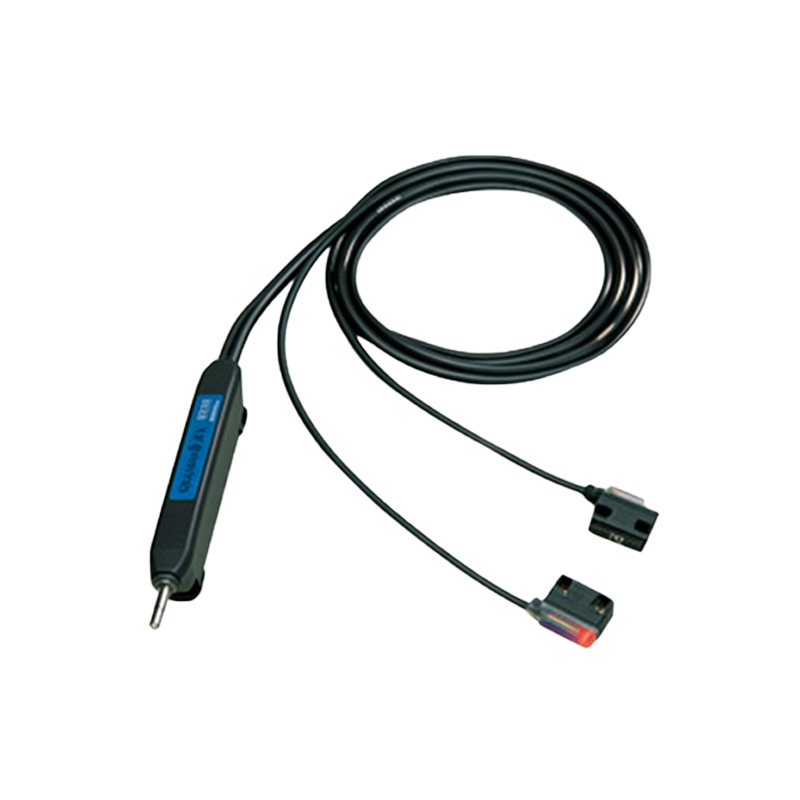
The through-beam sensor, also known as the opposed mode sensor, consists of two separate units: a transmitter and a receiver. The transmitter projects a continuous beam of light directly to the receiver. Detection occurs when an object physically interrupts this light beam. This type offers the longest sensing range and highest excess gain, meaning it is highly reliable even in dirty or dusty environments where light attenuation might occur. It is less susceptible to issues like color or surface reflectivity of the target object. Typical applications include detecting large objects on conveyor belts, checking for broken parts in assembly lines, and providing safety curtains for machinery guarding. The primary drawback is the need for precise alignment of two separate components and the higher installation cost associated with running wiring to both units.
Retro-Reflective Sensors
A retro-reflective sensor houses both the light transmitter and the receiver in a single housing. It projects a light beam towards a specialized reflector, often a corner-cube retroreflector, which reflects the light directly back to the receiver. An object is detected when it blocks this reflected beam. This design simplifies installation compared to through-beam sensors, as only one device needs wiring and alignment is with a passive reflector. The sensing range is shorter than through-beam but generally longer than diffuse sensors. A key feature is the use of polarizing filters to prevent false triggers from shiny objects. The transmitter emits polarized light, and the receiver has a filter that only accepts light that has been depolarized by the retroreflector. This makes them ideal for detecting glossy materials like metal cans or glass bottles without erroneous signals.
Diffuse Reflective Sensors (Proximity Mode)
The diffuse reflective sensor, or proximity sensor, integrates the emitter and receiver into one unit. It operates by detecting the light reflected directly off the surface of the target object itself. No separate reflector is needed. This makes it the most compact and easiest to install, as only a single device is required. However, its performance is highly dependent on the color, texture, and reflectivity of the object. Light-colored, smooth objects are detected at a greater distance than dark, rough, or absorbent ones. Sensing range is the shortest among the three main types. Advanced versions, known as background suppression or fixed-field sensors, use triangulation or other optical techniques to detect objects only within a specific, defined distance, ignoring the background. They are widely used for detecting objects at close range, counting, and presence detection on assembly lines.
Distance-Setting Reflective Sensors (Convergent Beam)
This specialized type of diffuse sensor is designed for precise detection at a predetermined distance. Often called convergent beam or fixed-focus sensors, they use a precise optical system where the emitted light beam converges at a specific focal point. The receiver is tuned to receive the maximum signal only when an object is positioned exactly at this focal point. Objects before or beyond this point reflect significantly less light. This allows for highly reliable detection of objects at an exact position, regardless of their color or reflectivity, within certain limits. It is exceptionally useful for applications like detecting the leading edge of a material on a roller, verifying the correct height of components, or ensuring objects are in a precise location before a machining operation. It combines some ease of installation of a diffuse sensor with much more consistent performance.
Choosing the Right Sensor Type
Selecting the appropriate photoelectric sensor type depends on several critical application factors. Consider the required sensing distance, the physical size and characteristics of the target object (color, material, surface finish), the environmental conditions (dust, moisture, ambient light), and installation constraints. For maximum range and reliability in harsh conditions, a through-beam sensor is preferred. When a moderate range is needed with simpler wiring, a retro-reflective sensor is an excellent choice. For close-range detection where only one side of the object is accessible, a diffuse sensor is standard, with a distance-setting variant chosen for precision. Understanding these four core operating principles is essential for specifying the optimal sensor to ensure robust and efficient system performance.