Introduction to Inductive Proximity Sensors
Inductive proximity sensors are fundamental components in industrial automation, renowned for their reliability and non-contact detection capabilities. These sensors operate on the principle of electromagnetic induction to detect the presence or absence of metallic objects within their sensing range. Unlike mechanical switches, they have no moving parts, leading to exceptional durability and a long operational life in harsh environments. The core of the sensor consists of a coil wound around a ferrite core, an oscillator, a signal evaluator, and an output switching circuit. When a metallic object enters the sensor's electromagnetic field, eddy currents are induced on the surface of the target. This causes a change in the oscillation amplitude within the sensor's coil, which is then detected and processed to trigger an output signal. This robust operating principle makes them immune to dust, dirt, oil, and other non-metallic contaminants, solidifying their position as a workhorse in manufacturing, packaging, material handling, and automotive assembly lines.
Core Operating Principles and Technology
The functionality of an inductive proximity sensor hinges on a high-frequency oscillating circuit that generates an alternating electromagnetic field at its active face. In the absence of a target, the oscillator runs at a constant amplitude. When a ferrous or non-ferrous metal object approaches this field, the electromagnetic properties change. For ferrous metals (like iron and steel), the object's high permeability concentrates the magnetic field lines, increasing the inductance of the coil. For non-ferrous metals (like aluminum, copper, or brass), the primary effect is the induction of eddy currents, which act against the sensor's own field, causing a decrease in the oscillation energy. The sensor's electronics continuously monitor this oscillation amplitude. A threshold circuit detects the drop (or change) and switches the solid-state output—typically a transistor (PNP or NPN)—to signal the object's presence. This all-electronic process occurs without any physical contact, ensuring wear-free operation.
Key Specifications and Selection Criteria
Selecting the correct inductive sensor requires careful consideration of several technical parameters. The nominal sensing distance (Sn) is a crucial specification, indicating the standard detection range for a defined standard target. It is vital to note that the effective sensing distance can vary with the target material's type, size, and shape. Factors such as temperature range, housing material (often nickel-plated brass, stainless steel, or PBT plastic), and ingress protection (IP) rating (e.g., IP67, IP69K) determine environmental suitability. Output configuration is another critical choice: 3-wire DC sensors with PNP (sourcing) or NNP (sinking) outputs are most common, while 2-wire AC/DC and 4-wire analog or IO-Link versions offer specialized functionality. Engineers must also consider switching frequency (response speed), repeat accuracy, and the presence of built-in diagnostics or protection against short-circuit, overload, and reverse polarity.
Target Material and Sensing Distance Factors
The performance of an inductive proximity sensor is intrinsically linked to the properties of the target material. Manufacturers specify sensing distances using a standard target, usually a square of mild steel (Fe360) with a thickness equal to the sensor's face diameter or 1mm, whichever is greater. For other materials, a reduction factor must be applied. Ferrous metals generally have a reduction factor close to 1.0, meaning they achieve nearly the full nominal sensing distance. Non-ferrous metals like aluminum and brass have reduction factors significantly less than 1 (e.g., 0.3 to 0.5), requiring much closer proximity for reliable detection. Copper and austenitic stainless steel (non-magnetic) have even lower factors. Furthermore, the target size must be at least equivalent to the sensor's active face area for the rated sensing distance. Smaller targets will reduce the effective range.
Common Types and Specialized Designs
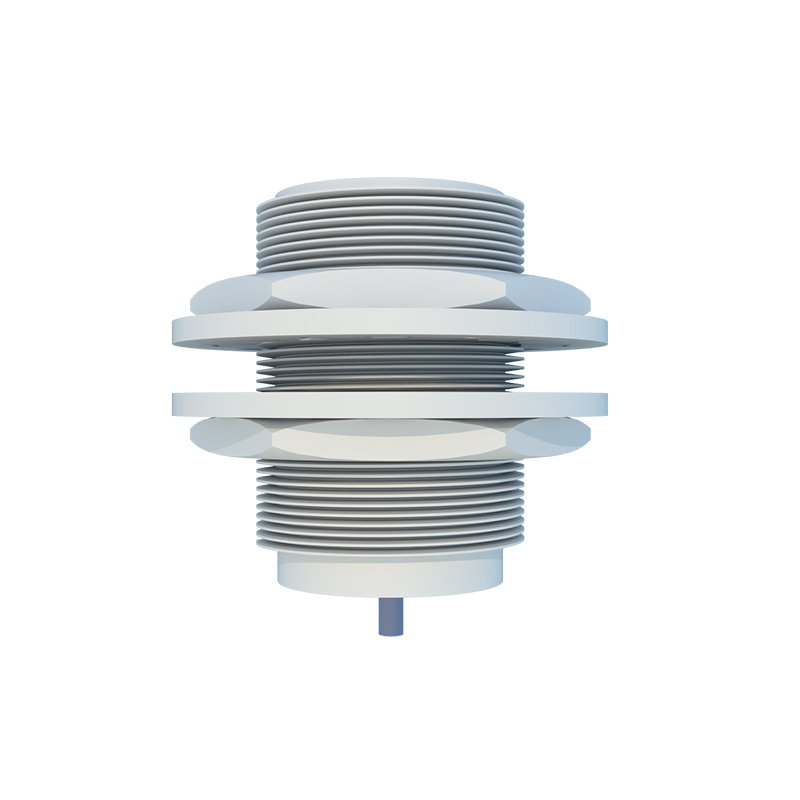
Beyond standard cylindrical (threaded barrel) models, inductive sensors come in various form factors to suit diverse applications. Rectangular or block-style sensors offer larger sensing ranges and are easier to mount. Slot sensors are designed to detect the teeth of a gear or the tabs of a encoder wheel. Analog output sensors provide a continuous voltage or current signal proportional to the distance to the target, enabling precise position monitoring. Factor-1 sensors are specially calibrated to provide the same sensing distance for all metals, simplifying application where target material varies. High-temperature sensors use specialized materials to withstand extreme heat near furnaces or welding equipment. Additionally, weld-field immune models are engineered to ignore the strong magnetic fields generated by resistance welding, preventing false triggering.
Typical Industrial Applications and Use Cases
The application spectrum for inductive proximity sensors is