Introduction to Reflective Photoelectric Sensors
Reflective photoelectric sensors are a cornerstone of modern industrial automation, offering non-contact detection of objects by utilizing a light emitter and a receiver housed within a single unit. These sensors operate on a simple yet effective principle: the emitter projects a beam of light, typically from an LED or laser diode, towards a target. The light is then reflected off the target's surface and captured by the receiver. By analyzing the intensity or modulation of the returned light, the sensor can determine the presence, absence, or distance of an object. Their self-contained design, which eliminates the need for a separate reflector, makes them highly versatile and easier to install than through-beam sensors, leading to widespread adoption in packaging, material handling, assembly, and robotics.
Diffuse Reflective Sensors
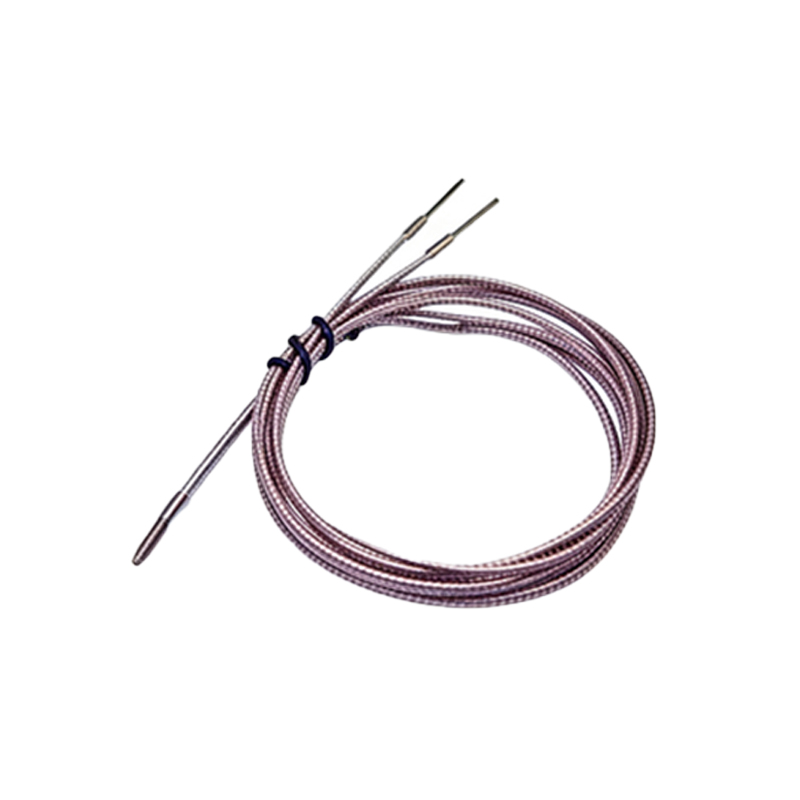
The most common type is the standard diffuse reflective sensor. In this configuration, the sensor emits a beam of light, and the detection occurs when an object enters the sensing field and reflects a sufficient amount of light back to the receiver. The effective sensing range is heavily dependent on the color, texture, and material of the target object. Light-colored, matte surfaces reflect well and provide a longer range, while dark, shiny, or absorbent surfaces can significantly reduce performance. These sensors are ideal for general-purpose applications like detecting the presence of boxes on a conveyor, counting objects, or verifying part placement where the target characteristics are relatively consistent and within the sensor's specified limits.
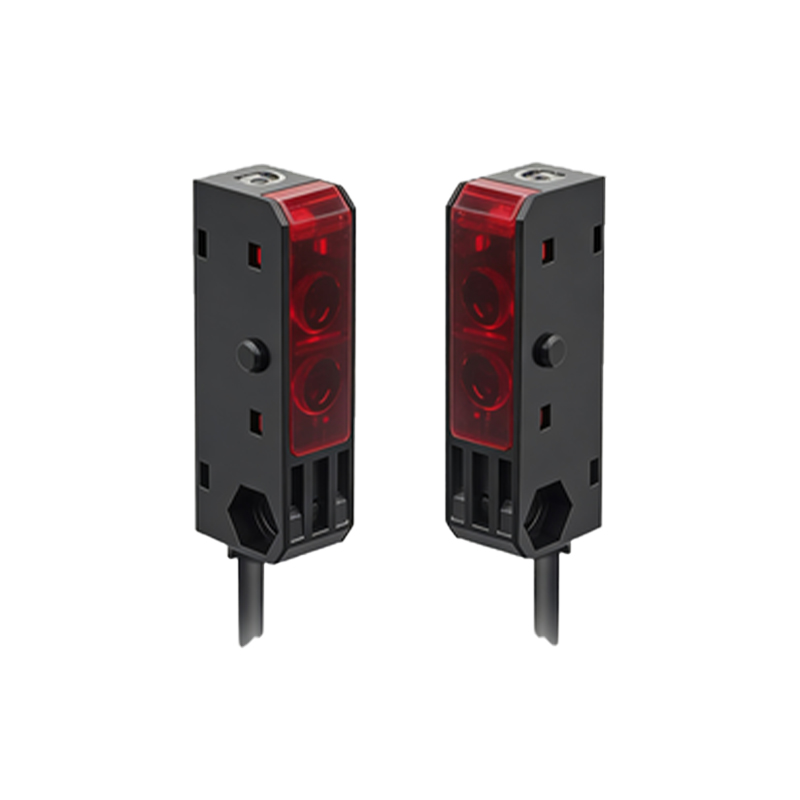
Background Suppression (BGS) Sensors
To overcome the limitations of standard diffuse sensors with varying surface properties, Background Suppression (BGS) sensors were developed. These advanced sensors use triangulation or a specialized optical system to measure the angle of the reflected light rather than just its intensity. They are precisely tuned to detect objects only within a specific, narrow distance band, effectively ignoring any background surfaces beyond this set range. This makes them exceptionally reliable for detecting objects regardless of color or surface finish. A classic application is detecting transparent bottles on a conveyor, where the sensor is set to ignore the conveyor belt in the background and only trigger when a bottle is present at the correct distance.
Retro-Reflective Sensors
Retro-reflective sensors, sometimes called reflex sensors, use a specialized reflector, such as a corner-cube or tape reflector, placed opposite the sensor. The emitter sends a beam to this reflector, which returns the light directly back to the receiver along the same path. An object is detected when it interrupts this beam. This design offers a longer sensing range than standard diffuse sensors and requires only a single wiring point. However, a key challenge is distinguishing a valid beam break from a signal caused by a highly reflective object, like a shiny metal part, which might also reflect light back. To solve this, many retro-reflective sensors employ polarization filters. The emitter sends polarized light, and the receiver has a filter that only accepts light depolarized by the corner-cube reflector, rejecting specular reflections from shiny objects.
Fiber Optic Reflective Sensors
For applications in extremely confined spaces, high-temperature environments, or areas with strong electromagnetic interference, fiber optic reflective sensors provide an elegant solution. The sensing electronics are housed in an amplifier unit located remotely in a safe area. Flexible or rigid fiber optic cables, containing both transmitting and receiving fibers, are used to guide light to and from the sensing point. The tip of the cable acts as a miniature diffuse sensor. This design allows for detection in tiny gaps, inside machinery, or in chemically aggressive environments where a standard sensor housing would not fit or survive. They are commonly used in semiconductor manufacturing, small parts assembly, and food processing equipment.
Laser-Based Reflective Sensors
Laser reflective sensors utilize a focused laser beam as the light source, offering significant advantages in precision and range. The small, intense spot size allows for the detection of very small objects or precise edge detection. They provide excellent background suppression capabilities and can achieve much longer sensing distances compared to LED-based sensors. Furthermore, some models are configured as laser distance measurement sensors, providing an analog output proportional to the distance to the target, which is invaluable for positioning and profiling applications. These sensors are critical in electronics assembly, precision metrology, and robotic guidance systems where accuracy is paramount.
Key Selection Criteria and Conclusion
Selecting the appropriate reflective photoelectric sensor requires careful consideration of several factors. The sensing range, target characteristics (size, color, material, and surface finish), required response time, environmental conditions (dust, moisture, ambient light), and output type (digital or analog) are all critical. Standard diffuse sensors offer cost-effective general detection, while BGS sensors handle challenging surfaces. Retro-reflective models are suited for long-range beam-break applications, and fiber optic or laser sensors address specialized needs for space, precision, or harsh conditions. Understanding the distinct capabilities of each reflective photoelectric sensor type empowers engineers to design more reliable, efficient, and intelligent automated systems, forming the essential sensory layer of Industry 4.0.