Introduction to the 402e14 Photoelectric Sensor
The 402e14 represents a significant advancement in the field of industrial photoelectric sensing. Engineered for reliability and precision, this sensor is a cornerstone component in modern automation systems. Its design focuses on delivering consistent performance in challenging environments, making it a preferred choice for engineers and system integrators. The core principle involves emitting a light beam, typically infrared, visible red, or laser, and detecting changes in the received light signal caused by the presence, absence, or characteristics of a target object. This fundamental operation enables a vast array of applications, from simple object detection to complex positioning and inspection tasks. The 402e14 model, in particular, is noted for its robust housing, advanced optics, and versatile output configurations, which collectively address the stringent demands of contemporary manufacturing and logistics.
Key Technical Specifications and Operating Principles
Delving into the technical specifications, the 402e14 sensor is characterized by several critical parameters. Its sensing range is a primary consideration, varying based on the specific model variant (diffuse, retro-reflective, or through-beam). The device typically operates on a standard industrial voltage range, such as 10-30V DC, ensuring compatibility with common control systems. Response time is exceptionally fast, often in the microsecond range, allowing for high-speed production line applications. The light source, a key component, is designed for longevity and stability, with LEDs that can operate for tens of thousands of hours. The operating principle hinges on modulation. The emitted light is pulsed at a specific frequency, and the receiver is tuned to detect only this modulated signal. This technique, known as synchronous detection, grants the 402e14 high immunity to ambient light interference from factory lighting, sunlight, or other machinery, a crucial feature for maintaining accuracy.
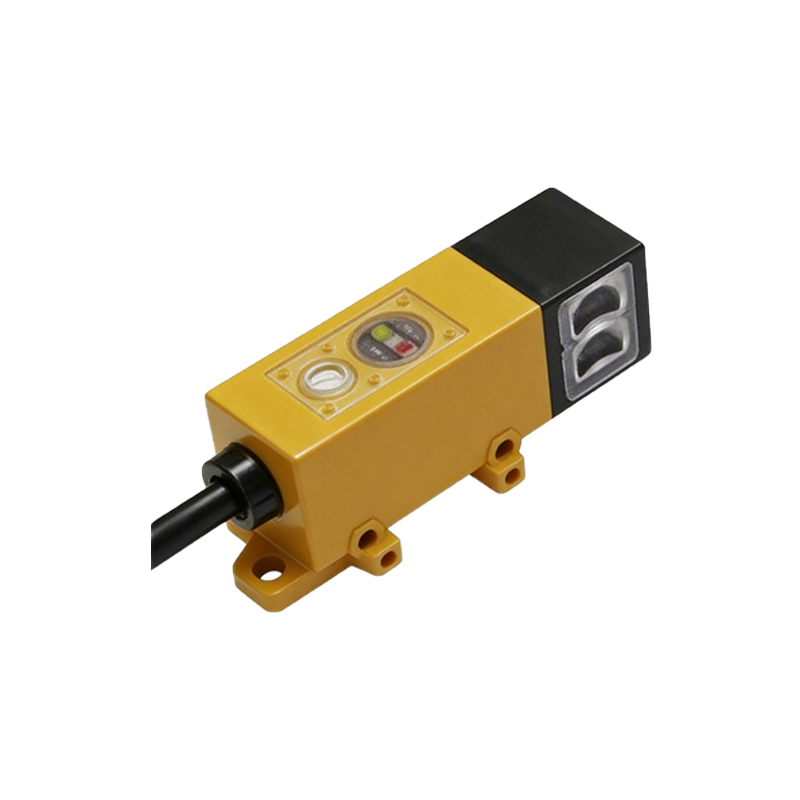
Versatile Sensing Modes and Configuration
The versatility of the 402e14 is largely due to its availability in multiple sensing modes. In the through-beam (or opposed) mode, the emitter and receiver are separate units. Detection occurs when an object breaks the beam between them, offering the longest sensing distances and highest reliability for opaque objects. The retro-reflective mode uses a single housing containing both emitter and receiver, along with a specialized reflector. An object is detected when it interrupts the beam to and from the reflector. This mode provides a good balance of range and ease of installation. Finally, the diffuse (or proximity) mode relies on light reflected directly from the target object itself. While sensing distance is shorter and can be affected by object color and surface texture, this mode allows for one-sided installation, which is invaluable in space-constrained applications. Many 402e14 units feature teach-in functionality or potentiometers for easy adjustment of sensitivity and response timing on-site.
Robust Design for Harsh Industrial Environments
Industrial environments pose significant challenges, including dust, moisture, vibration, and temperature extremes. The 402e14 photoelectric sensor is built to withstand these conditions. Its housing is commonly constructed from nickel-plated brass or high-grade industrial plastics, offering resistance to corrosion and physical impact. The optical lens is sealed to an ingress protection rating of IP67 or higher, meaning it is dust-tight and can withstand temporary immersion in water. This makes it suitable for washdown areas in food and beverage or pharmaceutical plants. Electrical connections are secure, often utilizing M12 or M8 quick-disconnect connectors for easy installation and maintenance. The internal circuitry is designed with protection against reverse polarity, short-circuits, and voltage spikes, ensuring operational stability and longevity even in electrically noisy environments common to factories.
Integration and Application in Automation Systems
Integration into a broader automation system is straightforward with the 402e14. Its output is typically a discrete signal—either a PNP (sourcing) or NPN (sinking) transistor switch—compatible with programmable logic controllers (PLCs), motor drives, and other control devices. Some advanced models may offer analog outputs or IO-Link communication for detailed diagnostics and parameter setting. Common applications are extensive. In packaging machinery, it detects missing labels or verifies case sealing. On assembly lines, it counts parts, checks for proper component placement, or controls robotic pick-and-place operations. In material handling, it positions pallets, detects stack height, or prevents conveyor jams. The sensor's precision also enables quality control tasks, such as detecting transparent bottles or verifying the presence of a liquid fill level.
Maintenance, Diagnostics, and Best Practices
While designed for durability, proper maintenance ensures optimal performance of the 402e14 sensor over its lifespan. Regular cleaning of the lens with a soft cloth is essential to prevent false triggers caused by dust, oil, or debris accumulation. Alignment should be periodically checked, especially for through-beam and retro-reflective setups, as vibration can cause misalignment over time. Many modern versions include built-in diagnostic indicators, such as a stable LED for power and a blinking or color-changing LED for output status and signal strength. Understanding these indicators is key to rapid troubleshooting. Best practices for installation include securing cables properly to avoid strain, avoiding mounting on surfaces that vibrate excessively, and ensuring that the sensing path is clear of reflective backgrounds or obstructions that could cause erratic behavior, particularly in diffuse sensing mode.
Conclusion and Future Outlook
The photoelectric sensor 402e14 exemplifies the engineering excellence required for industrial automation. Its blend of robust construction, advanced optical technology, and user-friendly configuration makes it an indispensable tool for enhancing productivity, safety, and quality. As Industry 4.0 and smart manufacturing evolve, sensors like the 402e14 are becoming integral nodes in interconnected systems, providing critical data for analytics and predictive maintenance. Future iterations may see enhanced connectivity, smarter onboard processing, and even greater miniaturization without sacrificing performance. For any engineer designing or maintaining an automated system, a deep understanding of the capabilities and applications of reliable components such as the 402e14 photoelectric sensor is fundamental to success.