Introduction to M8 Cylindrical Proximity Sensors
M8 cylindrical proximity sensors are compact, non-contact sensing devices widely used in industrial automation for detecting the presence or absence of metallic objects. Characterized by their 8mm diameter threaded barrel housing, these sensors offer a robust solution for applications with limited space. They operate on the principle of electromagnetic induction, generating an oscillating field that detects ferrous and non-ferrous metals without physical contact. This design ensures high reliability, long service life, and resistance to environmental factors like dust, moisture, and vibration, making them ideal for harsh manufacturing environments.
Key Technical Specifications and Variants
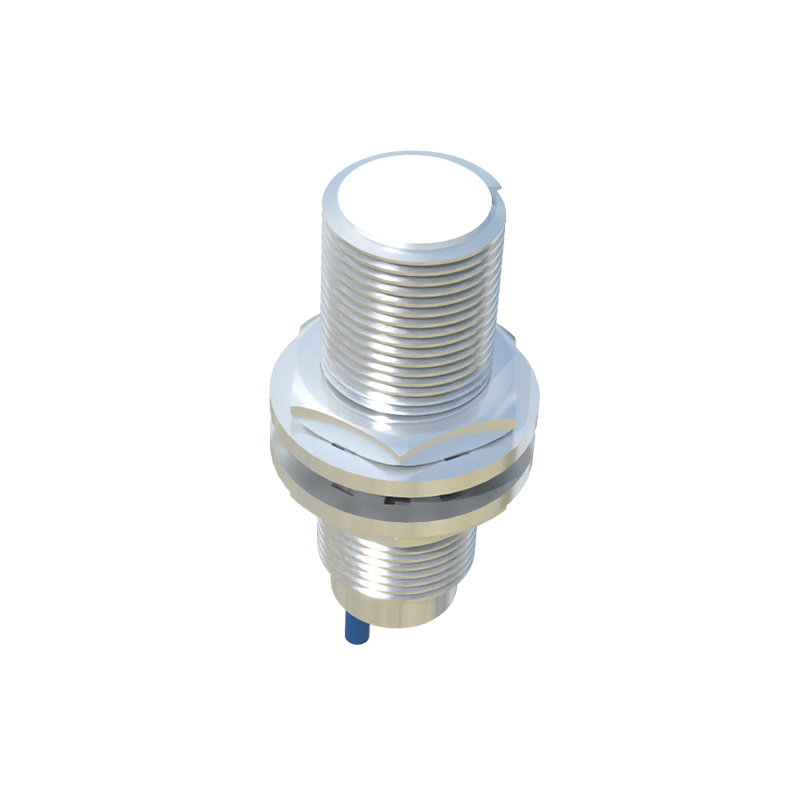
The performance of M8 proximity sensors is defined by several critical parameters. Sensing distance typically ranges from 1.5mm to 2mm, depending on the target material and sensor type (e.g., inductive, capacitive). Common variants include shielded (flush-mountable) and unshielded (non-flush) models, with NPN normally-open (NO), NPN normally-closed (NC), PNP NO, and PNP NC output configurations. Operating voltage is usually between 10-30V DC, with a switching frequency up to 1kHz. Housing materials like nickel-plated brass or stainless steel (IP67/IP68 rated) provide durability against mechanical stress and chemical exposure. Understanding these specs is crucial for selecting the right sensor for specific automation tasks.
Operating Principles and Detection Methods
Inductive M8 sensors contain an oscillator coil, demodulator, and output circuit. When a metallic target enters the active field, it induces eddy currents, dampening the oscillation and triggering a state change in the output signal. This allows for precise detection of objects like machine parts, conveyor components, or fasteners. Some advanced models feature analog outputs for distance measurement or teach-in functionality for adjustable sensing ranges. The non-contact nature eliminates wear and tear, ensuring consistent performance over millions of cycles without maintenance.
Installation and Wiring Considerations
Proper installation is vital for optimal sensor performance. The M8 threaded barrel allows easy mounting in standard nuts or brackets, with attention to alignment and clearance per manufacturer guidelines. Shielded sensors can be flush-mounted in metal without affecting range, while unshielded types require a non-metallic surround. Wiring involves connecting the brown wire (positive), blue wire (negative), and black wire (output signal) to a PLC or controller, adhering to voltage and current limits. Cable choices include PVC or PUR sheaths for flexibility and resistance to oils and abrasion.
Common Applications in Industrial Automation
These sensors are ubiquitous in automated systems. Typical uses include position sensing on linear actuators, end-of-travel detection in robotics, part counting on assembly lines, and jam detection in material handling. In packaging machinery, they verify cap presence on bottles; in CNC machines, they monitor tool position. Their small size enables integration into tight spaces like grippers or modular fixtures. By providing real-time feedback, M8 sensors enhance process control, safety, and efficiency across sectors from automotive to food processing.
Advantages Over Other Sensor Types
Compared to larger M12 or M18 sensors, M8 models save space and weight in compact designs. Versus photoelectric sensors, they are immune to ambient light, dust, and color variations, performing reliably in dirty conditions. Unlike mechanical limit switches, they have no moving parts, reducing failure risks. Their solid-state construction ensures fast response times (microseconds) and high repeatability. Additionally, cost-effectiveness and ease of replacement make them a preferred choice for high-volume OEM applications.
Maintenance and Troubleshooting Tips
While maintenance-free, periodic checks ensure longevity. Inspect for physical damage, clean lenses with non-abrasive cloths, and verify electrical connections. Common issues include false triggers from nearby metal interference—resolved by increasing separation—or output failure due to wiring errors. Use a multimeter to test voltage and signal continuity. For erratic behavior, check environmental factors like temperature extremes or electromagnetic noise. Following datasheet recommendations for mounting and operation minimizes downtime.
Future Trends and Innovations
Emerging trends include IO-Link communication for smart sensor networks, enabling parameter configuration and diagnostics via PLC. Miniaturization continues, with ultra-thin M8 models for micro-assembly tasks. Enhanced materials improve resistance to welding spatter and coolants. Integration with IIoT platforms allows predictive maintenance by monitoring sensor health data. As Industry 4.0 advances, M8 sensors will evolve with higher precision, connectivity, and energy efficiency, supporting smarter, more adaptive automation systems.