Introduction to Photoelectric Sensor Technology
Photoelectric sensors are fundamental components in modern industrial automation, playing a critical role in object detection, positioning, and quality control. These devices operate by emitting a beam of light, typically from an LED or laser diode, and detecting changes in the received light signal caused by the presence or absence of a target object. The technology's versatility, reliability, and non-contact nature make it indispensable across manufacturing, packaging, material handling, and automotive assembly lines. For engineers, technicians, and students, a deep understanding of the underlying principles, configurations, and application nuances is crucial for designing robust and efficient automated systems. This knowledge is best acquired through structured learning from authoritative technical books dedicated to the subject.
Core Principles and Sensor Types
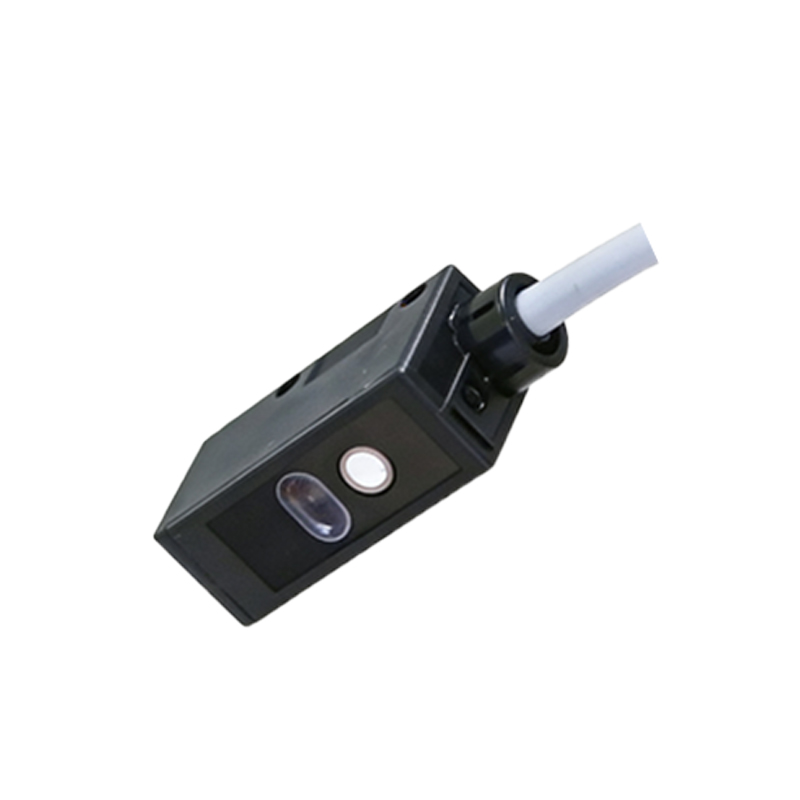
A comprehensive photoelectric sensor book begins by elucidating the core physics of light emission, transmission, and reception. It details the three primary sensing modes: through-beam, retro-reflective, and diffuse (proximity). Through-beam sensors, with separate emitter and receiver units, offer the longest sensing ranges and highest reliability. Retro-reflective types use a reflector to bounce light back to a co-located receiver, simplifying installation. Diffuse sensors detect light reflected directly from the target itself, making them compact and easy to install but more susceptible to target color and surface finish. Advanced texts delve into specialized variants like background suppression sensors, which ignore objects beyond a set distance, and fiber optic sensors, which guide light through flexible cables for use in harsh or confined spaces. Understanding the strengths and limitations of each type is the first step in proper selection.
Key Technical Specifications and Selection Criteria
Selecting the right sensor for an application requires careful analysis of technical parameters. Authoritative guides provide exhaustive coverage of specifications such as sensing range, response time, light source type (red, infrared, laser), and output configuration (PNP/NPN, analog, IO-Link). They explain critical concepts like excess gain, which quantifies a sensor's ability to overcome environmental challenges like dust, fog, or dirty lenses. Books often include detailed selection matrices and flowcharts, helping engineers match sensor capabilities to application demands like detecting small parts, transparent materials, or high-speed objects. A significant portion is dedicated to environmental considerations, including IP ratings for water and dust resistance, temperature tolerances, and resistance to chemicals or vibration, ensuring long-term reliability in industrial settings.
Circuit Design and Interfacing
Beyond basic operation, practical books serve as essential references for integrating sensors into control systems. They cover the electrical characteristics of sensor outputs, detailing how to interface them with Programmable Logic Controllers (PLCs), microcontrollers, and other industrial controllers. Chapters are devoted to wiring diagrams, load considerations, and protection circuits to prevent damage from electrical noise, surges, or incorrect connections. For modern smart sensors featuring IO-Link or other industrial communication protocols, guides explain how to leverage these for advanced diagnostics, parameter setting, and data exchange, moving beyond simple switch functionality. Troubleshooting sections, complete with schematic diagrams and measurement procedures, are invaluable for diagnosing common field issues like unstable operation or intermittent faults.
Application-Specific Solutions and Case Studies
The true value of a specialized technical book lies in its practical application insights. Quality publications are rich with real-world case studies from diverse industries. Examples might include precise bottle cap detection on a filling line, verifying the presence of a label on a package, counting items on a high-speed conveyor, or ensuring correct positioning of a robotic gripper. These case studies analyze the problem, compare potential sensor solutions, and justify the final selection, often highlighting clever solutions to challenging conditions like detecting clear glass, shiny metal, or in environments with heavy ambient light. Such practical examples bridge the gap between theoretical knowledge and field implementation, equipping the reader with problem-solving frameworks.
Installation, Alignment, and Maintenance Best Practices
Even the best sensor can fail if installed incorrectly. Detailed manuals dedicate sections to mechanical mounting, optical alignment, and commissioning procedures. They provide best practices for securing sensors, aligning through-beam pairs or retro-reflectors, and using alignment tools for precise setup. Maintenance chapters outline routine procedures for cleaning lenses, checking mounting stability, and verifying performance through diagnostic LEDs or software tools. Preventive maintenance schedules and checklists help minimize unplanned downtime. Furthermore, advanced books discuss the integration of sensor diagnostics into plant-wide predictive maintenance systems, allowing for proactive component replacement before failure occurs.
Future Trends and Advanced Technologies
The field of photoelectric sensing is continuously evolving. Contemporary and forward-looking books explore emerging trends such as the miniaturization of sensors, the integration of multi-functional sensing (e.g., distance measurement combined with color detection), and the increasing use of laser-based sensors for ultra-high precision. The convergence of traditional photoelectric sensors with Industrial Internet of Things (IIoT) platforms is a key topic, explaining how sensor data can be aggregated and analyzed for process optimization and overall equipment effectiveness (OEE) calculations. Understanding these trends allows engineers to future-proof their designs and stay ahead in a competitive technological landscape.
Recommended Reading and Authoritative References
For those seeking to build or deepen their expertise, several seminal texts and publisher series are considered industry standards. Books from established technical publishers like Springer, ISA (International Society of Automation), and vendor-specific handbooks from leading sensor manufacturers (e.g., Banner Engineering, Sick AG, Omron, Keyence) are highly regarded. These resources range from foundational textbooks suitable for university courses to dense, application-heavy handbooks for practicing engineers. When selecting a book, one should consider the publication date to ensure coverage of the latest technologies, the author's industry credentials, and the inclusion of practical diagrams, graphs, and application notes that enhance the learning experience.