Introduction to Proximity Switch Sensors
In the realm of industrial automation, proximity switch sensors are indispensable components for non-contact detection. Among the various operating voltages available, the 24V DC variant stands out as an industry standard, prized for its balance of safety, reliability, and compatibility with common Programmable Logic Controller (PLC) and control system power supplies. These sensors operate by generating an electromagnetic field or a beam of radiation. When a target object enters this field, the sensor detects its presence without any physical contact, triggering a solid-state output signal. This fundamental principle makes them ideal for harsh environments where mechanical wear, contamination, or repeated impact would quickly degrade traditional mechanical limit switches.
Core Operating Principles and Types
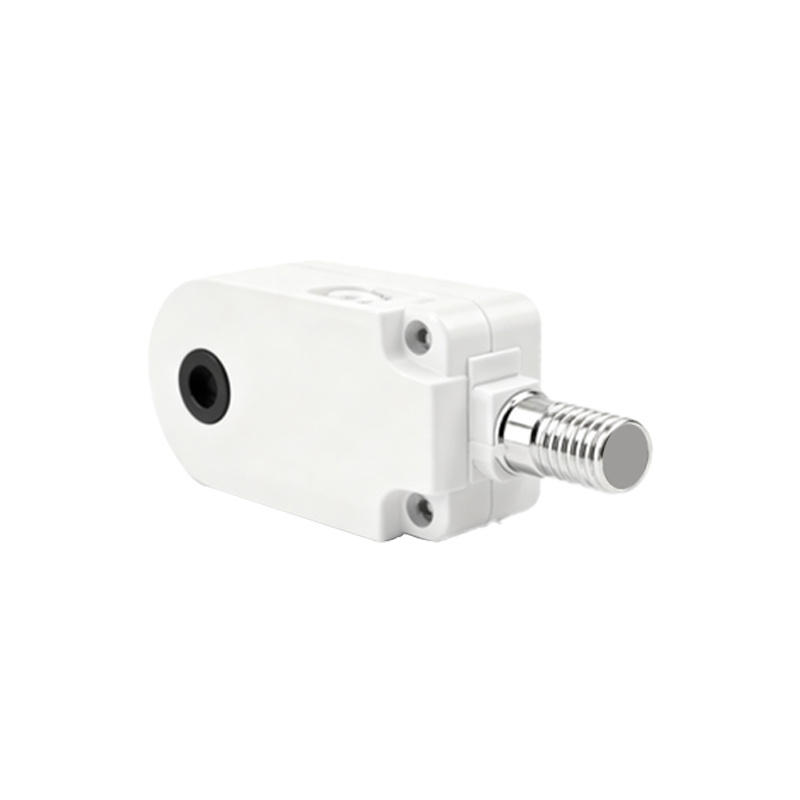
24V proximity sensors are primarily categorized by their underlying sensing technology. The most prevalent type is the inductive proximity sensor. Designed to detect metallic objects, typically ferrous metals like steel and iron, they generate an oscillating electromagnetic field from a coil. The presence of a metal target dampens this oscillation, which the sensor's internal circuitry detects and converts into a switching signal. Another major category is the capacitive proximity sensor. These can detect both metallic and non-metallic materials, including liquids, plastics, wood, and granular substances. They function by sensing changes in capacitance caused by the target object entering the electrical field surrounding the sensor's active face. For applications requiring detection of transparent or highly reflective materials, diffuse reflective photoelectric sensors, which also commonly operate at 24V DC, are often employed, using a light beam and receiver in a single housing.
Key Specifications and Selection Criteria
Selecting the correct 24V proximity sensor requires careful consideration of several technical parameters. The sensing distance, or nominal range, is critical and must be chosen with a safety margin, typically 70-80% of the rated value, to account for environmental factors and part tolerances. The housing material, such as nickel-plated brass, stainless steel, or PBT plastic, must withstand the specific environmental conditions, including exposure to coolants, oils, or washdowns. Output configuration is another vital decision; sensors come in NPN (sinking) or PNP (sourcing) transistor outputs, and the choice must match the input requirements of the connected controller. Furthermore, factors like switching frequency (response speed), temperature rating, and protection class (e.g., IP67 for dust and temporary immersion) are essential for ensuring long-term, trouble-free operation in demanding plant floors.
Wiring and Electrical Integration
The widespread adoption of 24V DC as a control voltage is largely due to its safety (SELV - Safety Extra-Low Voltage) and noise immunity. Wiring a 3-wire 24V DC sensor is straightforward. The brown wire (or +) connects to the 24V DC supply positive, the blue wire (or -) to the supply negative (0V), and the black wire is the switched output signal. For a PNP sensor, the black wire sources current to the load (e.g., a PLC input). For an NPN sensor, it sinks current from the load to ground. It is crucial to include a protective device, such as a fuse or circuit breaker, in the supply line. Many sensors also feature a built-in LED status indicator, which provides immediate visual confirmation of power and switching state, greatly aiding in installation and troubleshooting.
Common Applications Across Industries
The versatility of 24V proximity sensors leads to their deployment in countless applications. In automotive manufacturing, they verify the presence of parts on assembly lines, count components, and control robotic end-of-arm tooling. In packaging machinery, they detect fill levels, monitor film breaks, and confirm case positioning. On material handling systems, they provide position feedback for actuators, detect jams on conveyors, and serve as limit switches for linear slides and elevators. Their robust, non-contact nature makes them perfect for applications involving high-speed counting, precise positioning, and ensuring machine safety by confirming guards are closed or tools are retracted before a cycle begins.
Installation Best Practices and Troubleshooting
Proper installation is key to sensor performance and longevity. Sensors must be mounted securely to prevent vibration-induced failure. It is critical to maintain the specified lateral and axial clearance from surrounding metal structures to avoid false triggering. For inductive sensors, different metals have different correction factors; for instance, the sensing range for aluminum is significantly less than for mild steel. Common issues include failure to detect targets, which may stem from incorrect sensor type, insufficient sensing range, or a misaligned target. Constant output activation can be caused by sensor damage, metallic debris in the sensing field, or electrical noise interference. A systematic