Decoding the Alphanumeric Puzzle
Proximity sensor model numbers are not random strings of letters and digits; they are a coded language designed by manufacturers to convey critical information about the sensor's specifications, features, and intended application. Much like a vehicle identification number (VIN), each segment of a model number typically represents a distinct attribute. For engineers, procurement specialists, and maintenance personnel, understanding this coding system is essential for selecting the correct sensor, ensuring compatibility, and streamlining inventory management. The primary goal of this nomenclature is to pack maximum information into a compact identifier, allowing for quick reference and reducing specification errors during the design and replacement phases.
Common Elements in Model Number Structures
While every manufacturer has its unique system, several common elements appear across the industry. A typical model number might be structured as PS-18M-8D-EP. Let's break down what each segment could represent. The prefix, often 2-3 characters like 'PS', 'PR', or 'IN', usually indicates the product family or type—in this case, 'Proximity Sensor'. The following numeric segment, '18', frequently denotes the sensor's diameter in millimeters, a key physical dimension. The letter 'M' might specify the sensing technology, such as 'M' for inductive, 'C' for capacitive, or 'U' for ultrasonic. The '8' could indicate the sensing distance in millimeters. The 'D' often refers to the output type, like 'D' for DC 3-wire, 'A' for AC 2-wire, or 'N' for NPN/PNP. Finally, suffixes like 'EP' may indicate special features, such as extended temperature range, enhanced protection (IP rating), or specific connector types.
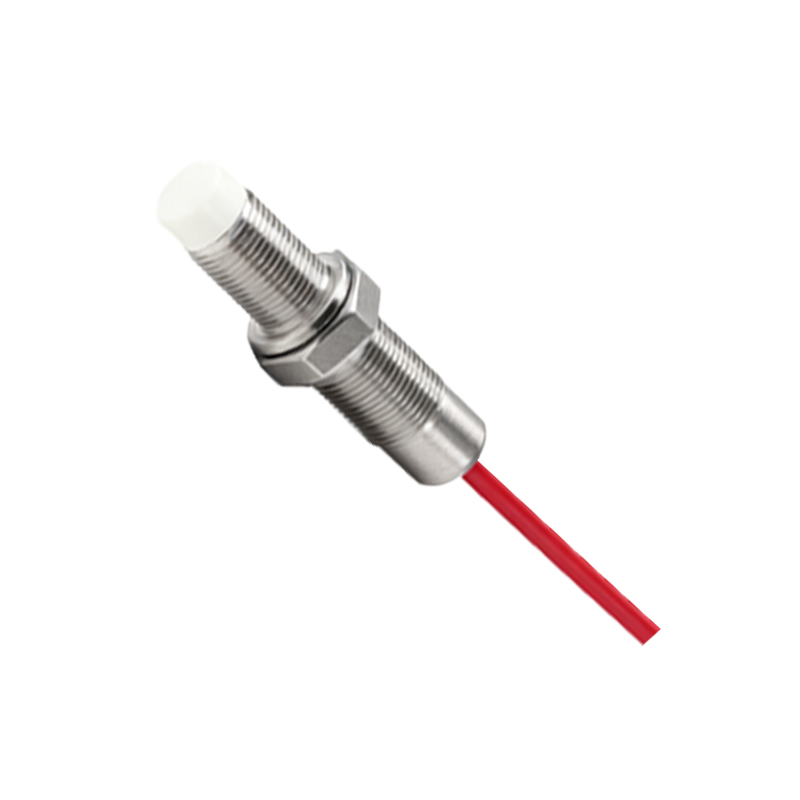
Technology and Sensing Type Indicators
One of the most critical pieces of information encoded is the sensing technology. This directly determines what kind of target the sensor can detect. Inductive sensors, the most common for metal detection, are often denoted by codes like 'I', 'IN', or 'M'. Capacitive sensors, capable of detecting non-metallic materials, may use 'C', 'CA', or 'K'. Ultrasonic sensors might be labeled 'U', 'US', or 'S'. Photoelectric sensors have a vast array of prefixes and codes like 'PE', 'FX', or 'BGS' for background suppression. Magnetic sensors (reed or Hall effect) often use 'MG' or 'H'. Misinterpreting this single character can lead to complete system failure, as an inductive sensor will not detect a plastic bottle, nor will a standard capacitive sensor reliably detect a small steel screw at a distance.
Electrical Specifications and Output Configuration
The electrical characteristics are paramount for integration into a control system. This part of the model number defines voltage ranges, output type, and wiring. Codes like 'DC', 'AC', 'DC/AC' specify the supply voltage. Output configuration is crucial: 'NO' or 'NC' for normally open or normally closed; '2W' for 2-wire AC; '3W' for 3-wire DC; and '4W' for dual-output or relay types. Furthermore, the transistor type for DC sensors is vital: 'NPN' (sinking) or 'PNP' (sourcing). A model number segment might simply state 'N' or 'P', or use a more complex code like 'NOC' for NPN normally open. Connecting a PNP sensor to an NPN input card, or vice versa, will result in malfunction, making accurate decoding a necessity for functional circuit design.
Physical Dimensions and Housing Material
The physical form factor is another key aspect. Cylindrical sensor diameters (e.g., M8, M12, M18, M30) are almost always indicated. Rectangular or block-style sensors may encode their dimensions (e.g., 40x40x20). The housing material is also frequently implied or explicitly stated. 'S' or 'SS' often denotes stainless steel housing, critical for wash-down or corrosive environments. 'B' might indicate brass, 'P' plastic (PVC, PBT), or 'N' nickel-plated brass. The housing material affects not only environmental robustness (IP67, IP69K) but also the sensing performance, as certain materials can influence the sensing field of inductive and capacitive models.
Special Features and Application-Specific Variants
The suffix or final segments of a model number are where manufacturers denote special features that differentiate a standard sensor from a specialized one. These codes can be extensive. 'E' or 'EP' might mean extended temperature range