Introduction to Sensing Technologies
In the rapidly evolving landscape of industrial automation, the choice of sensing technology is critical for optimizing performance, safety, and efficiency. Two prominent technologies that often come under consideration are photoelectric sensors and millimeter wave (mmWave) radar sensors. While both serve the fundamental purpose of detection, measurement, and object recognition, their underlying principles, capabilities, and ideal applications differ significantly. This article provides a detailed technical comparison to guide engineers and system integrators in selecting the most appropriate solution for their specific operational challenges. Understanding the distinct advantages and limitations of each technology is the first step toward building a more robust and intelligent automated system.
Fundamental Operating Principles
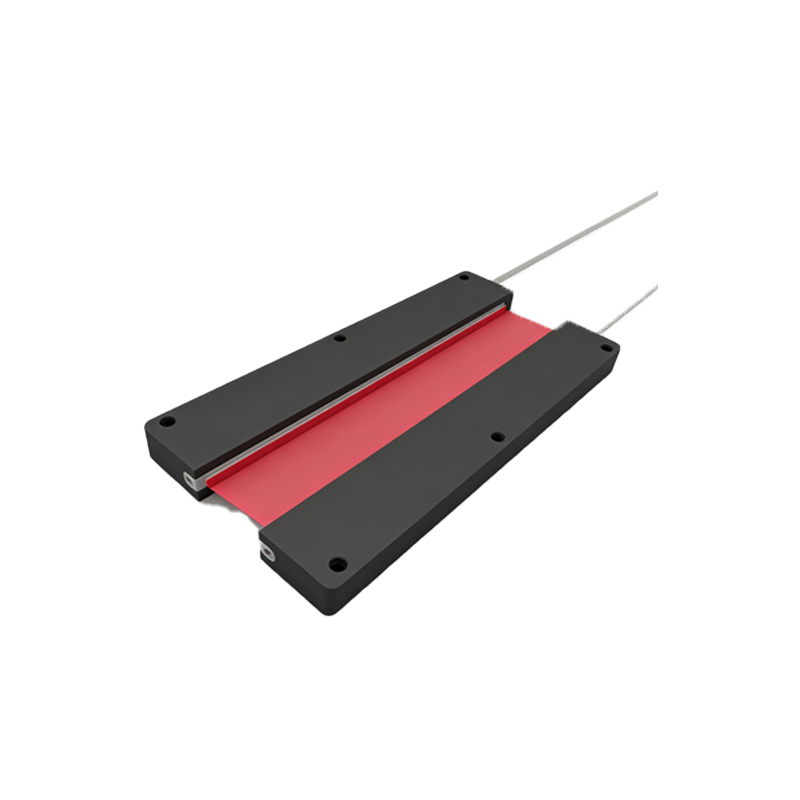
Photoelectric sensors operate on the principle of light transmission and reception. They typically consist of an emitter (often an LED or laser diode) that projects a light beam and a receiver that detects changes in the received light. Detection occurs when the target object interrupts (through-beam), reflects (retro-reflective), or diffuses (diffuse) this light beam. The technology is highly dependent on the optical properties of the target and the environmental conditions affecting light propagation. In contrast, millimeter wave radar sensors function by emitting continuous wave or frequency-modulated radio waves in the 30 GHz to 300 GHz spectrum. They detect objects by analyzing the reflected signal, measuring parameters like time-of-flight, frequency shift (Doppler effect), and signal amplitude. MmWave radar perceives the world based on the dielectric properties and movement of objects, making it largely indifferent to visual obscurants like dust, smoke, or fog.
Key Performance Characteristics and Limitations
Photoelectric sensors excel in applications requiring high precision and fast response times. They can achieve extremely fine resolution, detecting very small objects or precise edges, with response speeds in the microsecond range. Their limitations are primarily environmental: performance degrades in the presence of airborne contaminants, heavy rain, or direct sunlight interference. They can also be challenged by transparent or highly reflective surfaces. Millimeter wave radar, on the other hand, offers superior performance in harsh environments. It penetrates non-metallic materials like plastic, glass, and drywall to some degree and is completely unaffected by lighting conditions, dust, or steam. Its key strengths include accurate velocity measurement and the ability to detect objects through certain obstructions. Limitations include generally lower spatial resolution compared to laser-based systems, potential interference from other radio sources, and more complex signal processing requirements.
Typical Industrial Applications
The application scope defines the technology choice. Photoelectric sensors are the workhorses of factory automation. Common uses include object detection on high-speed conveyor belts, precise bottle cap alignment in packaging, wafer counting in semiconductor fabrication, and web break detection in printing. Their simplicity, cost-effectiveness, and precision make them ideal for clean, controlled environments. Millimeter wave radar finds its niche in challenging conditions. It is increasingly used for tank level measurement through sight glasses, presence detection in dusty mining operations, traffic monitoring and vehicle speed detection, and as a safety sensor for autonomous guided vehicles (AGVs) operating in dynamic, unstructured spaces. Its ability to measure distance and speed simultaneously is a unique advantage in logistics and material handling.
Considerations for System Integration
Integrating these sensors into a larger control system involves different considerations. Photoelectric sensors are typically straightforward, offering digital or analog outputs that connect directly to PLCs (Programmable Logic Controllers). Setup often involves simple alignment and sensitivity adjustment. Millimeter wave radar sensors are more complex. They output rich data points (distance, speed, angle) that may require an embedded processor or a dedicated industrial PC for advanced analysis and object classification. This adds to the system's computational load but also enables more sophisticated functionalities, such as tracking multiple objects or filtering out background clutter. The choice impacts network architecture, software development, and overall system intelligence.
Future Trends and Convergence
The future points not toward one technology replacing the other, but toward their strategic convergence and individual advancement. Photoelectric sensors are seeing improvements with the adoption of new light sources, like VCSELs (Vertical-Cavity Surface-Emitting Lasers), for better efficiency and longer ranges. Smart sensors with IO-Link communication are adding diagnostic and parameterization capabilities. In the mmWave domain, the advent of highly integrated, cost-effective radar-on-chip solutions is democratizing access. Furthermore, sensor fusion—combining the precise, high-resolution data from a photoelectric sensor with the robust, velocity-aware data from a mmWave radar—is an emerging trend for creating ultra-reliable perception systems in complex industrial IoT and Industry 4.0 applications.