Introduction to Phase Proximity Sensing
Phase proximity sensors represent a sophisticated category of non-contact detection devices widely utilized in industrial automation and control systems. Unlike standard inductive or capacitive sensors, these units operate on the principle of detecting changes in the phase angle of an oscillating signal when a metallic target enters their electromagnetic field. This fundamental operating principle grants them a distinct set of characteristics, making them exceptionally suitable for demanding applications where precision, reliability, and environmental resilience are paramount. Their ability to function effectively in the presence of contaminants, varying temperatures, and electromagnetic interference has cemented their role in modern manufacturing, robotics, and automotive assembly lines.
High Precision and Repeatability
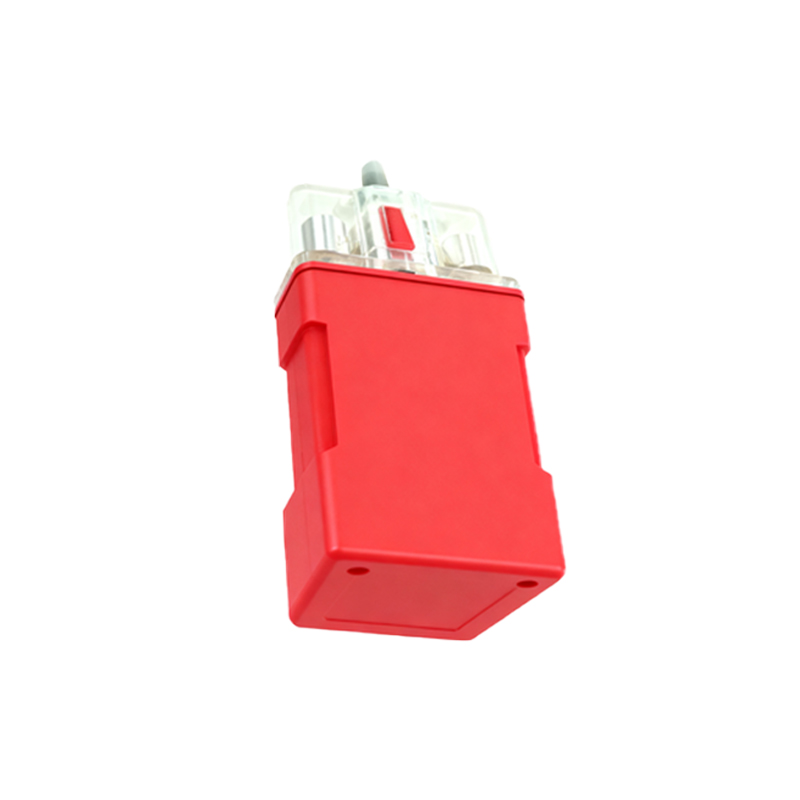
One of the most significant features of phase proximity sensors is their exceptional precision and repeatability. The technology's reliance on phase shift measurement, rather than simple amplitude change, allows for highly accurate detection of a target's presence or absence. This results in minimal hysteresis and outstanding repeat accuracy, often in the micrometer range. Consequently, they are indispensable in applications requiring precise positioning, such as in CNC machining centers for tool wear monitoring, in semiconductor manufacturing for wafer handling, or in automated assembly for part verification. The consistent performance ensures process stability and reduces the likelihood of errors in high-speed production environments.
Immunity to Environmental Interference
Industrial settings are often rife with potential sources of interference, including dust, oil, coolant mists, and strong electromagnetic fields from nearby machinery. Phase proximity sensors exhibit remarkable immunity to such environmental factors. Their sealed housings, typically rated IP67 or higher, protect internal electronics from ingress of solids and liquids. More critically, the phase-detection circuitry is inherently less susceptible to false triggering caused by electromagnetic noise or the presence of non-target materials compared to conventional sensors. This robustness ensures reliable operation in harsh conditions found in metalworking, food processing, and outdoor applications, minimizing downtime and maintenance requirements.
Extended Sensing Range and Reduced Dead Zone
These sensors often offer a longer nominal sensing range relative to their physical size compared to standard inductive proximity switches. The advanced signal processing enables detection of metallic objects at greater distances, providing more flexibility in machine design and sensor mounting. Furthermore, a notable feature is the reduced or virtually non-existent "dead zone" directly in front of the sensor's active face. In standard sensors, an object placed too close cannot be detected. Phase proximity sensors mitigate this issue, allowing for reliable detection even when a target is in immediate proximity to the sensing surface. This characteristic is crucial for applications involving small or thin targets and in tightly spaced mechanical assemblies.
Advanced Diagnostics and Output Flexibility
Modern phase proximity sensors are frequently equipped with intelligent features and flexible output options. Many models incorporate built-in diagnostic capabilities, such as LED indicators for signal strength, switch point indication, and fault detection (e.g., short-circuit or wire-break monitoring). This facilitates quick installation, troubleshooting, and predictive maintenance. Outputs can include standard discrete signals (PNP/NPN), analog current or voltage outputs proportional to distance, or even digital IO-Link communication. IO-Link connectivity allows for parameterization, real-time data exchange, and integration into Industry 4.0 networks, enabling detailed process monitoring and control from a central supervisory system.
Material and Target Independence
While primarily designed for ferrous metals, many phase proximity sensors demonstrate a degree of target material independence or can be tuned for specific alloys. Some advanced versions can differentiate between various metals or are calibrated to detect non-ferrous metals like aluminum, copper, or brass with high reliability. This reduces the need for stocking multiple sensor types for different materials on a production line. The consistent switching point regardless of the target's surface condition (e.g., rusty, painted, or polished) is another valuable trait, ensuring that sensor calibration remains valid over time and across different batches of material.
Conclusion and Application Spectrum
In summary, the defining features of phase proximity sensors—high precision, environmental robustness, extended range, intelligence, and target versatility—make them a superior choice for critical industrial sensing tasks. Their applications span a vast spectrum, from simple object detection on conveyor belts to complex tasks like controlling robotic gripper positions, monitoring spindle orientation, verifying part presence in welding fixtures, and ensuring safety in automated guided vehicles. As industrial processes demand greater efficiency and smarter automation, the role of reliable and feature-rich sensors like phase proximity types will continue to expand, driving improvements in quality, safety, and productivity across numerous sectors.