Introduction to Two-Key Proximity Sensors
In the realm of industrial automation, proximity switch sensors are fundamental components for detecting the presence or absence of objects without physical contact. Among the various configurations available, the two-key proximity sensor represents a specialized design offering enhanced functionality and control. These sensors typically incorporate two distinct sensing elements or operational keys within a single housing, allowing for more complex detection tasks, such as bidirectional sensing, differential measurement, or the implementation of safety interlocks. Unlike standard single-point sensors, the dual-key design enables precise monitoring of object position, direction of movement, or the verification of specific conditions, making them invaluable in sophisticated machinery, robotic systems, and high-reliability production lines. Their operation is based on electromagnetic, capacitive, or inductive principles, with the two keys often independently configurable to suit specific application requirements.
Core Operational Principles and Design
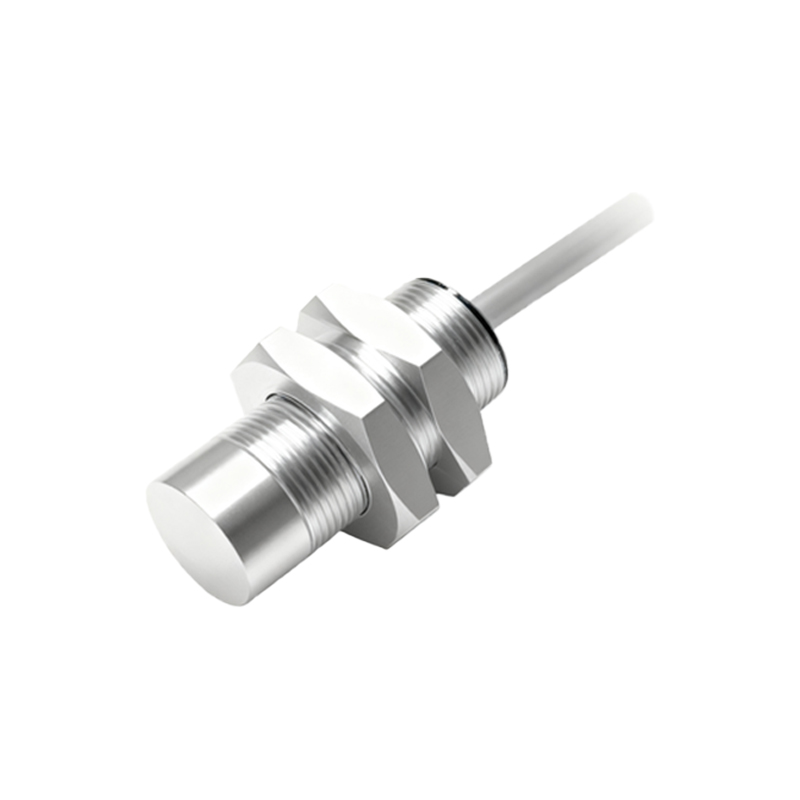
The functionality of a two-key proximity sensor hinges on its internal architecture. Each "key" refers to an independent sensing face or detection zone. In an inductive two-key sensor, for example, each key contains a coil that generates an oscillating electromagnetic field. When a metallic object enters the field of one key, it causes a change in oscillation amplitude or frequency, which the sensor's circuitry detects and converts into a switching signal. The two keys can be positioned to detect objects from different angles or at staggered distances. Advanced models feature programmable logic controllers (PLCs) integration, allowing the outputs of the two keys to be linked logically—for instance, requiring both keys to be activated (AND logic) or either one to be activated (OR logic) to trigger a control action. This design is crucial for applications requiring redundancy, sequence verification, or edge detection on moving parts.
Key Applications in Industrial Settings
Two-key proximity sensors find extensive use across diverse industrial sectors due to their versatility. In material handling and packaging systems, they are employed to detect the leading and trailing edges of products on conveyors, ensuring precise cutting or labeling. Within automotive assembly lines, these sensors verify the correct positioning of components by checking two reference points simultaneously, preventing misalignment. Another critical application is in safety systems, where the two keys act as a monitoring pair for machine guarding; if an object (like a hand) breaks the sensing field of both keys in a specific sequence, the system can initiate an emergency stop. Furthermore, in robotics, they facilitate complex pick-and-place operations by confirming gripper closure or object orientation through dual-point detection, enhancing operational accuracy and repeatability.
Configuration, Calibration, and Installation Guidelines
Proper setup is paramount for optimal performance of two-key proximity sensors. Installation begins with selecting the appropriate sensor type (inductive, capacitive, or ultrasonic) based on the target material and environmental conditions. Mounting must ensure that the sensing faces are correctly aligned with the target path, maintaining the specified sensing distance (Sn) for each key. Calibration often involves adjusting the sensitivity or hysteresis for each key independently to avoid cross-talk or false triggering. Many modern sensors come with teach-in functionality or IO-Link communication, simplifying parameterization through software. Wiring should adhere to manufacturer specifications, typically involving separate output lines for each key (e.g., PNP or NPN outputs). Environmental factors like temperature extremes, vibration, and exposure to chemicals must be considered, potentially necessitating sensors with high IP (Ingress Protection) ratings. Regular maintenance, including cleaning of sensing faces and checking for electrical integrity, ensures long-term reliability.
Advantages Over Single-Key Sensors
The primary advantage of a two-key design lies in its ability to perform more intelligent detection tasks within a compact footprint. By integrating two sensing points, it reduces the need for multiple single sensors, cutting down on installation space, wiring complexity, and overall system cost. It enhances diagnostic capabilities; for example, if one key fails or drifts out of calibration, the system can often flag the issue based on comparative readings from the paired key. This redundancy improves system availability and safety. Additionally, the dual-key setup allows for faster response in applications requiring differential measurement, such as speed monitoring or direction sensing, as the time delay between activations of the two keys can be precisely measured. This leads to more efficient process control and higher throughput in automated systems.
Common Challenges and Troubleshooting Tips
Despite their robustness, two-key proximity sensors can encounter operational challenges. Interference between the two keys, known as mutual interference, may occur if they are positioned too closely, leading to erratic switching. This is mitigated by following minimum separation distances specified in datasheets or using sensors with shielded designs. Another issue is false triggering from non-target objects or environmental noise, which can