Introduction to Shengzhou's Photoelectric Sensor Industry
Shengzhou has emerged as a significant and respected hub for the manufacturing of photoelectric sensors, carving out a niche in the global electronics and industrial automation supply chain. The city's manufacturers specialize in producing a wide array of sensors, including through-beam, retro-reflective, diffuse, and fiber optic types. These components are critical for applications ranging from object detection and counting on high-speed production lines to precise positioning in robotic assembly and safety monitoring in automated systems. The industry in Shengzhou is characterized by its commitment to integrating advanced optical technologies, robust electronic design, and durable mechanical housing to meet the stringent demands of modern industrial environments.
Core Technological Capabilities and Production Expertise
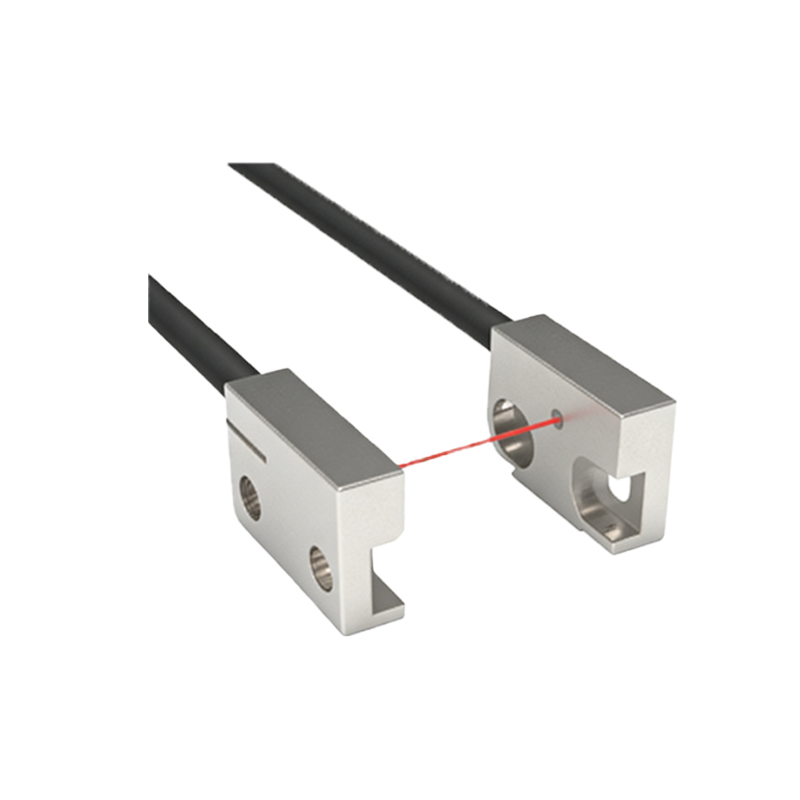
The production facilities in Shengzhou are equipped with state-of-the-art machinery for precision molding, automated SMT (Surface Mount Technology) assembly lines, and rigorous calibration and testing laboratories. A key strength lies in the deep expertise in optoelectronics. Engineers focus on optimizing the performance of key components such as LEDs (often infrared, red, or laser), phototransistors, and integrated receiver circuits. This involves meticulous design to achieve desired sensing ranges, high switching frequencies, and immunity to ambient light interference. Manufacturers here are proficient in producing sensors with various output configurations—including NPN, PNP, analog, and IO-Link digital outputs—to ensure compatibility with diverse PLCs and control systems worldwide.
Quality Assurance and Reliability Standards
Quality control is paramount in Shengzhou's photoelectric sensor manufacturing process. Every production batch undergoes a series of stringent tests, including thermal cycling, vibration testing, ingress protection (IP67/IP69K) validation, and long-term endurance runs. These procedures ensure that the sensors can perform reliably in harsh conditions involving dust, moisture, temperature extremes, and mechanical shock. Many factories adhere to international quality management systems like ISO 9001 and implement rigorous incoming quality control (IQC) and outgoing quality control (OQC) protocols. This relentless focus on reliability builds trust with OEMs and system integrators who require components with minimal failure rates and long service life.
Customization and Application-Specific Solutions
Beyond standard catalog products, Shengzhou manufacturers excel at providing customized sensor solutions. They work closely with clients to develop sensors with unique form factors, specific sensing ranges, specialized lens materials for aggressive environments, or integrated logic functions. Common customization requests involve modifying housing materials to resist chemicals, designing sensors for extremely small or large detection distances, or creating arrays for complex contour detection. This flexibility allows clients to source precisely tailored components, optimizing both performance and cost-effectiveness for their specific machinery or automated processes, from packaging and material handling to automotive manufacturing and semiconductor fabrication.
Global Supply Chain Integration and Logistics
Shengzhou's photoelectric sensor industry is deeply integrated into the global supply chain. Factories maintain efficient logistics networks to ensure timely delivery of components and finished goods to international markets. They manage complex supply chains for raw materials like optical-grade plastics, semiconductor wafers, and copper alloys. By leveraging nearby port facilities and established freight partnerships, they offer reliable just-in-time delivery options to support global manufacturing operations. This logistical competence, combined with competitive pricing derived from scaled production and vertical integration of some component manufacturing, makes Shengzhou a compelling source for high-volume procurement.
Future Trends and Innovation Focus
Looking forward, manufacturers in Shengzhou are actively investing in R&D to align with Industry 4.0 trends. This includes enhancing sensor intelligence by integrating more advanced diagnostics, predictive maintenance features, and easier configuration via Bluetooth or web interfaces. There is a growing emphasis on miniaturization without compromising performance, enabling sensors to fit into increasingly compact machinery. Furthermore, development is ongoing in areas like high-precision color sensors, contrast sensors, and sensors capable of reliable performance in highly reflective or low-contrast environments. By focusing on these innovative frontiers, Shengzhou aims to solidify its position not just as a manufacturing center, but as a source of next-generation sensing technology.
Conclusion: A Strategic Partner for Automation
In summary, the photoelectric sensor manufacturers in Shengzhou represent a blend of sophisticated engineering, rigorous quality management, and customer-centric flexibility. They have evolved from component suppliers to strategic partners for companies driving automation across diverse sectors. For engineers and procurement specialists seeking reliable, high-performance, and cost-effective sensing solutions, engaging with the expertise concentrated in Shengzhou offers a significant advantage in developing competitive and robust automated systems for the global market.