Introduction to Cross Photoelectric Sensors
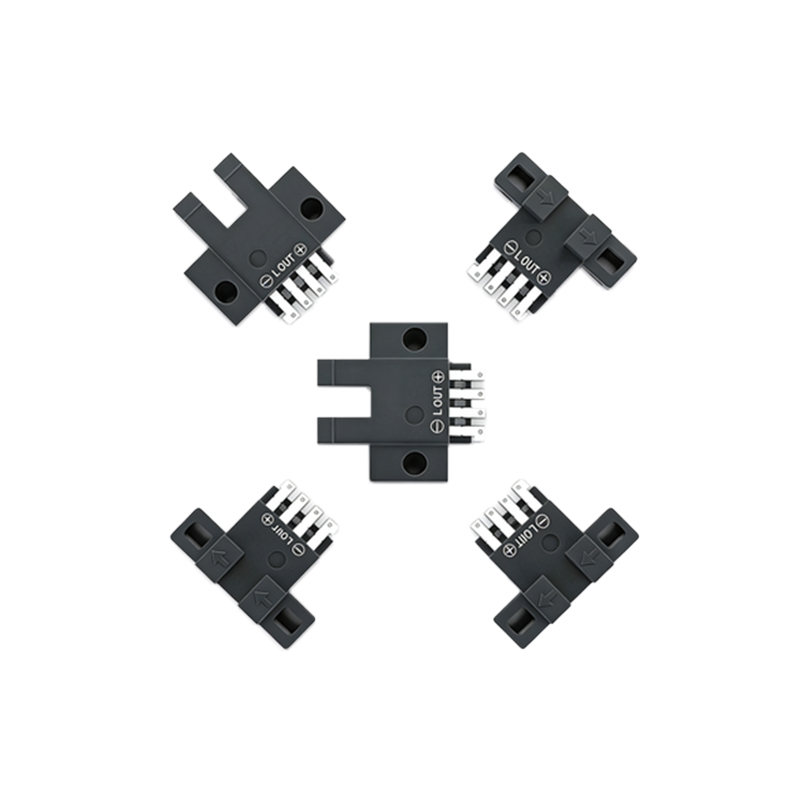
Cross photoelectric sensors, often referred to as through-beam sensors, represent a fundamental and highly reliable category in industrial sensing technology. Unlike their reflective counterparts, these sensors consist of two separate units: a transmitter and a receiver. The transmitter emits a continuous or modulated beam of light, typically infrared, visible red, or laser, which is then captured by the receiver positioned directly opposite. The core operating principle is elegantly simple: an object is detected when it physically interrupts this light beam between the two units. This straightforward mechanism grants cross photoelectric sensors exceptional performance characteristics, including long sensing distances, high precision, and immunity to the object's color, reflectivity, or surface texture. Their robustness makes them indispensable in demanding industrial environments where consistent, fail-safe detection is paramount.
Core Operating Principles and Advantages
The effectiveness of cross photoelectric sensors stems from their separated design. The transmitter and receiver are precisely aligned, creating a well-defined detection zone. Because the receiver only needs to detect the presence or absence of the transmitted beam, it can be highly sensitive without being confused by ambient light or reflections from the target itself. This leads to several key advantages. First, they offer the longest possible sensing ranges among photoelectric sensors, capable of detecting objects over distances of tens or even hundreds of meters. Second, they provide extremely high positional accuracy, as the detection point is exactly where the beam is broken. Third, they are largely unaffected by the optical properties of the target; a clear glass bottle or a matte black rubber piece will be detected with equal reliability. This makes them ideal for applications involving varied or unpredictable objects.
Typical Industrial Applications
Cross photoelectric sensors find widespread use across virtually every manufacturing and logistics sector. A primary application is in object counting and presence detection on high-speed conveyor lines, such as in packaging, bottling, and automotive assembly. Their long range and precision make them perfect for monitoring large areas, like gate or door control, and for safety curtains on hazardous machinery to protect personnel. In material handling, they are used to detect jams, monitor stack heights, and ensure correct positioning of pallets or products. The logistics industry relies on them for parcel dimensioning and sortation system guidance. Furthermore, their ability to detect transparent objects, like glass or plastic films, is a critical function in many production processes where other sensor types would fail.
Key Selection Criteria for Engineers
Selecting the appropriate cross photoelectric sensor requires careful consideration of several technical parameters. The sensing distance is the foremost factor; engineers must choose a model whose rated range exceeds the actual installation gap, accounting for potential misalignment and environmental factors. The light source type is crucial: infrared LEDs are common for general purpose use, visible red beams aid in alignment, and laser diodes provide a very narrow, precise beam for small object detection. Environmental resistance ratings, such as IP67 or IP69K for water and dust ingress, and NEMA ratings for industrial durability, are essential for harsh conditions. Other considerations include response time for high-speed applications, output configuration (PNP/NPN, relay), power supply requirements, and the availability of specialized housings or mounting accessories for easy integration.
Installation, Alignment, and Maintenance Best Practices
Proper installation is critical to realizing the full performance of cross photoelectric sensors. The initial alignment of the transmitter and receiver must be precise. Many models feature alignment indicators, such as LED signals that change brightness or pattern when optimal reception is achieved. Using a visible light beam greatly simplifies this process. Secure mounting on stable surfaces or using vibration-resistant brackets prevents misalignment from machinery movement. To avoid false triggers, the beam path should be kept clear of obstructions like dust, steam, or fluctuating ambient light sources; using sensors with modulated light can mitigate interference from ambient light. Routine maintenance involves periodically cleaning the lenses of both units to prevent buildup of dirt or grime that can attenuate the light signal, and verifying the alignment and output signal during scheduled downtime.
Comparison with Other Photoelectric Sensing Modes
Understanding where cross photoelectric sensors fit relative to diffuse-reflective and retro-reflective sensors is key to system design. Diffuse-reflective sensors house the emitter and receiver in one unit, detecting light reflected off the target. They are simpler to install as only one device needs mounting, but their sensing distance is shorter and performance can vary with target color and surface. Retro-reflective sensors also use a single housing but rely on a reflector; they offer longer ranges than diffuse models but can be fooled by shiny objects that reflect the beam directly. The cross photoelectric sensor, while requiring two separate units and careful alignment, provides superior range, consistency, and reliability, making it the preferred choice for the most critical or challenging detection tasks where performance cannot be compromised.