Introduction to Proximity Sensors
Proximity sensors are a fundamental component in modern industrial automation and electronic systems. These devices detect the presence or absence of an object within a specified range without any physical contact. This non-contact detection capability is crucial in applications where reliability, speed, and durability are paramount. Unlike mechanical limit switches, proximity sensors offer a longer operational life, higher switching rates, and immunity to environmental factors like dust, oil, and moisture. They are ubiquitous in manufacturing lines, automotive assembly, packaging machinery, and consumer electronics, serving as the "eyes" of automated systems by providing critical input for control logic.
Core Operating Principles
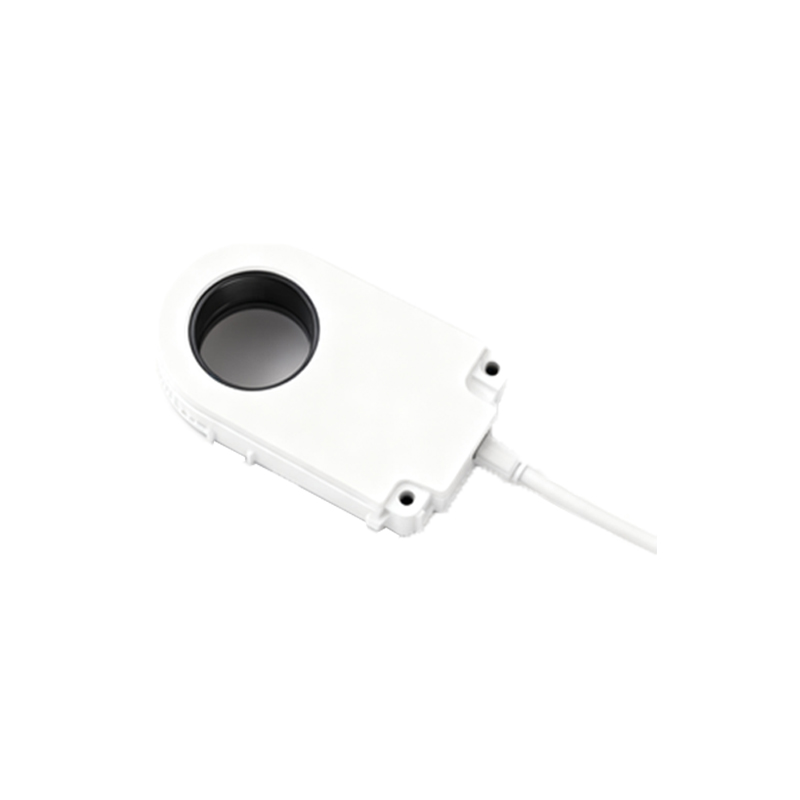
The operation of a proximity sensor is based on the disturbance of an electromagnetic field, acoustic wave, or light beam. The most common types are inductive, capacitive, and photoelectric sensors. An inductive proximity sensor generates an oscillating electromagnetic field from its sensing face. When a metallic object enters this field, eddy currents are induced on the object's surface. These currents absorb energy from the oscillator, causing a reduction in the amplitude of oscillation. This change is detected by the sensor's circuitry, which then triggers a switching output. This principle makes inductive sensors ideal for detecting metals.
Inductive Sensor Specifics
Inductive sensors are highly effective for ferrous and non-ferrous metal detection. Their sensing range depends on the actuator material, size, and shape. Standard sensing distances typically range from a few millimeters to about 60 millimeters. They are characterized by a high switching frequency, often exceeding several thousand Hertz, allowing for the detection of very fast-moving objects. A key feature is their hysteresis, which is the difference between the switch-on and switch-off points. This hysteresis prevents output chattering when an object is at the exact sensing limit, ensuring stable and reliable switching even with object vibration.
Capacitive Sensor Functionality
Capacitive proximity sensors can detect both metallic and non-metallic materials, including liquids, powders, plastics, and wood. They operate by generating an electrostatic field. The sensor and the target act as two plates of a capacitor. As a target approaches the sensing face, it alters the dielectric constant of the space between them, changing the capacitance of the oscillator circuit. When this change reaches a predetermined threshold, the sensor activates its output. These sensors are particularly useful in level detection applications for tanks containing liquids or granular solids, and for detecting non-metallic objects on conveyor belts.
Photoelectric Sensing Explained
Photoelectric sensors use light to detect objects. They consist of an emitter (light source, typically LED) and a receiver. There are three main operating modes: through-beam, retro-reflective, and diffuse. In through-beam mode, the emitter and receiver are separate units; an object is detected when it interrupts the light beam. Retro-reflective mode uses a single unit with a built-in reflector; detection occurs when the beam is broken. Diffuse mode, or proximity mode, relies on the reflection of light from the target itself back to the receiver. Photoelectric sensors offer the longest sensing ranges and can detect virtually any material, provided it affects the light beam.
Magnetic and Ultrasonic Variants
Beyond the primary types, magnetic proximity sensors (Reed switches or Hall-effect sensors) detect the presence of a permanent magnet. They are simple, cost-effective, and used in door/window security systems and position sensing. Ultrasonic proximity sensors emit high-frequency sound waves and evaluate the echo received back. They measure the time interval between sending the signal and receiving the echo to calculate the distance to an object. This technology is excellent for detecting objects of any material, shape, or color, and is used in challenging environments where optical sensors might fail due to dust, fog, or target translucency.
Output Configurations and Wiring
Proximity sensors provide discrete on/off signals to a controller like a PLC. Common output types include NPN (sinking) and PNP (sourcing) for DC sensors, and Normally Open (NO) or Normally Closed (NC) configurations. The choice depends on the control system's input module requirements. Wiring typically involves three or four wires: power supply positive, power supply negative, output signal, and sometimes a separate output for a diagnostic LED. Proper shielding and installation are critical to avoid electrical noise interference, especially in environments with variable frequency drives or welding equipment.
Key Selection Criteria
Selecting the correct proximity sensor requires analyzing several application parameters. The primary factor is the target material, which dictates whether an inductive, capacitive, or photoelectric sensor is needed. Other critical considerations include the required sensing distance, the physical size and shape of the