Introduction to M8 Photoelectric Sensors
Imported M8 photoelectric sensors represent a critical category of industrial automation components, renowned for their precision, reliability, and compact form factor. The "M8" designation refers to the standardized 8mm threaded cylindrical housing, a form factor that has become ubiquitous in factory automation and machinery design. These sensors operate on the fundamental principle of converting light signals into electrical outputs. Typically, they consist of an emitter, which projects a light beam (often infrared, red, or laser), and a receiver that detects changes in this beam. The disruption or reflection of this beam by an object triggers a switching action in the sensor's output circuit. Imported variants, often originating from technological leaders in Europe, North America, and Japan, are frequently sought after for their advanced engineering, stringent quality control, and proven performance in demanding environments. They are integral to countless applications requiring non-contact detection, positioning, and counting.
Key Technologies and Operating Modes
Understanding the core operating modes is essential for selecting the correct imported M8 sensor. The three primary modes are through-beam, retro-reflective, and diffuse reflective. Through-beam models feature separate emitter and receiver units. An object is detected when it interrupts the beam traveling between them. This mode offers the longest sensing ranges and highest reliability, as it is largely immune to object color or surface finish. Retro-reflective sensors house both emitter and receiver in a single unit, using a reflector to bounce the beam back. Detection occurs when an object blocks this reflected beam. They are ideal for applications where mounting space is limited on one side of the target. Diffuse reflective sensors, also self-contained, detect objects by measuring the light reflected directly off the target's surface. While sensing distance is shorter and can be influenced by color and texture, they offer the simplest installation with no separate components.
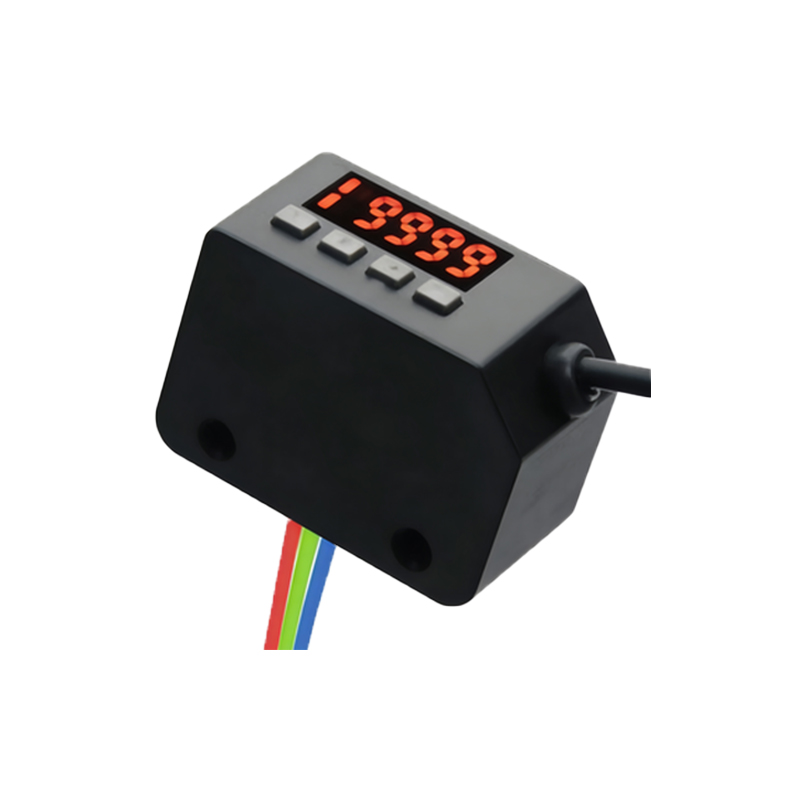
Critical Selection Criteria for Imported Models
Choosing the right imported M8 photoelectric sensor requires careful consideration of several technical parameters. Sensing range is paramount; it must accommodate the application's physical constraints. Response time, often in microseconds, determines the sensor's capability for high-speed counting or detection on fast-moving production lines. The type of light source—infrared for stability, red light for visibility during alignment, or laser for precision—impacts performance. Environmental robustness is a hallmark of premium imported sensors. Look for high Ingress Protection (IP) ratings (e.g., IP67) for resistance to dust and water, wide operating temperature ranges, and resistance to vibrations. Output configuration (NPN/PNP, NO/NC) must be compatible with the host controller (PLC). Finally, specialized features like background suppression, which ignores objects beyond a set distance, or polarized filters for shiny object detection, can solve complex application challenges.
Prominent Applications in Modern Industry
The versatility of imported M8 photoelectric sensors ensures their deployment across a vast spectrum of industries. In packaging machinery, they are indispensable for detecting the presence of boxes, bottles, or labels on conveyors, ensuring proper filling and sealing sequences. Within the automotive sector, these sensors verify part presence in assembly jigs, count components, and monitor robotic arm positions. On semiconductor and electronics production lines, their precision is leveraged for wafer handling, PCB positioning, and component verification. Material handling systems use them for pallet detection, stack height control, and conveyor jam prevention. Their small size also makes them perfect for integration into compact medical devices, vending machines, and automated guided vehicles (AGVs) for obstacle detection and navigation.
Advantages of Sourcing Imported M8 Sensors
Opting for imported M8 photoelectric sensors from established global manufacturers confers significant advantages. First and foremost is superior quality and consistency. These brands invest heavily in research and development, resulting in sensors with exceptional accuracy, long-term stability, and minimal drift over time. They undergo rigorous testing and certification processes (e.g., CE, UL), ensuring compliance with international safety and performance standards. The technical support and documentation provided are typically comprehensive, aiding in correct selection, installation, and troubleshooting. Furthermore, the global supply chain and distribution networks of major import brands often guarantee better availability and shorter lead times for replacements or system expansions, minimizing production downtime.
Installation and Maintenance Best Practices
Correct installation is crucial to realizing the full performance of an imported M8 photoelectric sensor. Always follow the manufacturer's datasheet for mounting distances, alignment procedures, and electrical connections. Ensure the sensor is securely fastened to prevent misalignment from vibration. For through-beam and retro-reflective types, precise alignment is critical; use the sensor's alignment indicator (if available) or monitor the output status during setup. Avoid mounting sensors where they will be exposed to direct, intense ambient light, which can interfere with operation. For maintenance, regular cleaning of the lens with a soft, lint-free cloth is recommended to prevent false triggers from dust or oil accumulation. Periodically verify the sensing function and check for physical damage to cables or housings as part of a preventive maintenance routine.
Future Trends and Conclusion
The evolution of imported M8 photoelectric sensors continues, driven by Industry 4.0 and smart factory trends. Future iterations will feature enhanced connectivity, such as IO-Link, enabling digital parameter setting, remote diagnostics, and condition monitoring data directly to control systems. Miniaturization will progress further without sacrificing range or robustness. Integration of advanced optics and smarter onboard processors will improve immunity to challenging backgrounds and complex surfaces. In conclusion, imported M8 photoelectric sensors are a foundational technology for industrial automation. Their compact size, operational reliability, and adaptability, backed by the engineering excellence of global manufacturers, make them a prudent investment for ensuring efficiency, precision, and reliability in virtually any automated process. Careful selection based on application needs will yield optimal performance and a strong return on investment.