Introduction to Photoelectric Sensors
Photoelectric sensors are essential components in modern industrial automation, utilizing light beams to detect the presence, absence, or distance of objects. These sensors operate by emitting a light source—typically infrared, visible red, or laser—and measuring the reflected or interrupted light to trigger an output signal. Their versatility allows for applications across diverse sectors, including packaging, material handling, automotive assembly, and food processing. The core principle relies on the modulation of light, ensuring reliable performance even in challenging environments with dust, moisture, or varying light conditions. By converting optical signals into electrical responses, photoelectric sensors enable precise control in machinery, enhancing efficiency and safety in automated systems.
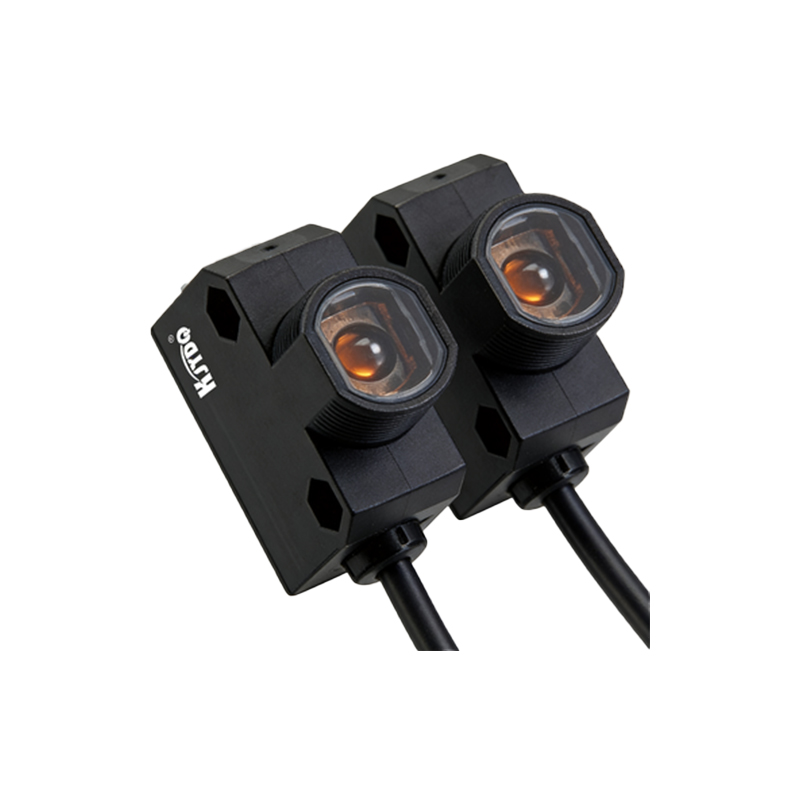
Through-Beam Sensors
Through-beam sensors, also known as opposed-mode sensors, consist of separate emitter and receiver units positioned opposite each other. The emitter projects a continuous light beam to the receiver, and detection occurs when an object interrupts this beam. This design offers the longest sensing ranges among photoelectric types, often exceeding 100 meters, and provides high reliability due to strong signal strength. Through-beam sensors are ideal for detecting opaque objects of any color or surface texture, as they rely on beam blockage rather than reflection. Common applications include conveyor belt monitoring, door safety systems, and large-scale industrial machinery where accuracy is critical. However, installation requires precise alignment of two components, which can be more complex compared to other types.
Retroreflective Sensors
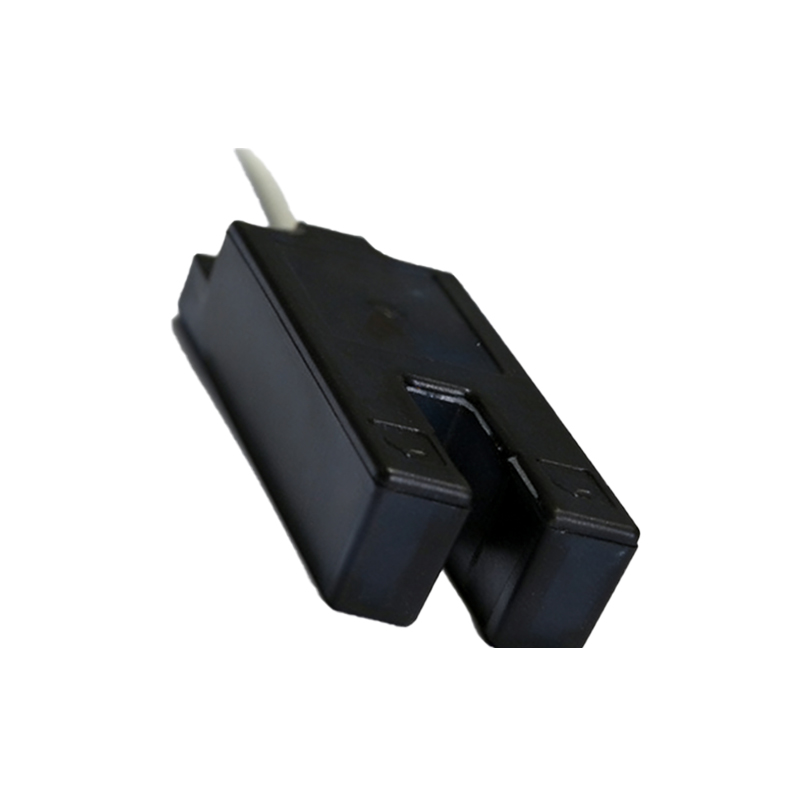
Retroreflective sensors integrate both emitter and receiver into a single housing, using a reflector (such as a corner-cube prism) to bounce the light beam back. When an object passes between the sensor and reflector, it disrupts the reflected light, triggering detection. These sensors offer medium sensing ranges, typically up to 10 meters, and simplify installation by requiring only one wiring point. They are suitable for detecting most materials, but highly reflective or transparent objects may cause false readings if not properly calibrated. Retroreflective sensors are widely used in packaging lines, vehicle detection, and automated storage systems, balancing cost-effectiveness with performance. Some models include polarization filters to ignore shiny surfaces, enhancing versatility in industrial settings.
Diffuse Reflective Sensors
Diffuse reflective sensors, or proximity-mode sensors, house the emitter and receiver together, detecting objects based on light scattered back from the target surface. The sensing range is shorter, usually under 2 meters, as it depends on the reflectivity of the object. Dark or matte surfaces absorb more light, reducing range, while bright surfaces improve detection. These sensors are compact and easy to install, requiring no separate reflector, making them ideal for space-constrained applications like robotic arms, small part counting, and assembly verification. Advanced versions feature background suppression technology, which uses triangulation to ignore distant objects, ensuring accurate detection at specific distances. Diffuse sensors are cost-effective for close-range tasks but may struggle with low-reflectivity materials.
Fiber Optic Photoelectric Sensors
Fiber optic photoelectric sensors utilize flexible fiber optic cables to transmit light between the sensor amplifier and the sensing point, allowing detection in tight or hazardous areas. The amplifier contains the emitter and receiver electronics, while the fiber tips can be configured for through-beam, retroreflective, or diffuse modes. These sensors excel in extreme environments with high temperatures, corrosive chemicals, or strong electromagnetic interference, as the fibers are immune to such conditions. Sensing ranges vary based on configuration, but they typically suit short to medium distances. Applications include micro-part detection in electronics manufacturing, monitoring in sterile medical facilities, and machinery with limited access. Fiber optic sensors offer precision and durability, though they may require careful handling to avoid cable damage.
Laser Sensor Variants
Laser photoelectric sensors employ focused laser beams for high-precision detection, often used in measurement and positioning tasks. They provide extremely narrow light spots, enabling accurate sensing of small objects or edges at longer ranges—up to several hundred meters in some models. Laser sensors are available in through-beam, retroreflective, and diffuse types, with added capabilities like distance measurement via time-of-flight or triangulation principles. Common uses include wafer alignment in semiconductor production, thickness gauging in metalworking, and robotic guidance systems. While more expensive than standard LED-based sensors, lasers offer superior resolution and stability, making them indispensable for critical industrial processes requiring micron-level accuracy.
Comparison Chart of Sensor Types
The following chart summarizes key differences among photoelectric sensor types to aid selection:
- Through-Beam: Sensing Range: Long (10-100+ m); Installation Complexity: High (two units); Best For: Opaque objects, long distances; Limitations: Alignment sensitive.
- Retroreflective: Sensing Range: Medium (up to 10 m); Installation Complexity: Moderate (one unit + reflector); Best For: General-purpose detection; Limitations: Issues with reflective/transparent objects.
- Diffuse Reflective: Sensing Range: Short (under 2 m); Installation Complexity: Low (one unit); Best For: Close-range, varied surfaces; Limitations: Affected by object color/texture.
- Fiber Optic: Sensing Range: Short to Medium (varies); Installation Complexity: Moderate (amplifier + fibers); Best For: Harsh environments, small spaces; Limitations: Fragile cables, higher cost.
- Laser: Sensing Range: Very Long (up to 300 m); Installation Complexity: High (precision needed); Best For: High-accuracy tasks; Limitations: Expensive, sensitive to contamination.
Selection Guidelines for Industrial Use
Choosing the right photoelectric sensor depends on application-specific factors. Consider sensing distance first—through-beam or laser sensors suit long ranges, while diffuse types are optimal for proximity. Object characteristics matter: through-beam handles any material, retroreflective works well with non-shiny surfaces, and diffuse sensors may need adjustments for dark colors. Environmental conditions like dust, moisture, or temperature extremes favor fiber optic or ruggedized models. For cost-sensitive projects, retroreflective or diffuse sensors offer balance, whereas precision tasks justify laser investments. Always verify compatibility with control systems and ensure proper mounting to avoid misalignment. Consulting manufacturer datasheets and testing in real conditions can prevent operational failures, maximizing uptime in industrial automation.
Future Trends in Photoelectric Sensing
Advancements in photoelectric sensor technology focus on integration with Industry 4.0 and IoT platforms. Smart sensors with embedded diagnostics, Ethernet connectivity, and data logging capabilities are becoming standard, enabling predictive maintenance and real-time monitoring. Miniaturization continues, allowing for smaller footprints in compact machinery, while enhanced algorithms improve rejection of ambient light interference. Emerging applications include collaborative robotics, where sensors ensure human safety, and sustainable manufacturing, optimizing energy use. As industries adopt more automated solutions, photoelectric sensors will evolve with higher precision, wireless options, and AI-driven adaptability, solidifying their role as critical components in the digital factory ecosystem.