Introduction to Proximity Sensing Technology
Proximity sensors are fundamental components in modern industrial automation, providing non-contact detection of objects within a defined range. These devices operate by emitting an electromagnetic field or a beam of radiation, then monitoring for changes in the field or return signal. The primary advantage is the absence of physical contact, which eliminates mechanical wear and tear, ensuring high reliability and long operational life. They are indispensable in environments where dirt, oil, or harsh conditions would compromise mechanical switches. From assembly lines and robotic arms to automotive manufacturing and packaging machinery, proximity sensors deliver the precise, repeatable feedback necessary for process control, safety, and efficiency.
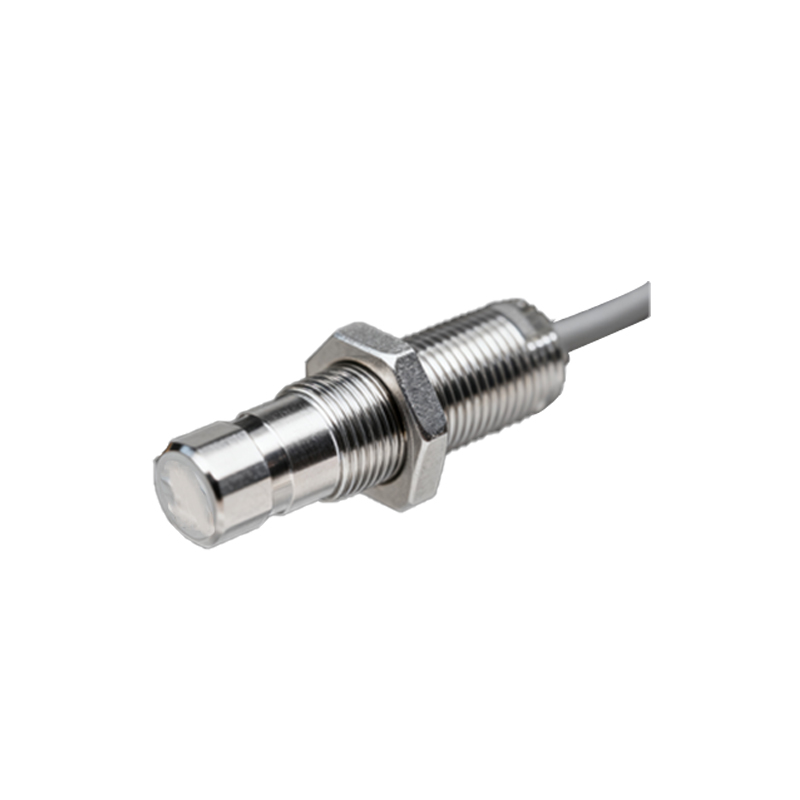
Inductive Proximity Sensors
Inductive proximity sensors are specifically designed to detect metallic objects. Their operating principle is based on electromagnetic induction. The sensor contains an oscillator circuit that generates a high-frequency electromagnetic field at its active face. When a ferrous or non-ferrous metal target enters this field, eddy currents are induced on the metal's surface. This causes a change in the oscillation amplitude, which is detected by the sensor's circuitry, triggering a solid-state output signal. Key characteristics include their robustness, high switching frequency, and immunity to environmental factors like dust, dirt, or moisture. They are ideal for counting metal parts, determining position limits on machine tools, or detecting the presence of a metal component in an assembly process.
Capacitive Proximity Sensors
Unlike their inductive counterparts, capacitive proximity sensors can detect both metallic and non-metallic materials, including liquids, plastics, glass, wood, and granular substances. They function by generating an electrostatic field. The sensor and the target act as two plates of a capacitor. As a target approaches the sensing face, it alters the capacitance of the system. This change is measured, and when it exceeds a preset threshold, the sensor switches its output state. These sensors are particularly useful in applications involving level detection of liquids or powders inside non-metallic containers, detecting filled vs. empty bottles on a conveyor, or sensing the presence of materials through a thin wall of plastic or glass.
Ultrasonic Proximity Sensors
Ultrasonic sensors utilize sound waves beyond the human hearing range (typically above 20 kHz) for detection and ranging. They consist of a transmitter that emits ultrasonic pulses and a receiver that listens for the echo reflected from a target object. By measuring the time interval between the emission and reception of the sound wave, the sensor can calculate the distance to the object. This technology allows for precise distance measurement and detection of objects regardless of their color, transparency, or material composition. Common applications include liquid level control in tanks, loop control in winding machines, collision avoidance for automated guided vehicles (AGVs), and presence detection of irregularly shaped or textured objects.
Photoelectric Sensors
Photoelectric sensors operate on the principle of light transmission and reception. They use a light emitter (usually an LED) and a photoelectric receiver. Detection occurs when the target object interrupts or reflects the light beam. There are three main operating modes: through-beam (separate emitter and receiver), retro-reflective (target breaks a beam reflected off a reflector), and diffuse (sensor detects light reflected directly from the target). These sensors offer very long sensing ranges and can detect tiny objects. They excel at detecting transparent films, colored marks, or objects on high-speed conveyors. However, their performance can be affected by ambient light, dust, or heavy contamination on the lenses.
Key Selection Criteria for Engineers
Selecting the appropriate proximity sensor requires a careful analysis of the application parameters. The first consideration is the target material; inductive for metals, capacitive for a wider range, and photoelectric/ultrasonic for specific non-metallic or distant targets. Sensing distance, or the nominal range at which the sensor reliably detects a standard target, is critical and often requires a safety margin. Environmental factors such as temperature extremes, washdown conditions, exposure to chemicals, or electromagnetic interference must be matched with the sensor's ingress protection (IP) rating and construction material. Finally, the electrical output type (PNP/NPN, analog, or IO-Link), switching frequency, and physical housing size must integrate seamlessly with the existing control system and mechanical design.
Installation and Maintenance Best Practices
Proper installation is paramount for reliable sensor operation. Engineers must ensure adequate clearance around the sensing face to prevent false triggers from surrounding metal (for inductive sensors) or other objects. Mounting brackets should be secure to prevent vibration-induced misalignment, especially for photoelectric and ultrasonic types. For flush-mountable inductive sensors, embedding them in metal can shield them from side influences. Regular maintenance involves keeping the sensing