Introduction to Proximity Sensor E2E Series
The E2E series of proximity sensors, developed by leading manufacturers like Omron, represents a cornerstone in industrial automation sensing technology. These inductive proximity sensors are renowned for their reliability, durability, and precision in detecting metallic objects without physical contact. Designed to withstand harsh industrial environments, the E2E family includes a wide range of models with varying sensing distances, housing materials, output configurations, and connection types. Understanding the core specifications and selection criteria is paramount for engineers and maintenance personnel to ensure optimal performance, machine safety, and system longevity. This guide provides a comprehensive overview of the critical factors to consider during the E2E proximity sensor selection process.
Key Technical Specifications for Selection
The selection process begins with a thorough analysis of technical parameters. The sensing distance, a fundamental specification, varies within the E2E series, typically ranging from 1mm to 15mm for standard cylindrical models. It is crucial to select a sensor with a rated operating distance that accounts for installation tolerances and target material. The target material itself is critical; standard inductive sensors detect ferrous metals (like iron and steel) at their nominal range, while non-ferrous metals (such as aluminum or copper) have a reduced effective sensing distance, often requiring a correction factor. Other vital specifications include the supply voltage (commonly 10-30V DC), output type (NPN or PNP, normally open or normally closed), and current rating. The response frequency, indicating how quickly the sensor can detect objects passing by, is essential for high-speed applications.
Environmental and Housing Considerations
Industrial environments pose significant challenges, including dust, coolant, oil, vibration, and temperature extremes. The E2E series offers various housing materials and ingress protection (IP) ratings to meet these demands. Standard models often feature nickel-plated brass or stainless steel housings, providing excellent resistance to corrosion and physical impact. The IP rating, such as IP67 or IP69K, defines the level of protection against solids and liquids. An IP67 rating ensures the sensor is dust-tight and can withstand temporary immersion in water, making it suitable for washdown areas. For applications involving heavy chemical exposure or extreme pressures, selecting a sensor with a fully welded stainless-steel housing and a higher IP rating is imperative to prevent failure and ensure operational continuity.
Electrical Output and Wiring Configuration
Choosing the correct electrical output is vital for seamless integration with the control system, typically a Programmable Logic Controller (PLC). The two primary transistor output types are NPN (sinking) and PNP (sourcing). The selection depends on the input circuit of the PLC or relay it will connect to. NPN outputs switch the negative (0V) line, while PNP outputs switch the positive (+V) line. Furthermore, the output state—normally open (NO) or normally closed (NC)—defines the sensor's behavior when no target is present. A 3-wire configuration is standard for DC sensors, comprising power, ground, and signal wires. Some E2E models also offer 2-wire AC/DC or 4-wire (with two complementary outputs) configurations. Ensuring compatibility with the existing control system's electrical characteristics prevents wiring errors and potential damage.
Mechanical Design and Installation
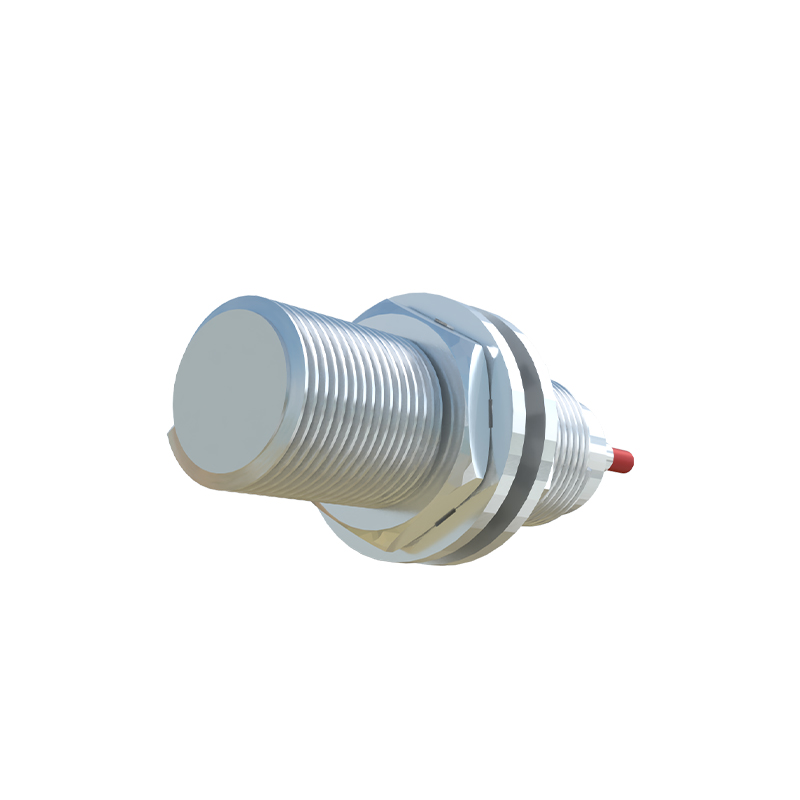
The physical dimensions and mounting style of the sensor must align with the spatial constraints of the application. The E2E series includes threaded barrel types (e.g., M8, M12, M18, M30), which are popular for easy installation into drilled and tapped holes, and rectangular or block-style housings for specialized mounting. Flush-mountable and non-flush-mountable designs are another key distinction. Flush-mount sensors can be embedded in metal without loss of sensing range, whereas non-flush models offer longer sensing distances but require a clear area around the sensing face. Proper attention to mounting clearances, as specified in the datasheet, is necessary to avoid mutual interference between adjacent sensors and to guarantee accurate and repeatable detection.
Application-Specific Features and Accessories
Beyond standard models, the E2E range includes variants with enhanced features for specific challenges. For welding environments, weld-field immune models are available to resist the strong magnetic fields generated by resistance welding equipment, preventing false triggering. Sensors with built-in surge protection and reverse polarity protection enhance durability against electrical noise and wiring mistakes. For precise positioning tasks, analog output models provide a voltage or current signal proportional to the distance to the target. Additionally, a suite of accessories is crucial for successful deployment. These include mounting brackets, protective caps to shield the sensing face during installation, cable glands for secure cable entry, and pre-w