Introduction to Inductive Proximity Sensors
Inductive proximity sensors are fundamental components in modern industrial automation. These non-contact electronic devices detect the presence or absence of metallic objects without any physical contact. Operating on the principle of electromagnetic induction, they generate an oscillating electromagnetic field from a coil located at their sensing face. When a metallic target enters this field, eddy currents are induced on the target's surface. This causes a change in the oscillation amplitude within the sensor's internal circuit, which is then processed to trigger a solid-state output switch. This robust operating principle makes them exceptionally reliable for harsh industrial environments where dust, oil, and vibration are prevalent. Their primary function is to provide precise positional feedback for control systems, enabling tasks like counting, positioning, and end-of-travel detection in machinery.
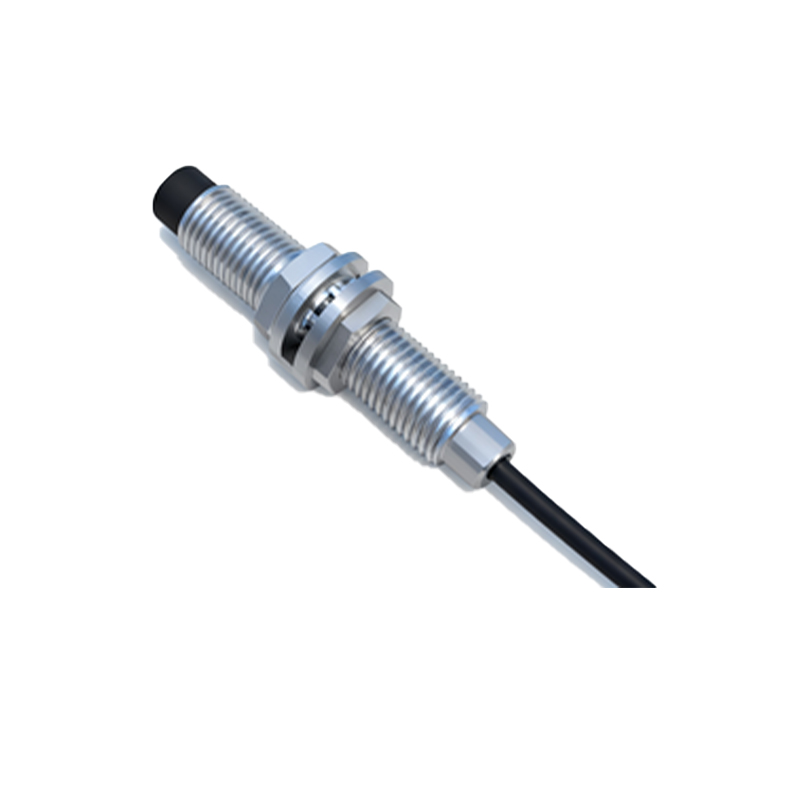
Core Operating Principle and Internal Components
The heart of an inductive sensor is its oscillator circuit, which includes a coil wound around a ferrite core. This oscillator generates a high-frequency electromagnetic field that radiates from the active face of the sensor. The key components are the oscillator, the trigger circuit, and the output switching amplifier. In the absence of a target, the oscillator runs at its nominal frequency. When a ferrous or non-ferrous metal object enters the sensing field, it absorbs energy from the field, causing the oscillation amplitude to decrease. The trigger circuit monitors this amplitude. Once the amplitude drop reaches a predefined threshold—indicating the target is within the nominal sensing distance—the trigger signals the output amplifier to change state, either opening or closing the electrical circuit. This entire process happens in microseconds, allowing for high-speed detection.
Key Performance Characteristics and Specifications
Several critical parameters define an inductive sensor's performance. The nominal sensing distance (Sn) is the rated operating distance under standardized conditions for a specified target, typically a square of mild steel. Factors like target material, size, and shape significantly influence the actual sensing range. For instance, steel has a factor of 1, while stainless steel is approximately 0.7 to 0.9, aluminum around 0.4, and copper about 0.3. Hysteresis is another vital specification; it is the difference between the switch-on point as the target approaches and the switch-off point as it moves away. This prevents output chattering when a target is at the exact sensing limit. Other important specs include switching frequency (how many on/off cycles per second), repeat accuracy, temperature range, and protection ratings like IP67 or IP69K for environmental sealing.
Common Output Types and Wiring Configurations
Inductive sensors are available with various output configurations to interface with different control systems. The two main categories are DC (Direct Current) and AC (Alternating Current) models. DC sensors, typically operating at 10-30V DC, are more common and offer several output types: NPN (sinking) and PNP (sourcing). An NPN output switches the negative (0V) line to the load, common in Asian-market designs, while a PNP output switches the positive voltage line, prevalent in Europe and North America. Analog outputs (4-20mA or 0-10V) provide a continuous signal proportional to the target distance. AC sensors usually operate on 20-250V AC. Additionally, sensors come in 2-wire, 3-wire, or 4-wire designs. 3-wire DC sensors are the industry standard, providing separate wires for power supply positive, negative, and the switched output signal.
Major Application Areas in Industry
The applications for inductive proximity sensors are vast and span nearly every manufacturing sector. In automotive assembly lines, they detect piston position in cylinders or confirm the presence of metal parts on pallets. Packaging machinery uses them to detect foil seals, count cans, or control fill levels. In metalworking and CNC machining, they serve as precise tool breakage detectors, spindle position finders, and part-in-place verification sensors. Material handling systems rely on them for pallet positioning, conveyor jam detection, and robotic end-effector guidance. Their robustness makes them ideal for heavy industries like steel mills and foundries. A specialized application is the use of all-metal sensing face models in the food and beverage industry, where frequent washdowns with corrosive chemicals are required.
Advantages Over Other Sensor Technologies
Inductive sensors offer distinct advantages that solidify their position in industrial settings. Their primary benefit is complete non-contact operation, leading to zero wear on both the sensor and the target, ensuring a long operational life. They are immune to ambient light, dust, and non-metallic debris like wood chips or plastic shavings that could interfere with optical