In the world of precision measurement and automation, laser distance sensor modules have become indispensable tools. These compact devices offer a non-contact method for determining distance with remarkable speed and accuracy, revolutionizing processes across numerous industries. At their core, these sensors operate on a fundamental principle: they emit a focused beam of laser light towards a target and measure the time it takes for the reflected light to return to the sensor. This time-of-flight (ToF) measurement is then converted into a precise distance reading using the known constant speed of light. Alternative methods, such as phase-shift analysis for even higher precision over shorter ranges, are also employed in certain module types.
The advantages of using a laser distance sensor are compelling. Firstly, they provide exceptional accuracy, often down to the millimeter or even sub-millimeter level, depending on the model and range. This non-contact nature is a critical benefit, as it allows for the measurement of delicate, hot, moving, or otherwise inaccessible objects without risk of damage or wear. Furthermore, laser sensors are incredibly fast, capable of taking thousands of measurements per second, making them ideal for dynamic applications and high-speed production lines. Their operation is largely unaffected by surface color or material in many cases, though extremely dark or absorbent surfaces can sometimes pose a challenge, which modern sensors often compensate for with higher output power.
The applications for laser distance sensor modules are vast and varied. In industrial automation, they are used for precise positioning of robotic arms, monitoring material levels in silos, and controlling the thickness of rolled goods like paper or metal. The construction industry relies on them for surveying, alignment, and volume calculations. Consumer electronics have integrated miniature versions into devices for features like camera autofocus and gesture recognition. Perhaps one of the most visible applications is in the domain of advanced driver-assistance systems (ADAS) in modern vehicles, where they contribute to adaptive cruise control and collision avoidance.

When selecting a laser distance sensor module for a specific project, several key parameters must be considered. The measuring range is the most obvious, defining the minimum and maximum distances the sensor can handle reliably. Accuracy and resolution specify the smallest detectable change in distance. The measurement rate or frequency determines how quickly the sensor can update its reading, which is crucial for tracking moving objects. Laser class (typically Class 1 or Class 2 for common modules) is a vital safety rating indicating the power output and any necessary precautions. Environmental factors like operating temperature, ingress protection (IP) rating against dust and water, and the potential for interference from ambient light must also be evaluated. Finally, the output interface—whether analog voltage, current loop, or digital protocols like UART, I2C, or RS-485—must be compatible with the host system.
Integration of these modules typically involves providing stable power, connecting the data output lines, and often implementing simple serial commands to initiate measurements and read results. Many manufacturers provide comprehensive software development kits (SDKs) and libraries to streamline this process for microcontrollers and single-board computers like Arduino or Raspberry Pi.
Looking ahead, the evolution of laser distance sensing continues. Trends point towards even smaller form factors, lower power consumption for battery-operated and IoT devices, and enhanced robustness for challenging industrial environments. The integration of smarter onboard processing, allowing for edge computing functions like multi-object tracking or simple decision-making, is also on the rise.
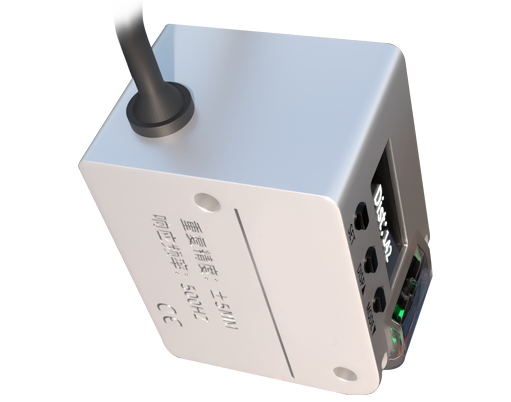
In conclusion, laser distance sensor modules are a cornerstone technology for modern measurement. By understanding their operating principles, recognizing their broad applicability, and carefully considering the technical specifications during selection, engineers, hobbyists, and system integrators can effectively harness their capabilities to add a layer of precision, efficiency, and intelligence to a wide array of applications, from factory floors to autonomous systems and beyond.