What is the Sensing Point of a Proximity Switch?
In the realm of industrial automation, proximity switches are fundamental components for non-contact detection. The core of their functionality lies in the sensing point. This term refers to the precise location in front of the sensor's active face where a target of specified material, size, and shape can be reliably detected. It is not merely the physical surface of the switch but a defined point in space where the electromagnetic or electrostatic field is sufficiently strong to trigger a state change in the switch's output. Understanding this parameter is critical for correct installation, ensuring repeatable machine cycles, and preventing malfunctions in automated systems. The sensing point is determined by the sensor's design, its operating frequency, and the characteristics of the target material.
Technical Definition and Industry Standards
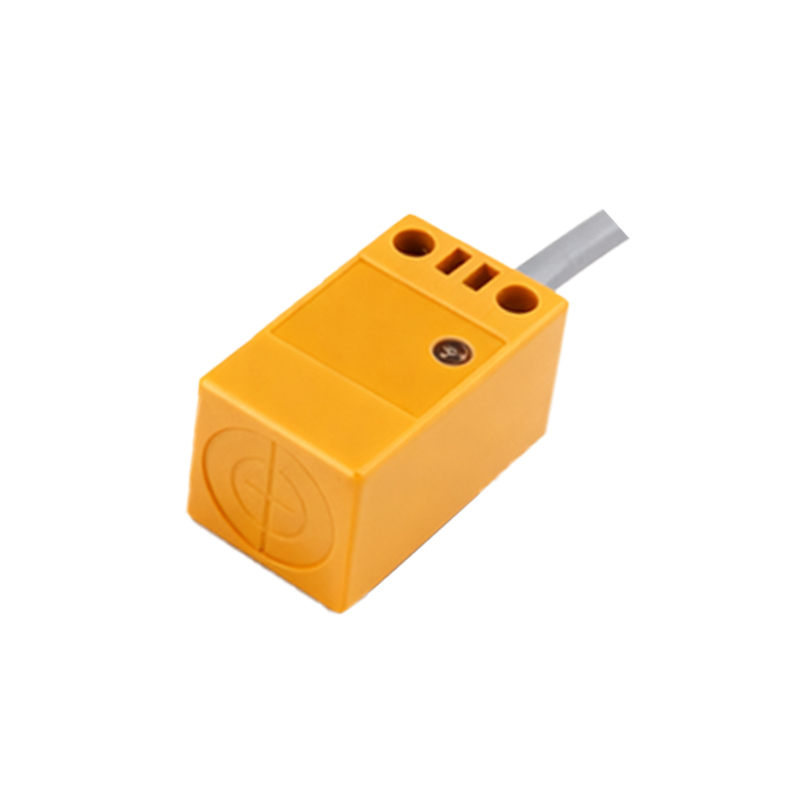
Industry standards, such as those from IEC (International Electrotechnical Commission), provide a formal definition. The sensing point, often called the operating point, is defined as the distance from the active face of the switch to the standard target where the output signal switches. This is typically specified as the nominal sensing distance (Sn). It is crucial to distinguish this from the effective sensing distance (Sr), which accounts for manufacturing tolerances and environmental factors, and is usually 90% of Sn. The release point, where the target moves away and the output switches back, is also defined. The difference between the operating and release points is the hysteresis, a vital feature that prevents output oscillation when a target is positioned at the exact sensing point threshold.
Factors Influencing the Sensing Point Location
Several key factors determine the exact location and stability of the sensing point. First is the sensor technology: inductive sensors detect ferrous and non-ferrous metals with different effective ranges, while capacitive sensors can detect a wider variety of materials, including liquids and plastics, with their sensing point highly dependent on the material's dielectric constant. Second, the target's properties are paramount. For inductive sensors, the size, shape, and material composition (e.g., steel, aluminum, brass) of the target significantly alter the effective sensing distance. A standard target is typically a square of mild steel with a thickness equal to the sensor's diameter or 1mm, whichever is greater. Using a non-standard target will shift the sensing point.
Installation Considerations and Mounting Effects
Proper installation is essential to maintain the specified sensing point. A critical consideration is the flush-mounting capability. Many proximity switches are designed to be mounted flush with a metal surface without a reduction in sensing distance. Non-flush mountable sensors require a clear zone around the active face; if mounted near metal, the sensing point will be drastically reduced—a phenomenon known as shielding. Additionally, the presence of other sensors, strong magnetic fields, or adjacent metal structures in the environment can interfere with the sensor's field, causing the effective sensing point to drift, leading to unreliable operation.
Practical Implications for System Design
In practical system design, engineers never position a target at the nominal sensing distance. A crucial safety factor, often called the utilization factor, is applied. It is standard practice to use only 60-80% of the nominal sensing distance (Sn) for reliable operation. This accounts for temperature fluctuations, voltage variations, target wear, and mechanical tolerances in the machinery. For example, if a sensor has an Sn of 10mm, the target should be designed to pass within 6-8mm of the active face. This ensures detection under all foreseeable operating conditions and extends the sensor's lifespan by preventing constant switching at its physical limits.
Calibration and Maintenance for Consistent Performance
While proximity switches are generally maintenance-free, verifying the sensing point is part of a robust preventive maintenance program. Over time, factors like accumulation of metallic dust on the active face, degradation of internal components, or physical damage can alter the sensing characteristics. Technicians may use a gauge or a known standard target to periodically check if the switch activates at the expected distance. For critical applications, sensors with built-in diagnostics or IO-Link capability can provide real-time data on the signal strength or the "margin to switch," which indicates how far the current target is from the actual sensing point, enabling predictive maintenance.
Conclusion: The Heart of Reliable Detection
The sensing point is more than a simple specification on a datasheet; it is the heart of a proximity switch's reliable operation. A deep understanding of its definition, the factors that influence it, and the design practices that account for its variability is essential for any engineer or technician working in industrial automation. By respecting the principles of nominal versus effective distance, applying appropriate safety margins, and considering installation effects, professionals can ensure