Introduction to Two-Wire AC Proximity Switches
Two-wire AC proximity switches represent a fundamental and widely adopted solution in industrial automation and control systems. Unlike their three-wire or four-wire counterparts, these sensors simplify wiring by combining the power supply and the switching signal into just two wires. This design inherently integrates the load directly in series with the sensor. The core principle involves the sensor drawing a small leakage or quiescent current to power its internal circuitry when in the "off" state. Upon detecting a target within its sensing range, the internal switching element (typically a solid-state device like a TRIAC) activates, allowing a larger load current to flow, thus signaling the presence of the object. This straightforward architecture makes them exceptionally suitable for replacing mechanical limit switches in AC-powered circuits, offering enhanced reliability, longer service life, and non-contact operation.
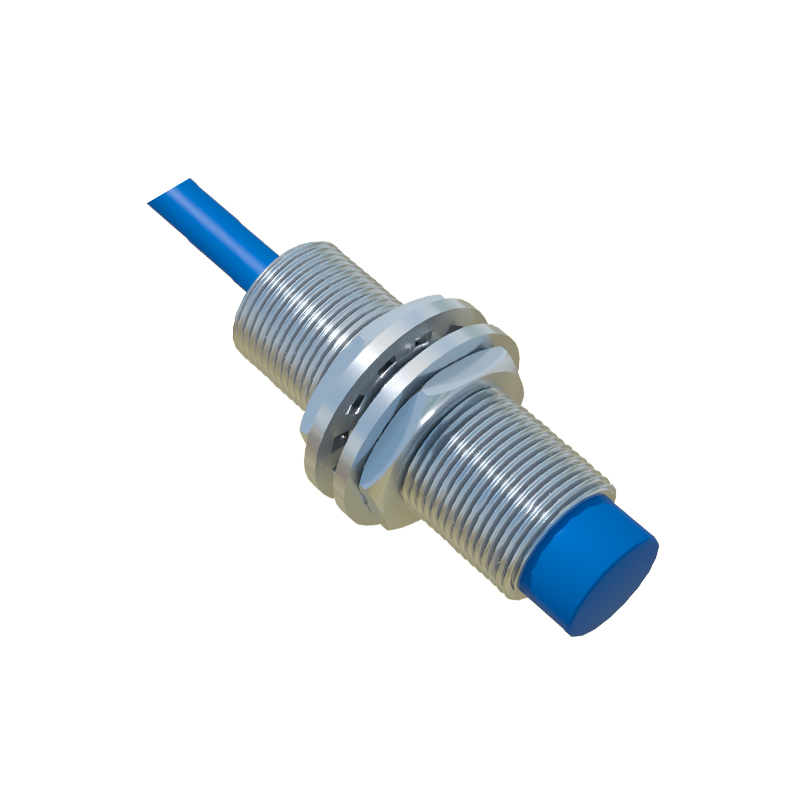
Operating Principle and Internal Circuitry
The operation of a two-wire AC proximity sensor is centered around a solid-state switch, most commonly a TRIAC. In the absence of a target, the sensor is in a high-impedance state. A minimal current, known as the residual current or off-state current, flows through the load to power the sensor's oscillator and evaluation electronics. This current is typically low enough (a few milliamperes) to prevent the activation of the connected load, such as a relay coil or PLC input. When a metallic or other detectable target enters the sensing field, it dampens the oscillator's amplitude. The detection circuit interprets this change and triggers the gate of the TRIAC, turning it on. This action significantly reduces the impedance across the sensor's terminals, allowing the full load current to pass through, effectively closing the switch from the control system's perspective. The sensor must maintain a minimum holding current to keep the TRIAC conductive, which is a critical parameter for ensuring stable operation with small loads.
Key Electrical Characteristics and Specifications
Engineers must carefully evaluate several key parameters when selecting and applying two-wire AC proximity switches. The operating voltage range is typically standard AC line voltages like 90-250V AC, 50/60Hz. The rated operating current (Ie) defines the maximum current the switch can handle continuously, while the minimum operating current specifies the smallest load current required to keep the switch reliably on after activation. The residual current (Io) is the current flowing when the sensor is off; it must be lower than the release current of the connected load to avoid false triggering. Voltage drop (Ud) across the sensor in the on-state leads to power dissipation and must be considered for heat management. Other crucial specs include switching frequency, sensing range, short-circuit and overload protection features, and the type of output (normally open or normally closed). Understanding these specifications is vital for ensuring compatibility with Programmable Logic Controller (PLC) inputs, contactors, and other control elements.
Advantages in Industrial Applications
The primary advantage of the two-wire AC design lies in its installation simplicity and cost-effectiveness. With only two wires to connect—simply in series with the load and the AC power source—installation time is reduced, and wiring errors are minimized. This makes them ideal for direct replacement of mechanical switches in existing panels. They offer high reliability due to the absence of mechanical contacts, which are prone to wear, arcing, and failure. Their solid-state construction provides fast switching speeds, high vibration resistance, and immunity to contact bounce. Furthermore, many models feature robust housings with high Ingress Protection (IP) ratings, allowing deployment in harsh environments with dust, moisture, or coolants. Their ability to interface directly with AC control circuits without additional power supplies or amplifiers simplifies system design.
Critical Considerations and Limitations
Despite their advantages, two-wire AC sensors present specific limitations that require careful design consideration. The residual current can inadvertently energize very sensitive loads, necessitating the use of a bypass resistor or a bleeder circuit in some applications. The minimum load current requirement means they may not function correctly with very high-impedance PLC digital inputs; verifying the PLC input's impedance and current draw is essential. The inherent voltage drop (typically 5-10V AC) results in power loss and heat generation, which must be accounted for, especially in panel cooling designs. They generally lack diagnostic capabilities like short-circuit protection or status LEDs found in three-wire DC sensors. Also, their switching speed, while fast, may be slower than some DC models, and they are susceptible to electrical noise typical in AC power systems, requiring proper shielding and filtering in electrically noisy environments.
Installation and Wiring Best Practices
Correct installation is paramount for reliable operation. Always disconnect