What Are Inductive Proximity Sensors?
Inductive proximity sensors are fundamental, non-contact electronic devices used extensively in industrial automation to detect the presence or absence of metallic objects. Operating on the principle of electromagnetic induction, these robust sensors generate an oscillating electromagnetic field from a coil located at their sensing face. When a conductive metal target enters this field, eddy currents are induced on the target's surface. This action dampens the oscillation amplitude within the sensor's internal circuit. The sensor's electronics monitor this change and trigger a solid-state output switch, signaling the object's detection. Their primary function is to perform precise, reliable position sensing of metallic components without any physical contact, making them indispensable for counting, positioning, and monitoring tasks in harsh manufacturing environments.
Core Operating Principle and Internal Components
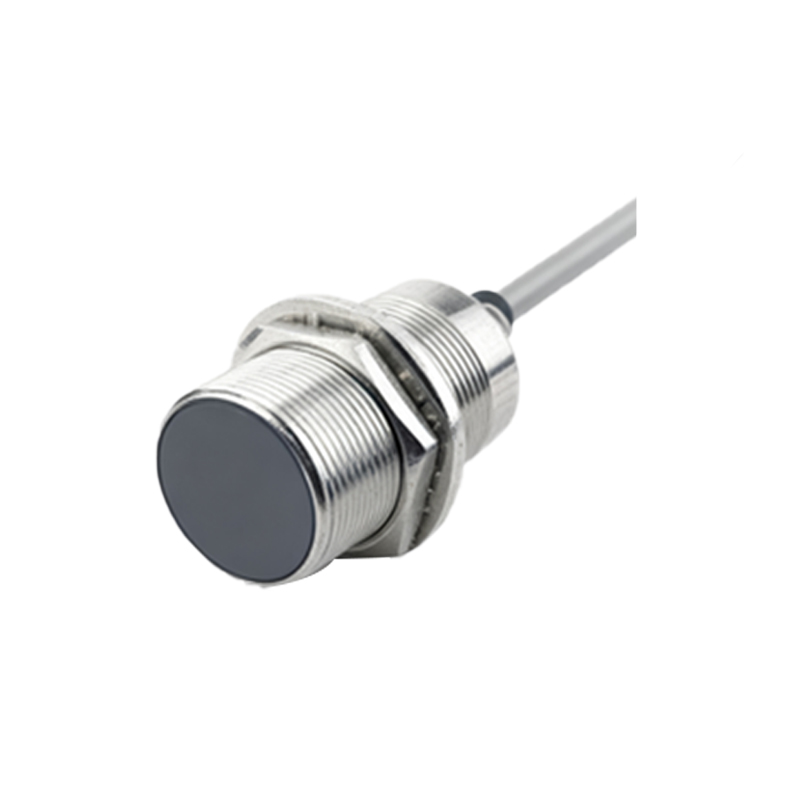
The heart of an inductive sensor is its oscillator coil, which generates the high-frequency electromagnetic field. This coil is part of a tuned circuit that includes a ferrite core to concentrate the field. The detection circuit continuously analyzes the oscillation's status. When the damping caused by a metal target reaches a predefined threshold, a trigger circuit activates. This, in turn, controls the output stage, typically a transistor (PNP or NNP sourcing/sinking configuration) that interfaces with Programmable Logic Controllers (PLCs) or other control systems. A key internal component is the Schmitt trigger, which provides hysteresis. This feature prevents output chattering when a target is at the exact switching point, ensuring a clean, single switching action critical for reliable machine operation.
Key Performance Characteristics and Specifications
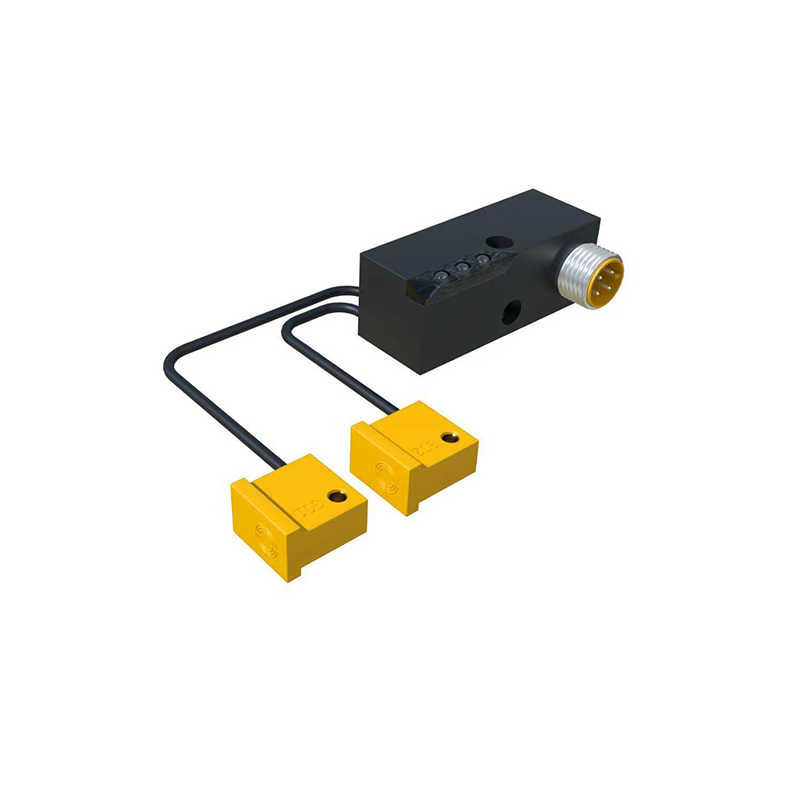
Understanding sensor specifications is crucial for correct selection. The nominal sensing distance (Sn) is the rated operating distance under standardized conditions for a defined standard target (usually mild steel). It is vital to note that the actual sensing range varies with different metals; for instance, stainless steel may reduce the range by 10-30%, while copper or aluminum can reduce it by up to 50%. Repeat accuracy defines the sensor's precision in consistently detecting a target at the same point. Switching frequency indicates how many detection cycles per second the sensor can handle, a critical factor for high-speed applications. Other essential specs include housing material (often nickel-plated brass or stainless steel), protection class (IP67/IP69K for washdown environments), and temperature range, ensuring suitability for the application's environmental challenges.
Target Material and Correction Factors
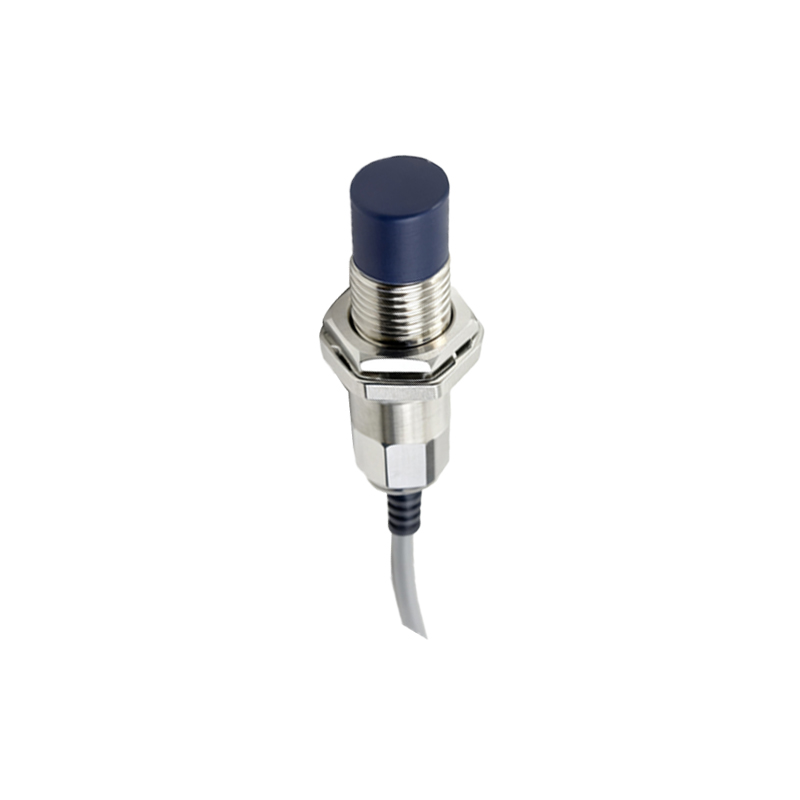
Not all metals are detected equally. The sensor's effectiveness is influenced by the target material's electrical conductivity and magnetic permeability. Mild steel, with high permeability, provides the longest sensing distance and is the reference (factor of 1.0). Austenitic stainless steels (e.g., 304, 316) are non-magnetic and less conductive, resulting in a reduction factor of approximately 0.7 to 0.8. Non-ferrous metals like aluminum, brass, and copper have high conductivity but zero permeability, leading to even greater reduction factors, typically between 0.3 and 0.5. Engineers must always apply these correction factors to the sensor's catalog sensing distance to determine the effective range for their specific target material, preventing application failures.
Common Output Types and Wiring Configurations
Inductive sensors offer various output types to match control system requirements. The two primary DC output configurations are PNP (sourcing) and NPN (sinking). A PNP sensor switches the positive voltage to the load, common in European and modern global designs. An NPN sensor switches the negative or ground line to the load, often found in Asian-made equipment. Analog outputs (4-20 mA or 0-10 V) provide a continuous signal proportional to the distance to the target, enabling precision measurement tasks. IO-Link is a growing digital communication option that transforms a standard sensor into a smart device, enabling parameter setting, condition monitoring, and advanced diagnostics directly from the controller, paving the way for Industry 4.0 integration.
Selecting the Right Sensor for Your Application
Successful implementation requires careful selection. First, identify the target material and apply the correction factor to determine the required nominal sensing distance, adding a safety margin. Consider the required mounting style: shielded (flush-mountable) sensors have a reduced range but can be installed flush in metal without affecting operation, while unshielded sensors offer longer ranges but require non-metallic surroundings. Evaluate environmental factors such as exposure to coolants, welding spatter, or extreme temperatures, selecting an appropriate housing and protection rating. Finally, match the electrical characteristics—operating voltage, output type, and current capacity—to the control system's input module specifications to ensure seamless integration and reliable performance.