Understanding the Core Technology
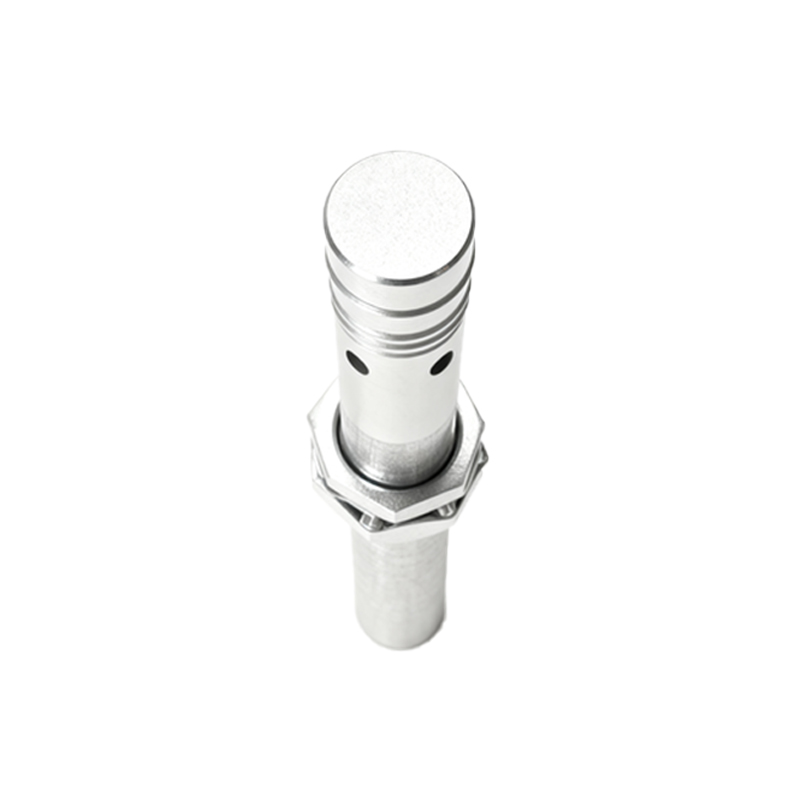
Capacitive proximity sensors operate on the principle of capacitance change. They generate an electrostatic field from the sensing face. When a target object enters this field, it alters the dielectric constant, causing a measurable change in the sensor's internal oscillator circuit. This change triggers the output switch. Unlike inductive sensors, which detect only metals, capacitive sensors can detect a vast range of materials, including liquids, powders, granules, and non-metallic solids like wood, glass, and plastic. This versatility stems from their ability to sense changes in the dielectric properties of materials. The sensing distance is a critical parameter, typically rated for a standard target (often mild steel for reference). However, this nominal sensing distance (Sn) is subject to significant variation based on the target material's properties, a factor that must be meticulously accounted for in system design and data analysis.
Key Performance Metrics and Relative Data
Evaluating capacitive sensors requires a focus on relative performance data. The nominal sensing distance (Sn) is the reference point. A crucial metric is the reduction factor, which expresses the effective sensing distance for a specific material relative to Sn. For instance, while water might have a reduction factor close to 1.0 (meaning it can be sensed at nearly 100% of Sn), a material like polyethylene plastic might have a factor of 0.4, reducing the effective range by 60%. Temperature stability is another vital data point; high-quality sensors specify a temperature drift coefficient, often as a percentage of Sn per 10°C, ensuring reliable operation in varying environmental conditions. Response frequency, measured in Hertz, indicates how quickly the sensor can detect objects passing by. For high-speed applications, sensors with frequencies exceeding 1 kHz are essential. Lastly, hysteresis—the difference between the switch-on and switch-off points—is a key reliability metric, preventing output chatter when a target is at the edge of the sensing field.
Material-Specific Sensing Characteristics
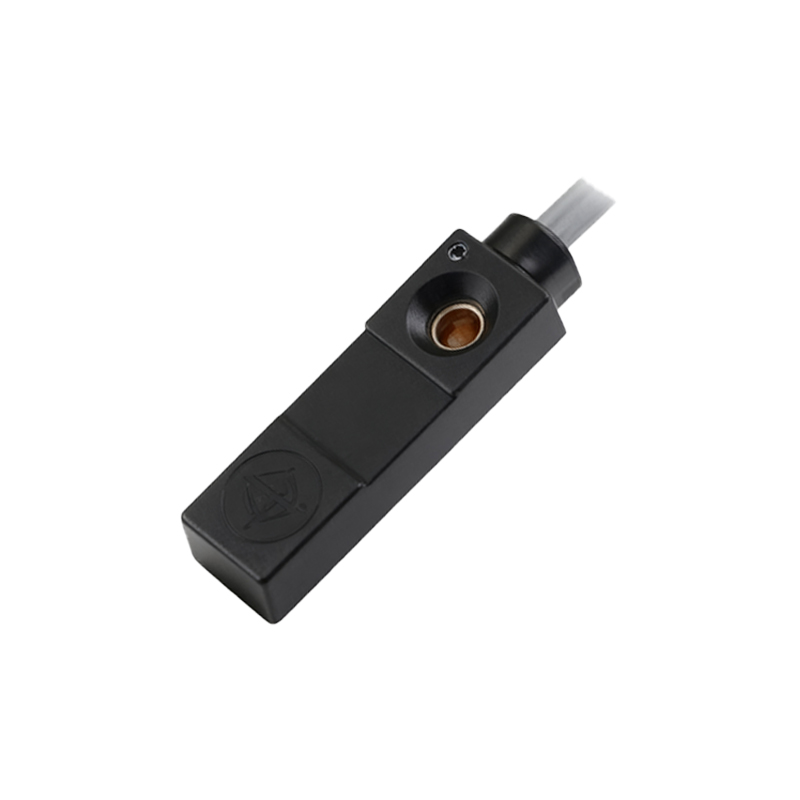
The performance data of a capacitive sensor is intrinsically linked to the target material's dielectric constant (εr). Materials with a high εr, such as water (εr ~80) or metals (theoretically infinite), are easily detected at or near the rated Sn. Materials with low εr, like most plastics (εr 2-4) or dry wood, present a challenge. Engineers must consult manufacturer datasheets that provide correction factors. For example, detecting a thin plastic film containing liquid requires understanding the composite dielectric effect. Furthermore, the sensor's sensitivity adjustment potentiometer allows fine-tuning for specific materials. In practice, for non-standard materials, empirical testing is recommended to gather application-specific data, establishing a reliable correlation between sensor output and target presence, which is more valuable than theoretical calculations alone.
Comparative Analysis with Inductive and Photoelectric Sensors
A data-driven selection process often involves comparing capacitive sensors against inductive and photoelectric alternatives. Inductive sensors offer superior precision and longer sensing ranges for metals but are blind to non-metallics. Photoelectric sensors provide very long ranges but can be disrupted by target color, transparency, and environmental contaminants like dust or fog. Capacitive sensors fill the niche where the target is non-metallic, or where conditions are dirty or humid. Key comparative data points include: sensing range relative to target type, environmental immunity (IP ratings), and cost-per-function. For instance, in a bottle-filling application detecting plastic bottles, a capacitive sensor's immunity to label color variations gives it a data-backed advantage over a diffuse photoelectric sensor.
Critical Application Considerations and Data Interpretation
Successful deployment hinges on correctly interpreting sensor data within the application context. Mounting conditions significantly influence performance; flush-mounted sensors have reduced lateral sensing fields but are immune to adjacent metal interference, while non-flush types offer longer ranges. The influence of the background material must be considered; mounting on a metal bracket requires ensuring the bracket is outside the sensor's active field. Data on repeatability, often specified as a percentage of Sn, is crucial for precision tasks like level detection. For liquid level control, the sensor's behavior with different dielectric liquids (e.g., oil vs. water) must be tested. The output type (PNP/NPN, analog, IO-Link) generates different data streams; modern IO-Link sensors can provide diagnostic data and parameterization, enabling predictive maintenance and finer process control.
Future Trends and Smart Sensor Data
The evolution of capacitive sensing is geared towards smarter, more data-rich devices. The integration of IO-Link communication is a major trend, transforming the sensor from a simple switch into a data point on the Industrial IoT network. These smart sensors can transmit not just a binary state but also diagnostic information like