Introduction to Optical Frequency Measurement
Optical frequency measurement represents a critical frontier in precision metrology, with applications spanning telecommunications, spectroscopy, and fundamental physics. Unlike traditional electronic sensors, photoelectric sensors offer a direct and highly sensitive means of interacting with light waves. These sensors function by converting incident photons into an electrical signal, a process governed by the photoelectric effect. The core challenge in optical frequency measurement lies not merely in detecting light intensity, but in accurately determining the oscillation frequency of the electromagnetic wave itself. This requires sophisticated interplay between the photoelectric sensor and subsequent signal processing electronics. Modern systems often leverage the stability of atomic transitions or optical frequency combs to provide reference points, with photoelectric detectors serving as the essential interface between the optical domain and the electronic measurement apparatus. The ability to measure optical frequencies with high precision has revolutionized fields such as timekeeping, where optical atomic clocks now surpass the accuracy of their microwave counterparts.
Fundamental Operating Principles
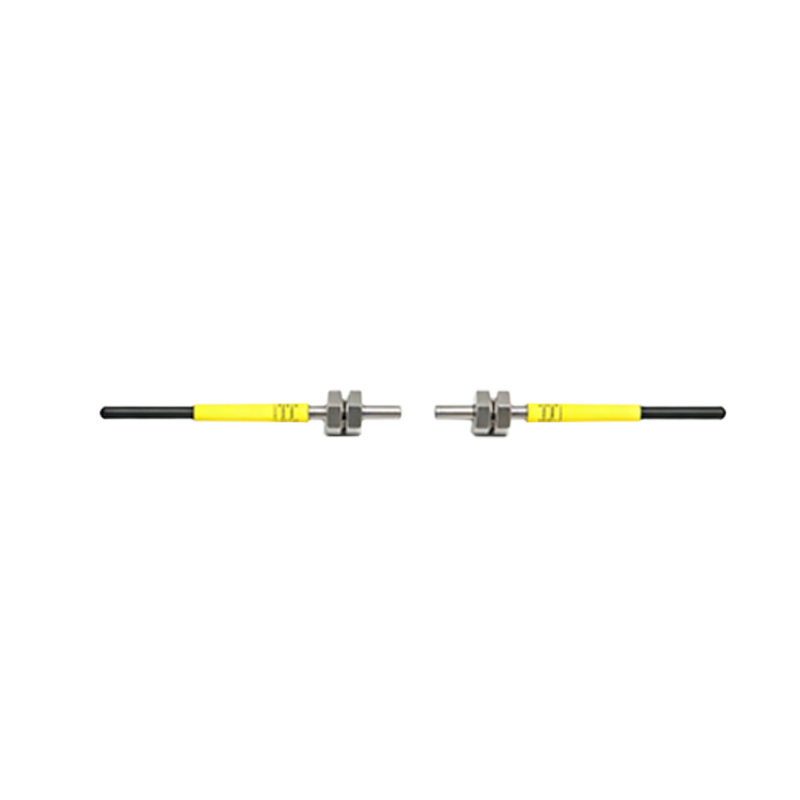
At the heart of a photoelectric sensor for frequency measurement is a photosensitive element, typically a photodiode, avalanche photodiode (APD), or photomultiplier tube (PMT). When photons with sufficient energy strike the active material, they liberate charge carriers, generating a photocurrent. For direct frequency measurement of a continuous-wave (CW) laser, the sensor alone is insufficient; the optical frequency is far too high (hundreds of THz) for electronics to follow directly. Therefore, the primary role of the sensor is in heterodyne or homodyne detection schemes. In optical heterodyning, the unknown optical signal is combined with a reference signal from a local oscillator laser on the photodetector's surface. The resulting photocurrent contains a beat note at the difference frequency between the two lasers, which falls into the radio-frequency (RF) or microwave regime and can be precisely measured with conventional electronics. The photoelectric sensor's bandwidth, responsivity, and noise characteristics are paramount in determining the minimum detectable beat signal and thus the measurement's ultimate precision.
Key Sensor Technologies and Characteristics
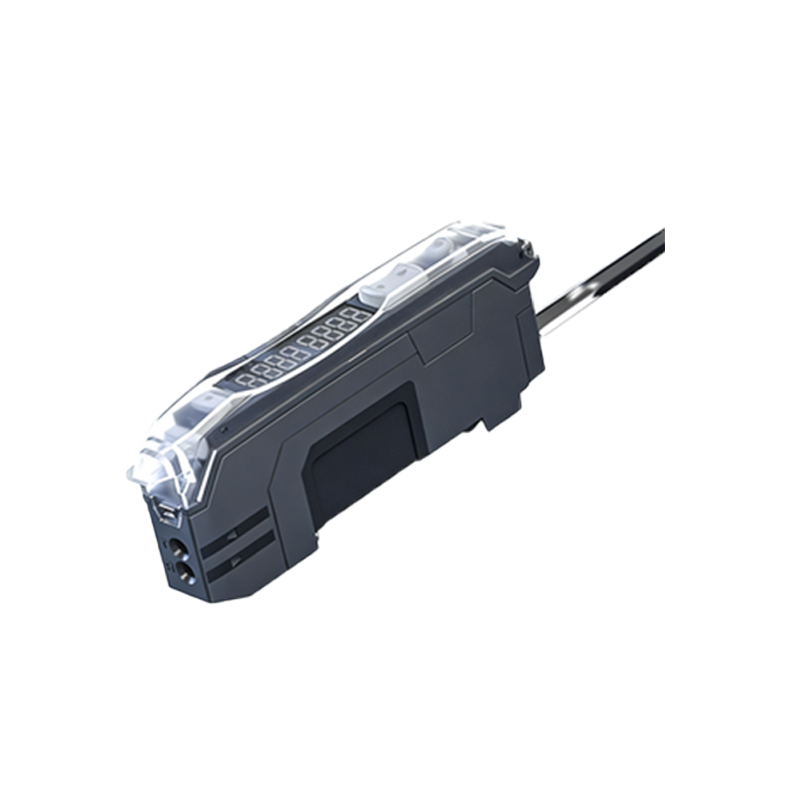
Selecting the appropriate photoelectric sensor is dictated by the specific measurement requirements, including wavelength, optical power, and required bandwidth. PIN photodiodes are common for their linearity and stability in many applications. For low-light-level detection, such as in spectroscopy with weak signals, APDs or PMTs, which provide internal gain through impact ionization or secondary emission, are essential. However, this gain often comes with increased noise. A critical figure of merit is the noise-equivalent power (NEP), which defines the minimum optical power a sensor can detect for a given bandwidth. For ultra-high-frequency measurements, such as characterizing mode-locked lasers, fast photodiodes with bandwidths exceeding 50 GHz are necessary to resolve individual pulses or high-frequency beat notes. The sensor's active area and capacitance also influence its high-frequency response. Furthermore, balanced photodetection, using a pair of matched sensors, is a prevalent technique to cancel out common-mode laser intensity noise, thereby improving the signal-to-noise ratio of the measured beat frequency.
System Integration and Signal Processing
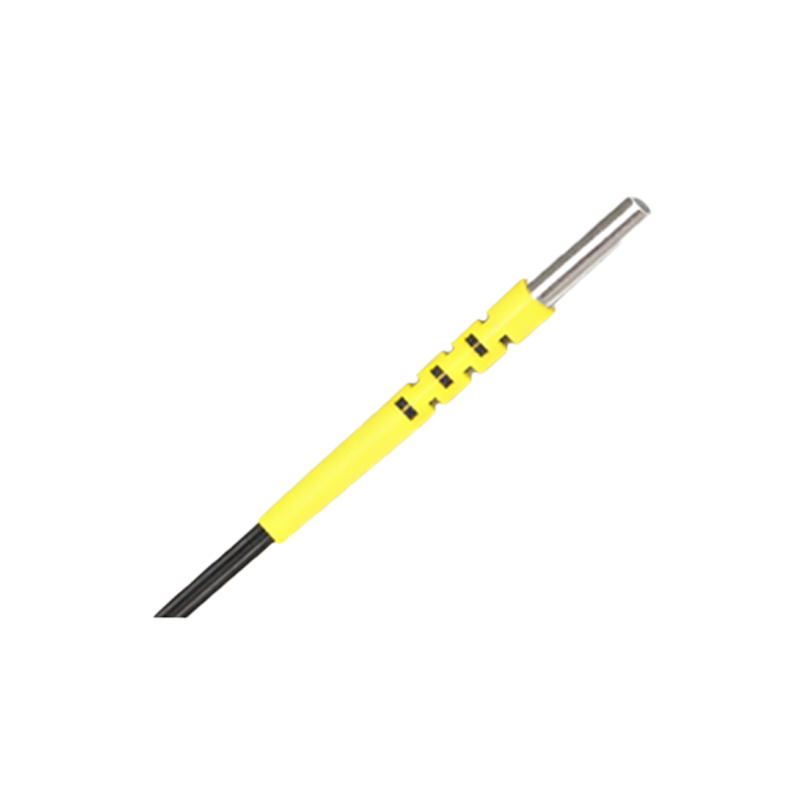
The photoelectric sensor is merely the first component in a complex measurement chain. The generated photocurrent, containing the beat frequency information, is typically amplified by a low-noise transimpedance amplifier. This analog signal is then processed. For frequency measurement, a frequency counter or a phase-locked loop (PLL) is often employed. A high-resolution frequency counter can directly measure the frequency of the RF beat note. In more advanced setups, the beat note is used to phase-lock the unknown laser to the reference laser or to an optical frequency comb. An optical frequency comb acts as a "ruler" in the frequency domain, providing a series of equally spaced, ultra-stable reference frequencies. The photoelectric sensor detects the beat between the unknown laser and the nearest comb line, allowing the laser's absolute optical frequency to be determined with extraordinary accuracy, often to parts in 10^15 or better. This integration demands careful impedance matching, shielding, and thermal management to preserve signal integrity.
Applications in Industry and Research
The practical applications of photoelectric sensor-based frequency measurement are vast and growing. In telecommunications, monitoring and stabilizing the frequencies of dense wavelength-division multiplexing (DWDM) channels is crucial for network integrity. Precision spectroscopy relies on these techniques to measure atomic and molecular absorption lines with unprecedented accuracy, enabling new discoveries in chemistry and atmospheric science. As mentioned, optical atomic clocks, the most accurate timekeepers ever built, depend entirely on measuring the frequency of an optical transition in atoms like strontium or ytterbium, using photoelectric sensors to probe the clock laser's interaction with the atomic ensemble. In manufacturing, laser interferometry for nanometer-scale distance measurement relies on measuring the frequency shift (Doppler shift) of reflected light, a task performed by photodetectors. Additionally, light detection and ranging (LIDAR) systems use frequency-modulated continuous-wave (FMCW) techniques, where the sensor detects the frequency difference between emitted and reflected light to calculate distance and velocity.
Challenges and Future Directions
Despite significant advances, challenges remain. Extending the operational bandwidth of photoelectric sensors into the terahertz regime for even higher-frequency applications is an active area of material research, exploring devices like uni-traveling-carrier photodiodes. Reducing all forms of noise—shot noise, thermal noise, and amplifier noise—is a perpetual pursuit to enhance measurement sensitivity for weaker signals. The integration of photoelectric sensors with photonic integrated circuits (PICs) promises more compact, robust, and potentially lower-cost measurement systems. Furthermore, the development of quantum-limited sensors, such as those exploiting squeezed light, could push precision beyond the standard quantum limit. As optical frequency measurement continues to drive progress in science and technology, the evolution of the humble photoelectric sensor will remain fundamentally intertwined with these breakthroughs, demanding ongoing innovation in semiconductor physics, device design, and system engineering.