Introduction to Proximity Sensing Technology
Proximity sensors are fundamental components in modern industrial automation, robotics, and countless electronic devices. Their primary function is to detect the presence or absence of an object within a specified range without any physical contact. This non-contact detection offers significant advantages, including high reliability, long operational life, and the ability to function in harsh environments where contaminants, moisture, or physical wear would compromise mechanical switches. The core principle involves the sensor generating an electromagnetic field or a beam of radiation and then monitoring for changes in the field or return signal. The specific technology employed defines the sensor's characteristics, such as sensing range, target material suitability, environmental robustness, and cost. Understanding the distinct types is crucial for selecting the optimal sensor for any given application, ensuring system efficiency, safety, and performance.
Inductive Proximity Sensors
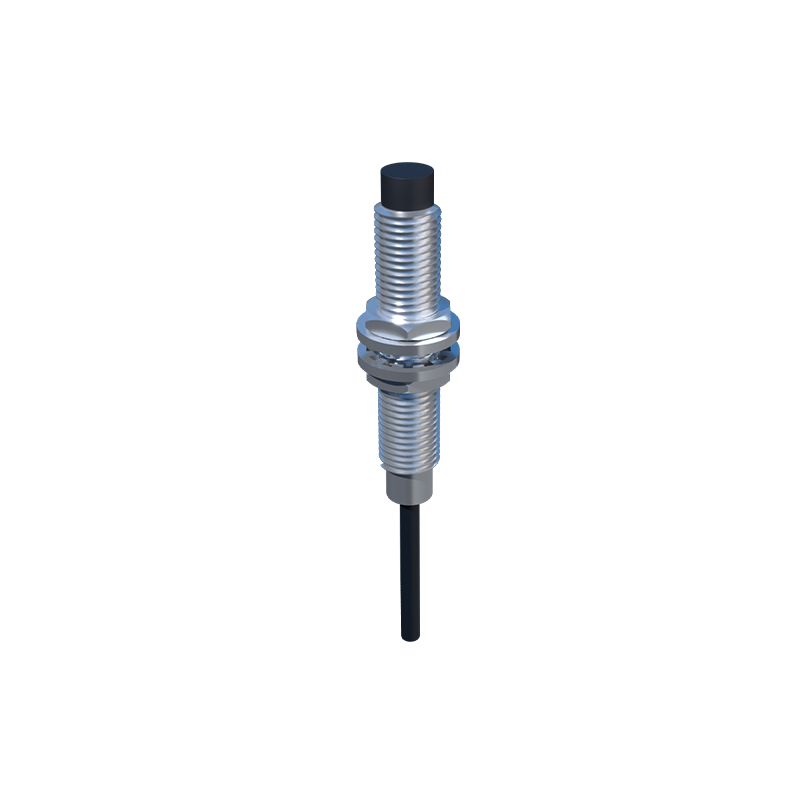
Inductive proximity sensors are exclusively used for detecting metallic objects, primarily ferrous metals like steel and iron, though specialized versions can detect non-ferrous metals. The sensor comprises an oscillator circuit that generates a high-frequency electromagnetic field emanating from the sensing face. When a conductive metal target enters this field, eddy currents are induced on the target's surface. These currents draw energy from the oscillator, causing a reduction in its oscillation amplitude. This change is detected by a threshold circuit, which subsequently triggers a solid-state output switch. Key advantages include high switching frequency, exceptional resistance to environmental factors like dust, oil, and moisture, and robust construction often rated for IP67 or higher. They are ideal for applications in metal machining, automotive assembly, and material handling where only metal detection is required.
Capacitive Proximity Sensors
Capacitive proximity sensors can detect a much wider variety of materials compared to their inductive counterparts, including metals, plastics, glass, wood, liquids, and granular substances. They operate on the principle of capacitance change. The sensor acts as one plate of a capacitor, with the target object acting as the other plate. The oscillator circuit is tuned so that it only oscillates when the capacitance—affected by the dielectric constant of the target and its distance—exceeds a certain threshold. As a target approaches, the capacitance increases until it triggers the oscillation and, consequently, the output switch. A sensitivity adjustment is typically provided to tune the sensor for different materials. These sensors are invaluable in applications like liquid level detection, material presence sensing on non-metallic conveyor belts, and detecting filled vs. empty containers in packaging lines.
Ultrasonic Proximity Sensors
Ultrasonic sensors utilize sound waves at frequencies above the human hearing range (typically 40-400 kHz). They operate on the time-of-flight principle: the sensor emits a burst of ultrasonic pulses and then listens for the echo reflected from a target object. An internal microcontroller calculates the distance to the object based on the time elapsed between emission and reception of the echo. They can detect virtually any solid or liquid object regardless of color, transparency, or material composition, making them extremely versatile. However, their performance can be affected by factors like temperature, air turbulence, and the target's sound-absorbing properties. Common applications include distance measurement, object detection in challenging environments (e.g., dusty areas), pallet stacking, and liquid level control in large tanks.
Photoelectric Sensors
Photoelectric sensors use light, typically infrared, visible red, or laser, to detect objects. They consist of a light emitter and a receiver. Several operational modes exist. The through-beam (or opposed) mode uses separate emitter and receiver units; detection occurs when the target interrupts the light beam. The retro-reflective mode uses a single housing with both emitter and receiver, relying on a reflector to bounce the beam back; detection occurs when the target blocks this reflected beam. The diffuse (or proximity) mode also uses a single unit, detecting light that is reflected directly off the target itself. Photoelectric sensors offer very long sensing ranges, especially in through-beam configuration, and can detect small objects. They are sensitive to environmental conditions like fog, steam, or heavy dust, which can scatter the light beam. Applications are vast, including packaging, bottling, assembly line counting, and door safety systems.
Magnetic Proximity Sensors (Reed Switches & Hall Effect)
Magnetic proximity sensors detect the presence of a permanent magnet. Two primary technologies are used. Reed switches consist of two ferromagnetic, hermetically sealed reeds inside a glass tube. When a magnetic field of sufficient strength is applied, the reeds attract each other and make contact, closing the circuit. They are simple, low-cost, but have limited switching speed and mechanical life. Hall Effect sensors are solid-state devices. When exposed to a