Introduction to Human Detection Proximity Switches
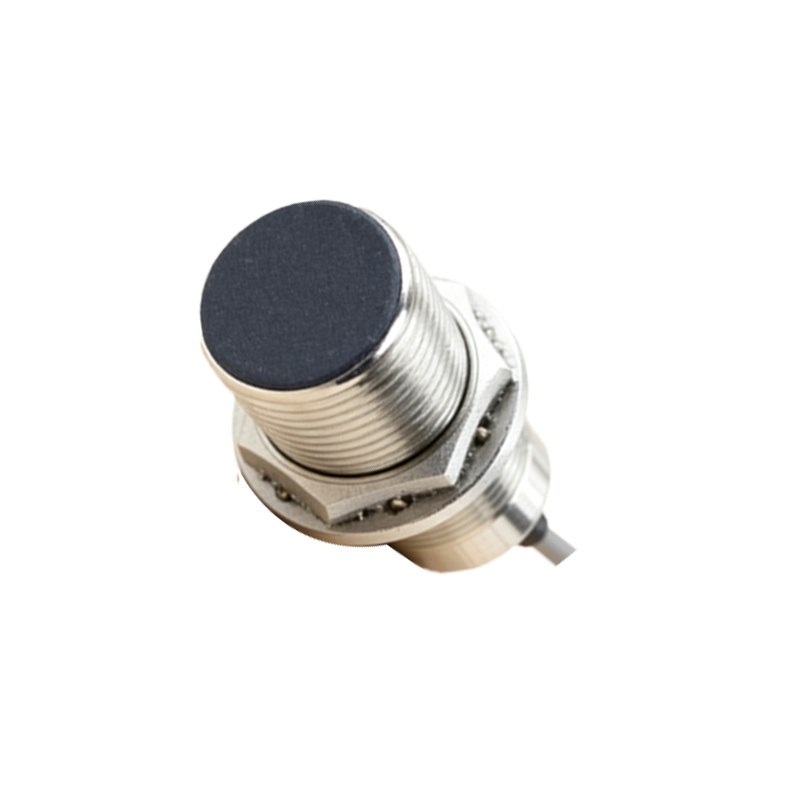
In the realm of industrial automation and smart building management, the integration of safety and operational efficiency is paramount. Proximity switches equipped with specialized human detection sensors represent a significant technological advancement in this domain. Unlike standard proximity sensors that detect the presence or absence of an object, these sophisticated devices are specifically calibrated to recognize human presence. This capability is crucial for applications where human-machine interaction is frequent, necessitating enhanced safety protocols and intelligent system responses. The core technology often relies on passive infrared (PIR), microwave, or advanced capacitive sensing principles, tailored to distinguish the unique biological and movement signatures of a person from inanimate objects or machinery.
Core Technologies and Operating Principles
The effectiveness of a human detection proximity switch hinges on its underlying sensing technology. Passive Infrared (PIR) sensors are widely used; they detect changes in infrared radiation emitted by the human body. When a person moves within the sensor's field of view, the infrared pattern changes, triggering the switch. Microwave sensors, on the other hand, emit continuous microwave signals and analyze the reflected waves. The Doppler effect caused by human movement alters the frequency of the return signal, enabling detection. Advanced capacitive proximity switches sense changes in an electrostatic field. The human body, being conductive and having a distinct dielectric constant, alters the capacitance when approaching, allowing for detection even through non-metallic barriers. Many modern switches employ sensor fusion, combining two or more technologies to reduce false positives—for instance, triggering only when both PIR and microwave sensors are activated.
Key Applications in Industrial and Commercial Settings
The applications for these sensors are diverse and critical. In industrial robotics and collaborative robot (cobot) cells, human detection proximity switches act as a primary safety layer. They can instantly signal a robot to enter a reduced-speed mode or a complete safe stop when a worker enters a predefined hazardous zone, preventing accidents. On automated assembly lines, they can pause conveyor belts or machinery when an operator reaches into a work area for maintenance or part retrieval. Beyond heavy industry, these switches are integral to building automation. They enable energy-saving lighting and HVAC systems that activate only upon detecting human occupancy in rooms, corridors, or warehouses. In access control systems, they can trigger door unlocks or security alerts based on authorized personnel approach.
Advantages Over Traditional Safety Systems
Implementing human detection proximity switches offers distinct advantages over traditional mechanical guards or basic light curtains. Firstly, they provide a non-contact, wear-free sensing solution, ensuring long-term reliability without physical degradation. They enable a more flexible and less intrusive safety perimeter. Unlike fixed barriers, their detection zones can often be adjusted or programmed, allowing for dynamic safety boundaries that adapt to different operational modes. This contributes to better ergonomics and workflow efficiency, as workers are not constantly hindered by physical gates. Furthermore, their integration into programmable logic controllers (PLCs) and Industrial Internet of Things (IIoT) networks allows for predictive maintenance and data logging. System managers can analyze detection patterns to optimize plant layout or identify near-miss incidents for proactive safety improvements.
Critical Selection Criteria and Installation Considerations
Selecting the appropriate human detection proximity switch requires careful analysis of several factors. The sensing range and field of view must match the application's spatial requirements. Environmental conditions are crucial; factors like ambient temperature fluctuations, humidity, dust, oil mist, or strong electromagnetic interference can affect sensor performance. The required response time is another key parameter—safety-critical applications demand ultra-fast switching speeds. The type of output (e.g., NPN/PNP transistor, relay, IO-Link) must be compatible with the existing control system. Proper installation is equally vital. Sensors must be mounted at optimal heights and angles to cover the intended detection zone while avoiding blind spots. Regular testing and calibration are necessary to ensure ongoing reliability, as misalignment or lens contamination can severely impair function.
Future Trends and Integration with Smart Systems
The future of human detection in proximity switches is moving towards greater intelligence and connectivity. The integration of artificial intelligence and machine learning algorithms will enable these sensors to not only detect presence but also interpret intent or posture, such as distinguishing between a person walking by versus intentionally approaching a machine. The adoption of IO-Link communication provides detailed diagnostic data and parameterization capabilities, facilitating condition monitoring and remote configuration. Furthermore, their role within the broader framework of Industry 4.0 and smart factories is expanding. By feeding real-time occupancy and location data into a central Manufacturing Execution System (MES), these switches contribute to optimizing personnel flow, enhancing security, and creating truly responsive and safe automated environments where systems intelligently adapt to human activity.