Introduction to Photoelectric Speed Sensing
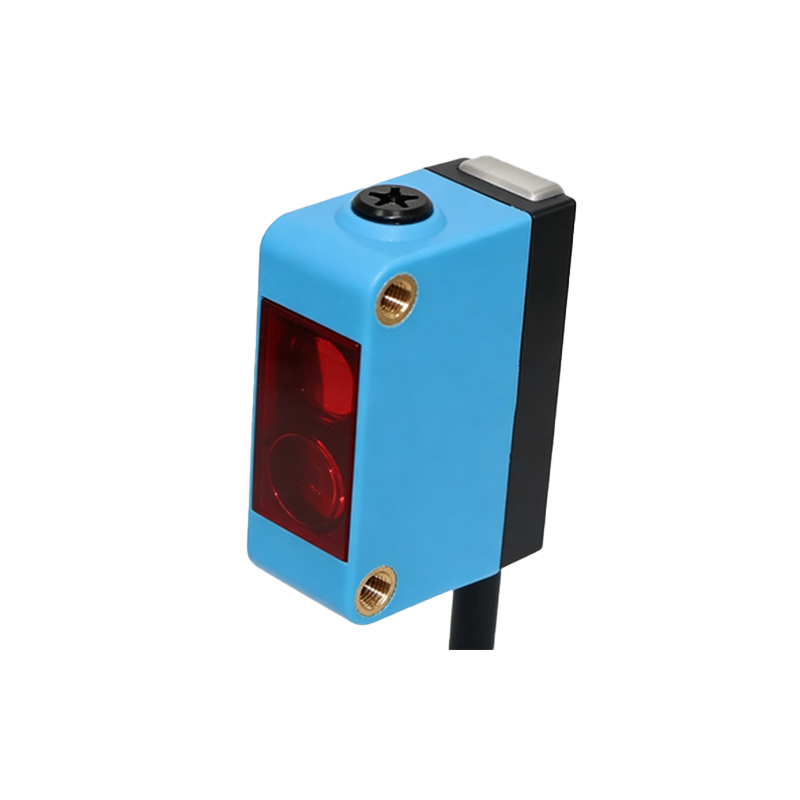
Photoelectric sensors are widely employed for non-contact speed measurement across various industrial and scientific applications, including conveyor systems, motor control, and rotational machinery monitoring. These devices operate on the principle of detecting interruptions or reflections of a light beam, typically from an infrared or laser source, to generate a pulse signal corresponding to the passing of an object or a mark on a rotating shaft. While they offer advantages like high resolution and fast response, their performance is contingent upon specific operational conditions. A thorough understanding of their inherent limitations is crucial for engineers to ensure system reliability and accuracy, preventing costly downtime or measurement errors in critical processes.
Sensitivity to Environmental Contaminants
One of the most significant drawbacks of photoelectric sensors in speed measurement is their pronounced sensitivity to environmental factors. Dust, oil mist, steam, and other airborne particulates can accumulate on the sensor's lens or the emitter/detector windows. This contamination attenuates the light beam, reducing the signal strength received by the photodetector. In severe cases, it can lead to complete signal loss, causing the system to miss counts and report an erroneously low speed or even a stall condition. This necessitates frequent and meticulous maintenance schedules in dirty environments, such as mining, food processing, or machining workshops, increasing operational costs and complexity.
Susceptibility to Ambient Light Interference
Despite often using modulated light sources to mitigate interference, photoelectric sensors can still be adversely affected by strong ambient light. Direct sunlight, welding arcs, or other high-intensity light sources can saturate the receiver, creating false triggers or masking the genuine signal from the target. This is particularly problematic for retro-reflective or diffuse sensors. While optical filters and careful housing design can alleviate this issue, they cannot eliminate it entirely, especially in outdoor or uncontrolled lighting environments. This susceptibility limits their deployment in applications where lighting conditions are variable or unpredictable.
Requirement for Precise Alignment and Installation
Achieving and maintaining precise optical alignment is a critical and often challenging aspect of using photoelectric sensors for speed measurement. For through-beam sensors, the emitter and receiver must be perfectly aligned to ensure a strong, uninterrupted beam. Vibrations, thermal expansion of mounting structures, or accidental impacts can easily misalign these components, leading to signal degradation or failure. For reflective applications, the sensor must be positioned at an optimal angle relative to the target surface. This installation precision demands skilled personnel and time, and any subsequent drift can compromise long-term measurement integrity without immediate detection.
Limitations with Target Surface Properties
The performance of a photoelectric sensor is heavily dependent on the optical properties of the target surface. Transparent, highly reflective, or absorbent materials pose significant challenges. A clear glass bottle on a conveyor, a shiny metal surface, or a dark, matte object can cause inconsistent signal reflection or transmission. This inconsistency leads to unreliable pulse generation, directly impacting speed measurement accuracy. Engineers must often apply supplemental markings (like retro-reflective tape) or select specialized sensor models (e.g., polarized or background suppression types), which adds steps and cost to the system integration.
Limited Effective Sensing Range
Compared to some other non-contact sensing technologies like inductive or capacitive proximity sensors (for metallic targets) or radar-based systems, standard photoelectric sensors have a relatively limited effective range. While long-range models exist, they are typically more expensive and can have other trade-offs like larger beam spots. In applications requiring measurement from a significant distance or involving large machinery, this range limitation can be a decisive factor. The sensor must be placed close to the target, which may not always be feasible due to space constraints, safety regulations, or high-temperature zones.
Potential for Mechanical Wear on Components
Although photoelectric sensors themselves are non-contact, many speed measurement setups rely on a mechanical component attached to the rotating shaft, such as an encoder disk with slots or a reflective code wheel. These mechanical components are subject to wear, tear, and accumulation of debris over time. A damaged or dirty code wheel will cause irregular pulse patterns, leading to inaccurate speed readings. Therefore, while the sensor element may be robust, the overall measurement system's reliability is still tied to the mechanical integrity of these ancillary parts.
Conclusion and Mitigation Strategies
In summary, while photoelectric sensors are a valuable tool for speed measurement, their disadvantages—including environmental sensitivity, ambient light interference, precise alignment needs, target property dependencies, range limitations, and reliance on mechanical components—must be carefully evaluated during the system design phase. Mitigation often involves selecting specialized sensor variants (e.g., fiber-optic units for dirty environments, laser models for long-range), implementing rigorous maintenance protocols, and considering alternative technologies like magnetic encoders or tachogenerators where appropriate. A holistic assessment of the application's specific environmental and operational demands is essential to determine if a photoelectric solution is optimal or if an alternative sensing methodology would provide greater long-term reliability and accuracy.