Introduction to Proximity Sensing Technology
Proximity sensors are fundamental components in modern industrial automation and control systems. These non-contact devices detect the presence or absence of an object within a specified sensing range without any physical contact. The core principle involves generating an electromagnetic field or beam of radiation and monitoring for changes caused by a target object. This technology is indispensable across numerous applications, from manufacturing assembly lines and robotic guidance to consumer electronics and automotive safety systems. The primary advantage lies in their reliability, long operational life due to the absence of mechanical wear, and ability to function in harsh environments where physical contact is impractical or damaging. Understanding the distinct types and their operational characteristics is crucial for selecting the optimal sensor for any given application, ensuring system efficiency, safety, and cost-effectiveness.
Inductive Proximity Sensors
Inductive proximity sensors are specifically designed to detect metallic objects. Their operation is based on the principle of electromagnetic induction. The sensor contains a coil wound around a ferrite core connected to an oscillator. When an alternating current passes through the coil, it generates an alternating electromagnetic field. When a conductive metal target enters this field, eddy currents are induced on the surface of the target. These eddy currents draw energy from the sensor's oscillator, resulting in a reduction of oscillation amplitude. This change is detected by the sensor's circuitry, which triggers an output signal. Key characteristics include a sensing range typically up to 60 mm, high switching frequency, and exceptional robustness. They are immune to non-metallic substances like dust, oil, or water, making them ideal for heavy industrial environments such as machine tools, metal stamping, and automotive manufacturing. However, their limitation is exclusive sensitivity to metals, with detection range varying based on the target's material properties.
Capacitive Proximity Sensors
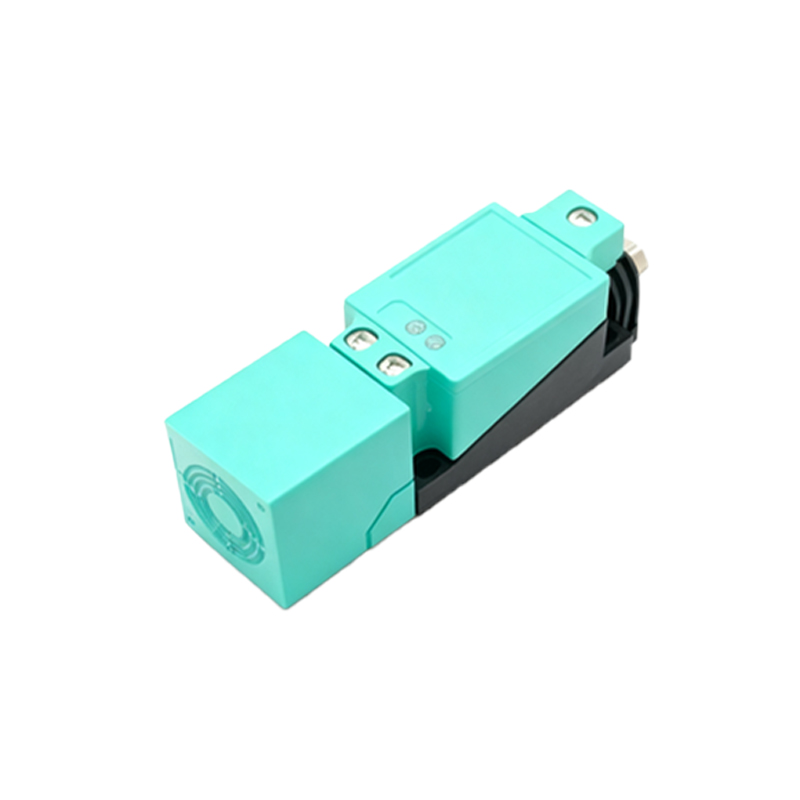
Capacitive proximity sensors can detect both metallic and non-metallic materials, including liquids, powders, plastics, and wood. They operate by measuring changes in capacitance. The sensor's active face forms one plate of a capacitor, with the target object acting as the other plate. An oscillator circuit creates an electrostatic field emanating from the sensor. When a target object enters this field, it alters the dielectric constant and thus the capacitance of the system. This change in capacitance increases the oscillation amplitude, which is processed to trigger an output. Their main characteristics are versatility in material detection and the ability to sense through certain non-metallic barriers, like glass or plastic containers. Typical sensing distances range up to 25 mm. These sensors are widely used in level detection for liquids and granular materials, packaging industries, and touch-sensitive interfaces. A notable consideration is their potential sensitivity to environmental factors like humidity or temperature, which can affect the dielectric constant of air.
Ultrasonic Proximity Sensors
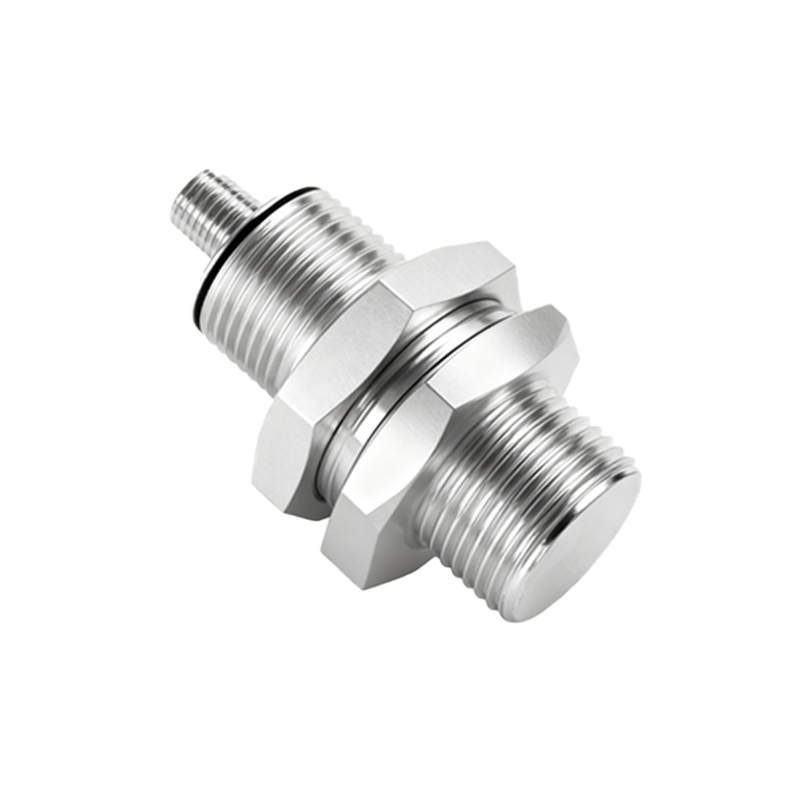
Ultrasonic proximity sensors utilize sound waves beyond the human hearing range (typically above 20 kHz) to detect objects and measure distance. They consist of a transmitter that emits ultrasonic pulses and a receiver that listens for the echo reflected from a target. By calculating the time interval between pulse emission and echo reception, the sensor can determine the presence and distance of an object. These sensors are characterized by their long sensing ranges, which can extend up to several meters, and their ability to detect objects regardless of color, transparency, or material composition. They perform well with sound-absorbing materials like foam or fabric, though with reduced range. Common applications include parking assistance systems, bulk material level sensing, and collision avoidance for automated guided vehicles (AGVs). Limitations include potential interference from ambient noise, temperature variations affecting sound speed, and a relatively slower response time compared to inductive or capacitive types.
Photoelectric Proximity Sensors
Photoelectric sensors use light beams to detect objects. They comprise a light emitter (usually an LED producing visible red, infrared, or laser light) and a photoreceiver. There are three primary operating modes: through-beam, retro-reflective, and diffuse (proximity) mode. In the diffuse mode, relevant for proximity sensing, the emitter and receiver are housed in the same unit. The emitted light hits a target and is diffusely reflected back to the receiver. Detection occurs when sufficient reflected light is received. Key characteristics include very long sensing ranges (especially for through-beam types), high speed, and precision. They can detect tiny objects and are effective on virtually any material. However, their performance can be influenced by environmental factors like dust, fog, ambient light, and the target object's color, reflectivity, or surface angle. Applications are vast, including object counting on conveyors, bottle detection in bottling plants, and paper registration in printing presses.