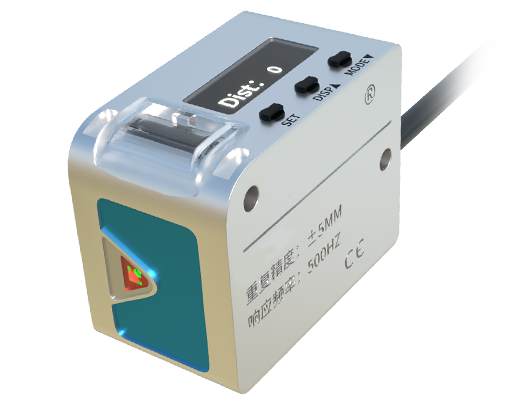
In the realm of precision measurement and control systems, laser sensors stand out for their unparalleled accuracy, speed, and non-contact capabilities. However, the raw performance of a laser sensor is only fully realized through meticulous tuning. Laser sensor tuning is the critical process of calibrating and adjusting the sensor's operational parameters to match specific application requirements, environmental conditions, and target material properties. This ensures reliable, repeatable, and high-fidelity data acquisition, which is the cornerstone of quality assurance in industries ranging from semiconductor manufacturing to automotive assembly.
The core principle behind tuning lies in optimizing the interaction between the laser beam and the target. A laser sensor typically emits a focused beam of light. The reflected or scattered light is then captured by a detector within the sensor. The tuning process adjusts how the sensor interprets this returned signal. Key parameters involved include sensitivity or gain, response time, sampling rate, and threshold levels. For instance, setting the sensitivity too high on a shiny metal surface might cause signal saturation and erroneous readings, while setting it too low on a dark, absorbent material might result in a weak, unreliable signal. Proper tuning finds the "sweet spot" where the signal is strong, stable, and unambiguous.
Several fundamental methods are employed for laser sensor tuning, often accessible via dedicated software or hardware interfaces provided by the manufacturer. The most common approach is teach-in or auto-tuning. Here, the sensor is presented with representative "good" and "bad" conditions or with the actual target at its desired reference position. The sensor's internal processor then automatically calculates and sets optimal parameters based on the sampled signal strength. This method is user-friendly and highly effective for standard applications with consistent targets.

For more complex scenarios, manual parameter adjustment is essential. Engineers delve into specific settings like analog output scaling, which maps the measured distance or intensity to a specific voltage or current range for the control system. Digital filtering can be adjusted to smooth out signal noise caused by vibration or surface texture without sacrificing response speed. The emission power of the laser diode itself can sometimes be tuned to prevent oversaturation on reflective surfaces or to increase signal strength on difficult targets. This manual process requires a deeper understanding of the sensor's specifications and the application's physics.
Environmental compensation is a crucial, often overlooked, aspect of tuning. Factors such as ambient temperature fluctuations, humidity, and the presence of ambient light (especially from other lasers or bright factory lighting) can significantly affect sensor performance. Advanced sensors may offer temperature compensation algorithms or filters for specific light wavelengths. Tuning must therefore be validated under real-world operating conditions, not just in a controlled lab environment. A sensor perfectly tuned at 20°C may drift at 35°C, leading to measurement errors.
The choice of target material profoundly influences the tuning strategy. Diffuse surfaces, like white paper or matte-finished plastic, scatter light in many directions, providing a stable signal that is generally easier to tune. Specular surfaces, like polished metal or glass, act like mirrors, reflecting the beam at a predictable angle. This often requires precise angular alignment of the sensor and may necessitate lower laser power to avoid blinding the detector. Transparent objects, such as glass or clear films, pose a unique challenge as they allow most of the laser beam to pass through. Tuning for these often involves using a specialized background or leveraging the small amount of reflection from the surface itself.

Best practices for laser sensor tuning begin with thorough preparation. Always consult the manufacturer's datasheet and application notes. Ensure the sensor is mechanically mounted securely to minimize vibration. Start with factory default settings as a baseline. When using teach-in, use the actual production material as the target sample. For manual tuning, change only one parameter at a time and observe the effect on the output signal, preferably using an oscilloscope or the software's real-time monitoring tool. Document all final settings for future reference and replication.
Post-tuning validation is non-negotiable. This involves running the sensor through a series of tests that simulate the full range of expected conditions in the application. Check for repeatability by taking multiple measurements on the same target. Test for robustness by introducing potential interferences, such as passing objects nearby or varying the ambient light. The goal is to ensure the sensor provides a stable, accurate reading not just under ideal conditions, but throughout the entire production cycle.
In conclusion, laser sensor tuning is not a one-time setup task but an integral part of designing a robust measurement system. It bridges the gap between theoretical sensor specifications and practical, real-world performance. By understanding the principles of laser-target interaction, methodically applying tuning techniques, and rigorously validating the setup for specific materials and environments, engineers can unlock the full potential of laser sensing technology. This leads to enhanced process control, reduced waste, and higher product quality, delivering a substantial return on investment from these sophisticated instruments.