Introduction to Autonomous Ultrasonic Proximity Sensors
Autonomous ultrasonic proximity sensors represent a significant leap forward in industrial sensing technology. Unlike traditional sensors that require constant external control and calibration, these advanced devices operate with a high degree of self-sufficiency. They utilize high-frequency sound waves, typically above 20 kHz, to detect the presence, distance, and sometimes even the profile of objects within their operational field. The core principle involves emitting an ultrasonic pulse and then measuring the time it takes for the echo to return after bouncing off a target. This time-of-flight (ToF) data is processed internally by sophisticated onboard microcontrollers. The "autonomous" aspect refers to the sensor's integrated intelligence, which allows it to self-adjust parameters like sensitivity and detection thresholds, perform self-diagnostics, and communicate status updates without needing constant intervention from a central programmable logic controller (PLC). This autonomy reduces system complexity and enhances reliability in demanding environments.
Core Operating Principles and Technology
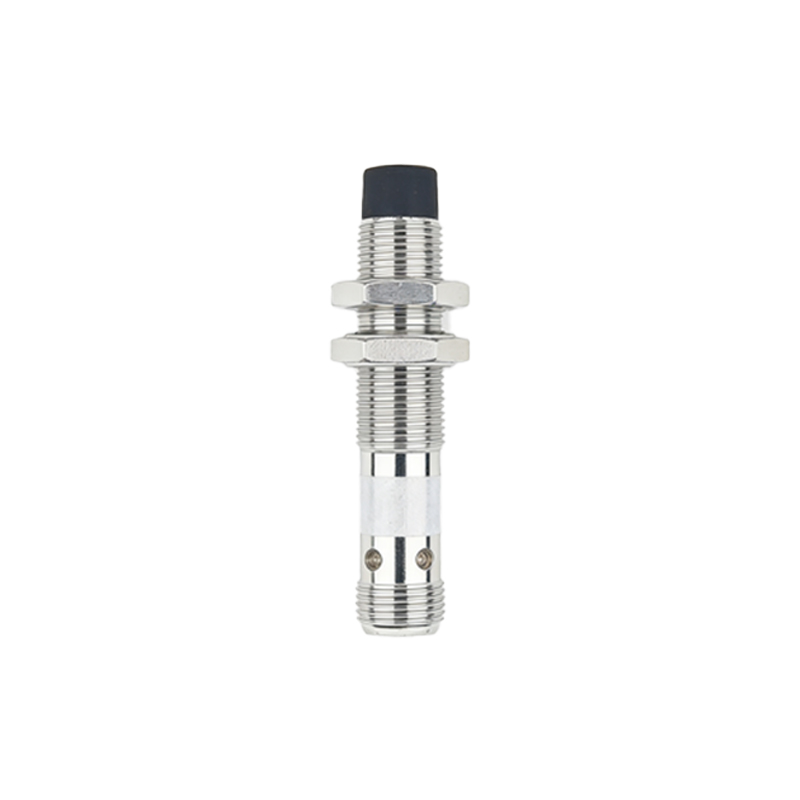
The functionality of an autonomous ultrasonic proximity sensor is built upon a robust technological foundation. The key component is the piezoelectric transducer, which converts electrical energy into ultrasonic sound waves and vice versa. When activated, the sensor emits a short burst of ultrasonic waves from its transmitter. These waves travel through the air at the speed of sound. Upon encountering an object, they are reflected back towards the sensor. The receiver element captures this echo. An integrated microprocessor precisely calculates the elapsed time between emission and reception. Using the known speed of sound in the ambient conditions (often compensated for temperature variations via an internal sensor), the distance to the object is computed with high accuracy. Advanced models incorporate algorithms to filter out background noise, distinguish between multiple echoes, and compensate for factors like air turbulence or acoustic interference, ensuring stable and reliable readings.
Key Features and Advantages in Industrial Applications
Autonomous ultrasonic sensors offer a compelling set of features that make them indispensable in modern automation. Their primary advantage is the ability to detect a wide variety of materials, regardless of color, transparency, or surface texture—a limitation for optical sensors. They are highly effective with liquids, transparent glass, and dark or shiny objects. The sensing range is substantial, often from a few centimeters up to several meters. Their autonomy manifests in features like automatic background suppression, where the sensor learns its environment and ignores fixed structures, and teach-in functionality, allowing quick setup via a button press. They are inherently robust, resistant to dust, moisture, and ambient light, making them suitable for harsh industrial settings like packaging, material handling, and automotive assembly lines. The reduced wiring and PLC programming overhead lower installation and maintenance costs significantly.
Communication Protocols and Integration
Seamless integration into Industry 4.0 and IoT frameworks is a hallmark of modern autonomous ultrasonic sensors. They are equipped with a variety of digital and analog output options. Standard discrete outputs like NPN, PNP, or relay contacts provide simple on/off signals. More advanced units feature analog outputs (0-10V, 4-20mA) for continuous distance measurement. Crucially, many autonomous sensors support industrial communication protocols directly. IO-Link is particularly prevalent, as it enables bidirectional digital communication. Through IO-Link, parameters can be set remotely, detailed diagnostic data (such as operating hours, temperature warnings, or signal quality) can be read, and process values can be transmitted with high resolution. This connectivity facilitates predictive maintenance, centralized configuration management, and integration into larger data-collection systems for analytics and optimization.
Application Scenarios and Use Cases
The versatility of autonomous ultrasonic proximity sensors leads to their deployment across diverse sectors. In logistics and warehousing, they are used for pallet detection, level monitoring in silos or tanks, and controlling the height of stacking cranes. In the automotive industry, they ensure precise positioning of robot arms and verify the presence of components on assembly lines. Packaging machinery utilizes them to detect jams, count items on conveyors, and control fill levels in bottles. An emerging application is in autonomous mobile robots (AMRs) and automated guided vehicles (AGVs), where they serve as non-contact safety bumpers for obstacle avoidance and navigation. Their ability to function reliably in environments with oil mist, steam, or varying light conditions makes them a superior choice over optical alternatives in many challenging scenarios.
Selection Criteria and Installation Best Practices
Selecting the right autonomous ultrasonic sensor requires careful consideration of several parameters. The required sensing range and blind zone (the minimum distance where detection is unreliable) are primary factors. The size and angle of the ultrasonic beam must match the target size and application geometry. Environmental conditions like temperature extremes, potential for condensation, and exposure to corrosive chemicals dictate the required housing material and ingress protection (IP) rating