The Heart of Induction: The Coil's Fundamental Role
At the core of an inductive proximity switch sensor lies its coil, a component as critical as the heart in a living system. This coil is typically wound from fine copper wire and forms an integral part of an oscillating circuit. When energized by an alternating current, the coil generates a high-frequency electromagnetic field that projects from the sensor's active face. This field is the sensor's primary tool for detection. Without a precisely designed and manufactured coil, the sensor cannot perform its fundamental task of non-contact object sensing. The coil's characteristics directly dictate the sensor's operational frequency, sensing range, and overall stability, making its design a paramount consideration in sensor engineering.
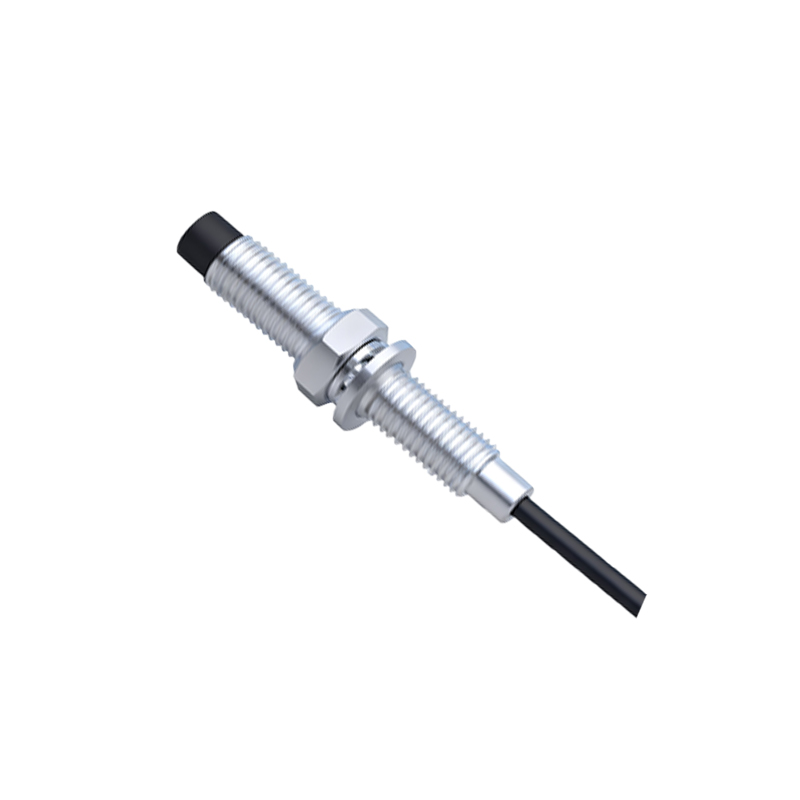
Design Principles and Manufacturing Precision
The design of a proximity sensor coil is a meticulous exercise in electrical engineering. Key parameters include the number of turns, the wire gauge, the core material (often ferrite), and the physical geometry of the winding. Engineers must balance factors such as the required inductance (L), the quality factor (Q), and the coil's resistance. A higher Q factor generally indicates a more efficient coil with sharper resonance, which can enhance sensitivity and range. Manufacturing demands high precision; automated winding machines ensure consistency in turn count and tension, while potting compounds are often used to secure the windings against vibration and environmental stressors. This precision ensures that each sensor performs reliably within its specified parameters.
Operating Principle: From Field Disturbance to Signal
The operational magic begins when a metallic target enters the oscillating electromagnetic field generated by the coil. The target, typically made of ferrous or non-ferrous metal, induces eddy currents on its surface. These eddy currents draw energy from the coil's field, effectively acting as a load. This energy loss causes a measurable change in the amplitude of the oscillation within the sensor's circuit. For some designs, the change in oscillation frequency is the key parameter. A subsequent evaluation circuit, connected to the coil's system, monitors this change. Once the disturbance exceeds a predefined threshold, the circuit triggers a switching action, changing the output state of the sensor from "off" to "on" or vice versa.
Factors Influencing Coil Performance and Sensing Range
Several factors critically influence the performance of the coil and, by extension, the sensor's rated sensing distance. The target material is primary; ferrous metals like steel cause a greater effect and are detected at longer ranges compared to non-ferrous metals like aluminum or copper. The target's size, shape, and thickness also play significant roles. Furthermore, the coil's own design frequency impacts performance; higher frequencies can improve response time but may reduce the effective sensing range for some materials. Environmental conditions, such as extreme temperatures, can affect the coil's inductance and resistance, while the presence of other nearby metallic objects or sensors can cause mutual interference, necessitating careful installation planning.
Advanced Coil Configurations and Specialized Types
Beyond the standard cylindrical wound coil, advanced configurations exist for specialized applications. Shielded (or flush-mountable) sensors incorporate a metal ring around the coil, concentrating the magnetic field axially and allowing the sensor to be embedded in metal without triggering false detects. Unshielded sensors have a more extended field, offering slightly longer ranges but requiring non-metallic surroundings. For high-temperature applications, coils may be wound with special high-temperature wire and insulations. Some sensors feature differential coils, which are excellent for detecting small changes or for applications requiring high immunity to electromagnetic interference, by comparing the status of two coil systems.
Application-Specific Considerations and Selection Criteria
Selecting a proximity sensor with the appropriate coil characteristics is vital for system reliability. In high-speed counting or packaging lines, a sensor with a coil optimized for a fast response and high switching frequency is essential. For applications involving different metal types, such as sorting systems, a factor-1 sensor (equally sensitive to all metals) with a specially tuned coil may be required. In environments with strong EMI, a sensor with a robust coil design and filtering circuitry is necessary. Engineers must consult datasheets to understand the coil's inherent properties, such as the nominal sensing distance (Sn) and the associated correction factors for various metals, to ensure correct integration.
Maintenance, Diagnostics, and Common Failure Modes
While proximity sensor coils are generally robust and sealed, they are not immune to failure. Common issues include wire breakage due to excessive vibration or thermal cycling, insulation breakdown from voltage spikes or moisture ingress, and degradation of ferrite cores under mechanical shock. Diagnostic tools like LCR meters can measure a coil's inductance and resistance, comparing values to the manufacturer's specifications to identify potential faults