In the realm of precision measurement and industrial automation, laser displacement sensors have become indispensable tools. These devices offer non-contact, high-speed, and highly accurate measurement capabilities, enabling tasks that were once difficult or impossible with traditional contact methods. At its core, a laser displacement sensor operates by projecting a focused laser beam onto a target surface. The sensor then detects the position of the reflected light spot using a receiving element, such as a Position Sensitive Detector (PSD) or a Charge-Coupled Device (CCD). By calculating the angle of the reflected beam, the sensor determines the precise distance to the target with remarkable resolution, often in the micrometer or even nanometer range.
The fundamental principle behind most laser displacement sensors is triangulation. Imagine a triangle formed by the laser emitter, the point where the beam hits the target, and the receiver inside the sensor. As the target distance changes, the angle of the reflected light shifts, causing the light spot to move across the receiver. This movement is converted into an electrical signal, which is then processed to output a precise distance value. This method allows for measurements on a wide variety of surfaces, though the reflectivity and color of the target can influence performance, which is why many advanced sensors incorporate automatic gain control and other compensation algorithms.
Several key types of laser displacement sensors cater to different needs. Confocal chromatic sensors use white light split into a spectrum, measuring distance based on the wavelength of light that is precisely focused on the target. They excel at measuring transparent or highly reflective surfaces. Laser triangulation sensors, as described, are the most common and versatile, suitable for most industrial applications. Time-of-flight (ToF) sensors measure the round-trip time of a laser pulse, making them ideal for very long-range measurements, though typically with lower resolution than triangulation types. Each type has its optimal use case, dictated by required range, resolution, target material, and environmental conditions.
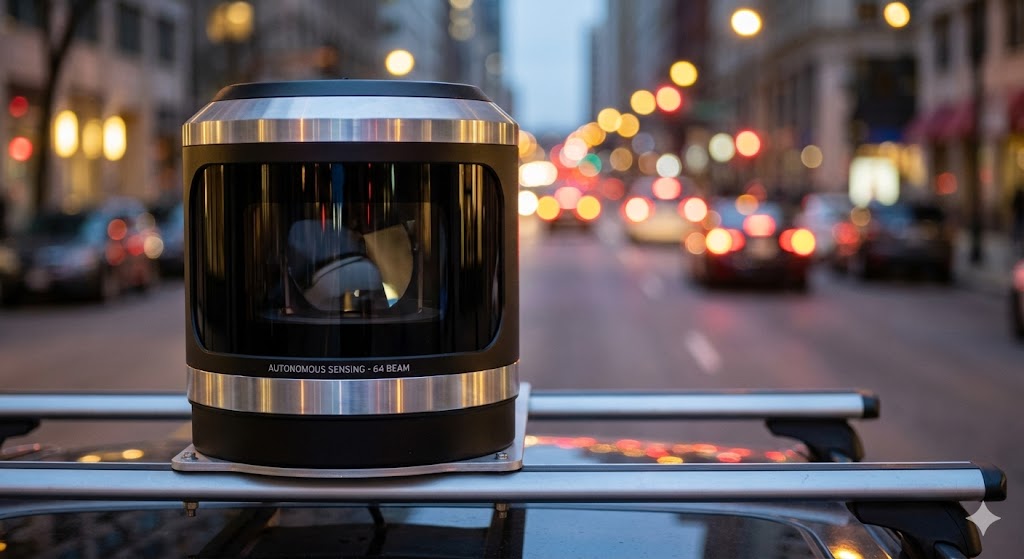
The applications of laser displacement sensors span countless industries. In automotive manufacturing, they are used to inspect panel gaps, measure brake disc thickness, and ensure the precise assembly of engine components. In electronics, they verify the coplanarity of chip leads, measure solder paste height, and inspect micro-components. The semiconductor industry relies on them for wafer thickness measurement and alignment. In robotics, they provide critical feedback for positioning and guidance. Furthermore, they play vital roles in quality control for rolled steel thickness, vibration analysis in machinery, and even in medical devices for precise dimensional checks. Their non-contact nature is particularly valuable for measuring soft, delicate, or hot objects that could be damaged by a physical probe.
Selecting the right laser displacement sensor requires careful consideration of several parameters. Measurement range defines the minimum and maximum distances over which the sensor can operate accurately. Spot size determines the minimum feature that can be measured and affects resolution on curved surfaces. Sampling speed, or response frequency, is crucial for high-speed production lines or measuring vibrating objects. Linearity indicates the accuracy across the entire measurement range. Environmental factors like ambient light, temperature fluctuations, dust, and fumes must also be accounted for, often necessitating sensors with specific ingress protection (IP) ratings or built-in cooling systems for harsh environments.

Installation and setup are critical for optimal performance. The sensor must be mounted stably to minimize vibration. The laser beam should be perpendicular to the target surface for most accurate results, unless a specific angle is required. Proper calibration using a known reference is essential. Users must also configure the output signal—common options include analog voltage/current, digital interfaces like Ethernet/IP or PROFINET, and serial communication—to integrate seamlessly with PLCs, data loggers, or control systems. Regular maintenance, primarily keeping the lens clean, ensures long-term reliability and accuracy.
The future of laser displacement sensing is geared towards even higher speeds, greater precision, and enhanced intelligence. Integration with AI and machine vision systems allows sensors not only to measure distance but also to classify defects or make pass/fail decisions autonomously. Miniaturization continues, enabling integration into tighter spaces. Furthermore, the development of more robust algorithms is improving performance on challenging surfaces like transparent glass or black rubber, expanding the potential applications even further. As Industry 4.0 and smart factories evolve, these sensors will become more networked and data-rich, providing deeper insights into manufacturing processes and predictive maintenance.
In conclusion, laser displacement sensors are a cornerstone technology for modern precision engineering. By understanding their operating principles, the various types available, and their vast application landscape, engineers and technicians can effectively harness their power to improve product quality, enhance automation, and drive innovation across virtually every manufacturing and research sector. Their ability to deliver fast, reliable, and non-contact measurements makes them an irreplaceable asset in the pursuit of ever-tighter tolerances and higher efficiency.