In the realm of industrial automation and machine control, proximity sensors play a pivotal role in enabling non-contact detection of objects. Among the various configurations, the normally open (NO) proximity sensor stands out for its specific operational logic and widespread utility. This article delves into the fundamental principles, common applications, and key considerations for selecting and implementing normally open proximity sensors.
At its core, a proximity sensor is a device that detects the presence or absence of an object within its sensing range without physical contact. It does so by emitting an electromagnetic field, beam, or ultrasonic waves and then monitoring for changes in the field or return signal. The terms "normally open" and "normally closed" (NC) refer to the electrical state of the sensor's output switch when no target is present in the sensing zone. A normally open proximity sensor has an output circuit that is open (non-conducting) when no detectable object is within its range. When a target enters the sensing field, the internal switch closes, completing the circuit and allowing current to flow to the connected load, such as a PLC input, relay, or indicator lamp. This "open-to-close on detection" behavior is the defining characteristic of the NO type.
The operating principle depends on the underlying technology. Inductive proximity sensors, for instance, generate an oscillating electromagnetic field. When a metallic object enters this field, it causes eddy currents that dampen the oscillation, triggering the switch. Capacitive sensors detect both metallic and non-metallic materials by sensing changes in capacitance. Photoelectric sensors use light beams, and ultrasonic sensors use sound waves. Regardless of the technology, the NO output logic remains consistent: no target equals an open circuit; detected target equals a closed circuit.
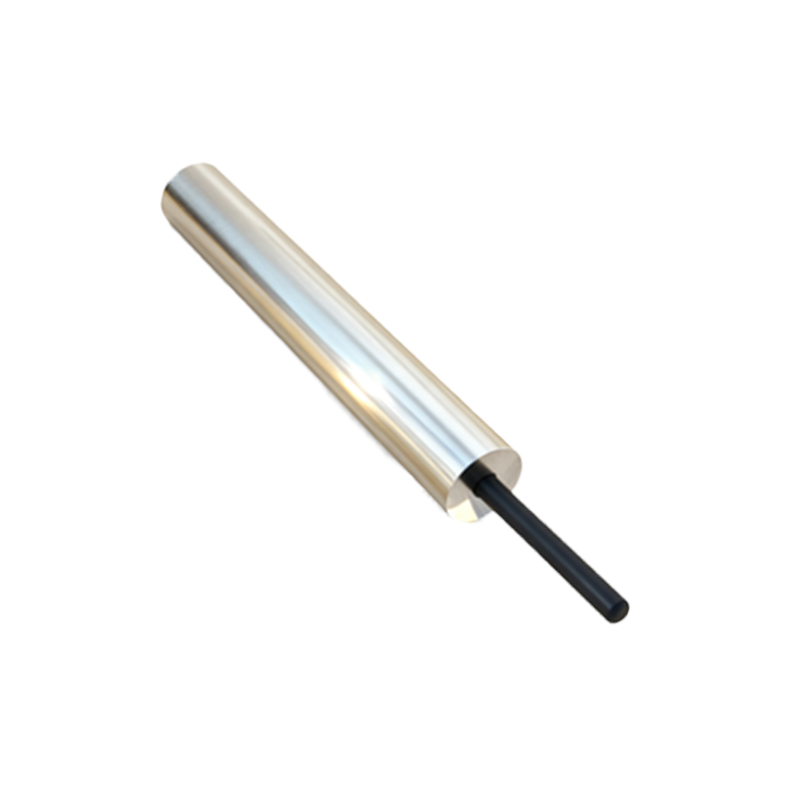
This behavior makes normally open sensors exceptionally suitable for a vast array of applications. A primary use case is as a presence verification sensor in automated production lines. For example, an NO sensor can be positioned to confirm that a part has arrived at a specific workstation. The output signal remains off until the part is correctly positioned, at which point it turns on, signaling the controller to initiate the next operation, such as welding, drilling, or assembly. This provides a clear, positive confirmation of part presence. They are also extensively used in safety and interlock systems. A classic application is on protective machine guards or doors. An NO sensor can be installed so that when the guard door is properly closed, a target on the door enters the sensor's range, closing the switch and enabling the machine to operate. If the door is opened, the target moves away, the switch opens (returns to its normal state), and the machine is immediately stopped or prevented from starting, ensuring operator safety. In material handling and packaging, NO sensors monitor product flow, detect jams, or count items on a conveyor. Their output is inactive when the line is clear, activating only when an item passes by, providing a clean pulse for counting or timing functions.
Selecting the right normally open proximity sensor requires careful evaluation of several parameters. First, the sensing technology must match the application's target material. For metals, inductive sensors are standard. For plastics, liquids, powders, or other non-metallics, capacitive or photoelectric NO sensors are necessary. The sensing distance, or range, is critical and should be chosen with a safety margin to account for mechanical tolerances and environmental factors like temperature fluctuations, which can affect performance. The sensor's housing material and ingress protection (IP) rating must withstand the operational environment, whether it involves exposure to coolants, oils, washdowns, or dust. Electrical characteristics are equally important: the output type (PNP or NPN sinking/sourcing), voltage rating, and current capacity must be compatible with the control system. The response time must be fast enough for high-speed applications. Finally, the physical form factor—barrel-shaped, rectangular, or ring-shaped—must fit the mechanical installation constraints.
Installation and wiring are straightforward but require attention to detail. Manufacturers typically provide clear labeling for the power supply connections (brown wire for +V, blue for 0V common) and the output signal wire (often black). The load is connected between the output wire and the positive supply (for PNP) or negative supply (for NPN). It is crucial to ensure that the sensor is mounted securely, without vibration, and that the target approaches the sensing face correctly. Factors like target size, material, and approach angle can influence the effective sensing distance. For instance, a smaller target than the sensor's face or a non-ferrous metal for an inductive sensor may reduce the rated range.
In summary, the normally open proximity sensor is a fundamental component in modern automation, offering reliable, non-contact detection with a clear logical output: off until detection. Its versatility across technologies—inductive, capacitive, photoelectric,