The Genesis of Non-Contact Detection
The story of the proximity sensor, a cornerstone of modern industrial automation, is not attributed to a single inventor but rather represents an evolutionary journey of electromagnetic and electronic principles. The foundational concept emerged in the late 19th and early 20th centuries with the pioneering work of scientists like Michael Faraday and James Clerk Maxwell, who established the theories of electromagnetism. These principles laid the groundwork for detecting objects without physical contact. Early practical applications were seen in the development of metal detectors during World War I, which utilized electromagnetic induction to locate metallic objects underground. This technology formed the primitive basis for what would later become inductive proximity switches, marking the initial step towards automated, non-contact sensing in industrial settings.
The Rise of Industrial Automation and Early Patents
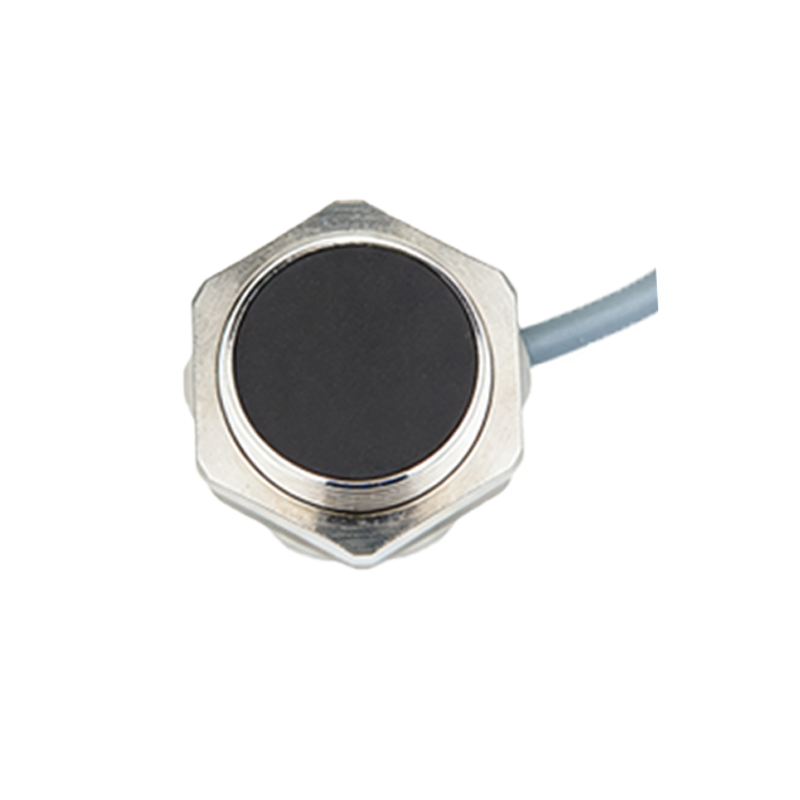
The true impetus for the development of the modern proximity switch came with the post-World War II industrial boom and the subsequent push for automation in the 1950s and 1960s. Manufacturing processes demanded faster, more reliable, and wear-free methods for detecting the presence, absence, or position of objects on assembly lines. While no single name is universally credited, numerous engineers and companies filed pivotal patents during this era. One of the earliest documented patents for a non-contact "presence sensing apparatus" was filed in the United States in the late 1950s. These early devices were predominantly inductive, designed to detect ferrous metals. They operated on the principle of a high-frequency oscillator circuit whose energy field is dampened by the presence of a metallic target, triggering a solid-state switch.
Key Technological Milestones and Diversification
The 1970s and 1980s witnessed significant diversification and refinement. The invention and commercialization of the transistor and later integrated circuits were critical enablers, allowing sensors to become smaller, more robust, and energy-efficient. During this period, different sensing technologies emerged to meet varied application needs. Capacitive proximity sensors were developed to detect non-metallic materials like wood, plastic, and liquids by measuring changes in capacitance. Photoelectric sensors, leveraging the invention of the laser and efficient phototransistors, used light beams to detect objects at greater distances. Ultrasonic sensors, applying sonar principles, provided solutions for level detection and presence sensing in challenging environments. Each type addressed specific industrial challenges, expanding the scope of automation.
The Role of Standardization and Global Manufacturers
The proliferation of proximity sensors was accelerated by the efforts of several key global electronics and automation companies. Firms like Siemens, Omron, Pepperl+Fuchs, and Allen-Bradley played instrumental roles in refining the technology, establishing manufacturing standards, and promoting their widespread adoption. They contributed to the miniaturization of housings, the standardization of output configurations (e.g., NPN/PNP), and the improvement of environmental resilience (ingress protection ratings). The development of standardized form factors, such as cylindrical M8, M12, and M18 housings, ensured interchangeability and simplified integration into machinery worldwide. This era of standardization, driven by industry needs rather than a lone inventor, was crucial for making proximity sensors a ubiquitous component in factories.
Modern Evolution and Smart Sensor Integration
The invention story continues into the 21st century with the advent of "smart" sensors and the Industrial Internet of Things (IIoT). Modern proximity sensors are no longer simple binary switches. They incorporate microprocessors, enabling functions like condition monitoring, self-diagnostics, parameter configurability via IO-Link, and digital communication over fieldbus or Ethernet protocols. The core sensing principles remain, but the intelligence embedded within represents the latest chapter. This evolution transforms them from mere detection devices into data points within a networked industrial ecosystem, providing valuable insights for predictive maintenance and process optimization. The invention, therefore, is an ongoing process of integration and digital enhancement.
Conclusion: A Collective Engineering Achievement
In conclusion, the proximity sensor is a quintessential example of a technology invented by the collective force of industrial necessity, foundational physics, and iterative engineering innovation. It lacks a singular "Eureka!" moment attributed to one person. Instead, its development was a continuum—from theoretical electromagnetic principles to wartime metal detectors, through the patent-driven automation age, to the standardized components of global manufacturing, and now into the digital, connected era. The true "inventors" are the countless engineers, physicists, and corporations who, over decades, responded to the growing demands of industry for reliable, non-contact detection, each building upon the work of their predecessors to create the indispensable devices we rely on today.