Introduction to Proximity Sensors
Proximity sensors are non-contact electronic devices designed to detect the presence or absence of an object within a defined sensing range without any physical contact. These sensors are fundamental components in modern industrial automation, robotics, and safety systems. They operate by emitting an electromagnetic field or a beam of electromagnetic radiation and then monitoring for changes in the field or return signal. The primary advantage of proximity sensors lies in their reliability, long operational life, and ability to function in harsh environments where mechanical switches would fail. Their applications span from simple object detection on conveyor belts to complex positioning tasks in CNC machinery and critical safety interlocks.
Inductive Proximity Sensors
Inductive proximity sensors are specifically engineered to detect metallic objects, primarily ferrous metals like steel and iron, though some models can also sense non-ferrous metals like aluminum, copper, and brass. They generate an oscillating electromagnetic field from a coil located at the sensing face. When a metallic target enters this field, it induces eddy currents, causing a change in the oscillation amplitude. This change is detected by the sensor's circuitry, triggering an output signal. Common models include shielded (flush-mountable) and unshielded (non-flush mountable) types, with sensing ranges typically from 1 to 60 mm. They are highly resistant to environmental factors like dust, oil, and coolant, making them ideal for machine tools, automotive assembly, and metal fabrication.

Capacitive Proximity Sensors
Capacitive proximity sensors can detect both metallic and non-metallic materials, including liquids, powders, plastics, glass, and wood. They function by generating an electrostatic field. Any object that enters this field alters the capacitance of the sensor's circuit, which is then measured to trigger an output. These sensors often feature sensitivity adjustment potentiometers to fine-tune the detection threshold for different materials. Typical sensing distances range from 3 to 60 mm. Their versatility makes them suitable for applications such as level detection in tanks or silos, material handling for non-metallic products, and presence detection of filled containers or bottles on production lines.
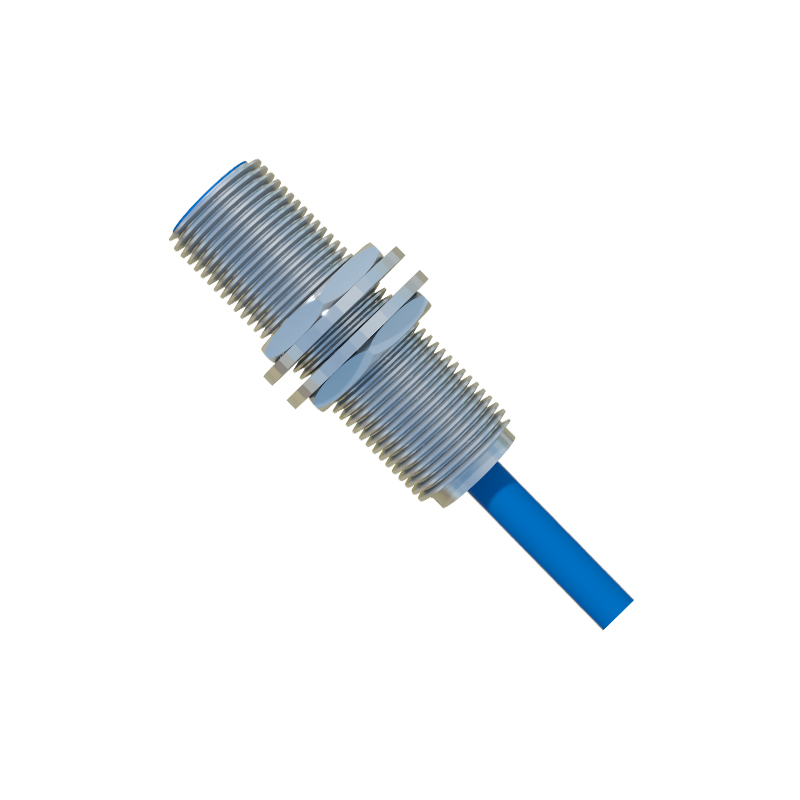
Ultrasonic Proximity Sensors
Ultrasonic sensors operate on the principle of sound wave echo. They emit high-frequency sound pulses (typically beyond human hearing) and calculate the time interval between the emission and the reception of the reflected echo. This time-of-flight measurement allows them to determine the distance to an object. They can detect virtually any material, regardless of color, transparency, or surface texture, as long as it reflects sound adequately. Models are available with both analog and discrete outputs, offering sensing ranges from a few centimeters up to several meters. Common applications include distance measurement, object profiling, loop control, and level sensing for bulk solids or clear liquids.
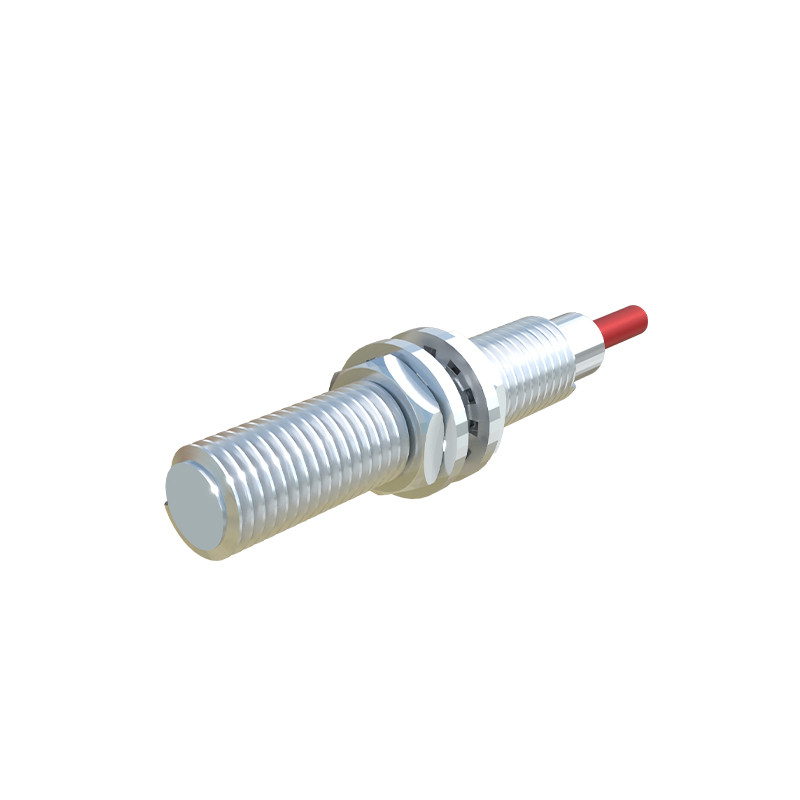
Photoelectric Sensors
Photoelectric sensors use light beams to detect objects. They consist of a light emitter (usually an LED) and a receiver. When the light beam is interrupted or reflected by an object, the change in light intensity at the receiver triggers the output. There are three main operating modes: through-beam (sender and receiver are separate units), retro-reflective (uses a reflector), and diffuse (reflective), where the sensor detects light reflected directly from the target. They offer very long sensing ranges compared to other types, with through-beam models capable of detecting objects over 100 meters away. They are excellent for detecting small objects, transparent materials, and for applications requiring long-range detection, such as packaging, material handling, and security systems.
Magnetic Proximity Sensors (Reed Switches)
Magnetic proximity sensors, commonly known as reed switches, are activated by the presence of a permanent magnet. The switch contains two ferromagnetic reeds sealed within a glass tube. When a magnetic field of sufficient strength is applied, the reeds attract each other and make contact, closing the circuit. These sensors are simple, cost-effective, and can be used in low-power circuits. They are often employed in applications where hermetically sealed contacts are necessary, such as in fluid level indicators, door and window security sensors, and as position sensors in cylinders (piston detection). Their main limitation is a relatively short sensing range, which is highly dependent on the magnet's strength.
Selection Criteria and Key Specifications
Choosing the correct proximity sensor model requires careful consideration of several key parameters. The sensing range, or the maximum distance at which the sensor can reliably detect a standard target, is paramount. The target material (metal, plastic, liquid) dictates whether an inductive, capacitive, or other type is needed. Output type is another critical factor, including options like NPN/PNP transistor, NO