What Are Proximity Sensors?
Proximity sensors are non-contact electronic devices designed to detect the presence or absence of an object within a defined sensing range without any physical contact. These sensors operate by emitting an electromagnetic field or a beam of electromagnetic radiation, such as infrared light, and then monitoring for changes in the field or return signal. The core principle relies on the interaction between the sensor's emitted energy and the target object. When an object enters the sensing field, it causes a detectable change—like a disturbance in an electromagnetic field or the reflection of a light beam—which the sensor converts into an electrical signal. This signal is then processed to trigger a specific action, such as activating a control circuit, counting items on a conveyor belt, or initiating a safety shutdown. Their ability to function without touching the object makes them exceptionally reliable for harsh, dirty, or high-speed environments where mechanical wear or contamination would compromise other sensing methods.
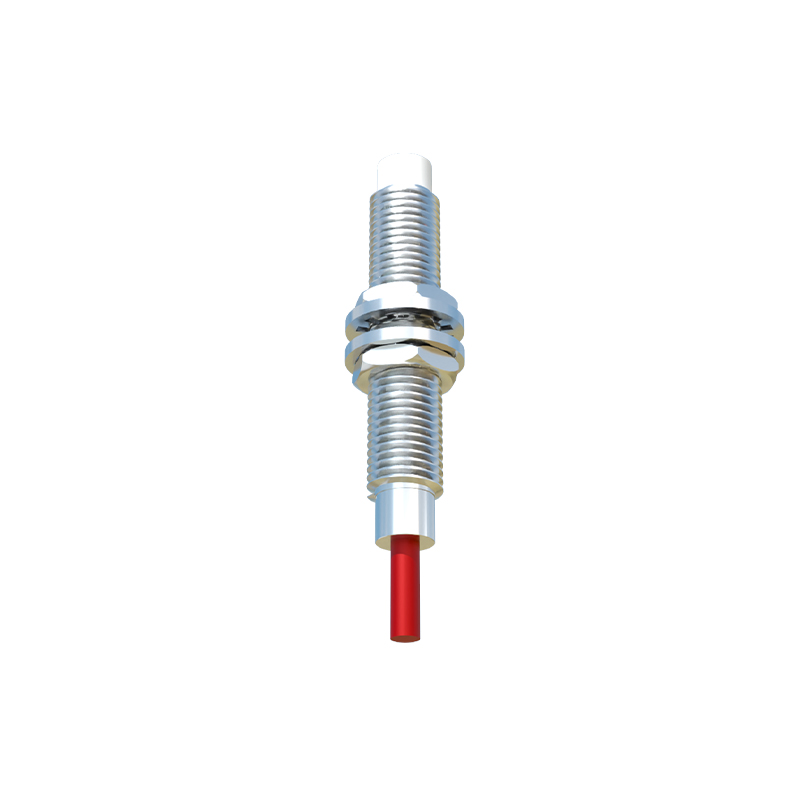
Key Operating Principles and Technologies
The performance and application of a proximity sensor are fundamentally determined by its underlying technology. The most prevalent types include inductive, capacitive, and photoelectric sensors. Inductive proximity sensors are the workhorses of metal detection. They generate an oscillating electromagnetic field from a coil. When a metallic object enters this field, it induces eddy currents within the metal, which dampens the oscillation. The sensor's circuit detects this damping and switches its output state. Capacitive sensors, in contrast, can detect both metallic and non-metallic materials like liquids, plastics, or wood. They function by generating an electrostatic field. Any object with a dielectric constant different from air will alter the capacitance of the sensing circuit, triggering detection. Photoelectric sensors use light, typically infrared or laser, to detect objects. They come in through-beam, retro-reflective, and diffuse reflective models, each suited for different sensing distances and environmental conditions. Ultrasonic sensors, another important category, emit high-frequency sound waves and measure the time for the echo to return, making them ideal for distance measurement and level detection of varied materials.
Critical Selection Criteria for Engineers
Selecting the optimal proximity sensor for an application requires a systematic evaluation of several technical parameters. The sensing range, or the maximum distance at which the sensor can reliably detect a standard target, is paramount. Engineers must also consider the target material, size, and shape, as these directly influence sensor choice—inductive for metals, capacitive for a broader range. The sensor's output configuration is another critical decision point; common outputs include NPN (sinking), PNP (sourcing), analog (4-20 mA or 0-10V), and IO-Link for digital communication. Environmental factors cannot be overlooked. An enclosure's Ingress Protection (IP) rating indicates its resilience against dust and water, crucial for washdown areas or outdoor use. Temperature ratings, resistance to chemicals, and electrical noise immunity are equally vital for ensuring long-term stability. Finally, mounting constraints, response time (for high-speed applications), and connection type (pre-wired or connector-based) complete the selection matrix.
Industrial Applications and Integration
The versatility of proximity sensors makes them indispensable across virtually all industrial sectors. In automotive manufacturing, they are deployed for precise part positioning in robotic welding arms and for verifying the presence of components on assembly lines. Packaging machinery relies heavily on them for product counting, fill-level control, and label detection. Within material handling and logistics, sensors monitor conveyor belt operations, control sorting gates, and ensure pallet positioning. A critical safety application is found in machine guarding, where sensors create non-contact safety curtains to protect personnel from hazardous moving parts. The integration of these sensors into modern control systems, particularly Programmable Logic Controllers (PLCs) and Industrial Internet of Things (IIoT) architectures, has amplified their value. Smart sensors with IO-Link capability provide not just binary detection but also diagnostic data like operating temperature, signal strength, and device health, enabling predictive maintenance and reducing unplanned downtime.
Advantages, Limitations, and Maintenance
The primary advantages of proximity sensors stem from their non-contact nature. They offer exceptionally long operational life due to the absence of mechanical wear, high reliability with fast response speeds suitable for rapid production cycles, and consistent performance unaffected by surface conditions like oil or dirt (within specified limits). They can detect fragile or freshly painted objects without causing damage. However, limitations exist. Sensing range is finite and can be affected by the target's material properties. For instance, different metals have varying effects on inductive sensors. Environmental extremes like very high temperatures, intense magnetic fields, or heavy airborne particulates can interfere with operation. Proper maintenance is generally minimal but essential. It involves regular cleaning of the sensing face to