Introduction to Proximity Sensors
In the realm of industrial automation and control systems, proximity sensors stand as fundamental components, enabling machinery to interact with its environment without physical contact. These devices are engineered to detect the presence or absence of an object within a specified range, providing a crucial input signal to programmable logic controllers (PLCs) and other control units. Their ability to perform reliably in harsh conditions—amidst dust, oil, and vibration—makes them indispensable in manufacturing, packaging, material handling, and automotive assembly lines. Unlike mechanical limit switches, proximity sensors offer non-contact detection, which translates to longer service life, higher operational speeds, and minimal maintenance requirements. The core value of a proximity sensor lies in its capacity to convert information about the presence of a target into an electrical signal, seamlessly integrating the physical world with digital control systems.
Primary Functions and Applications
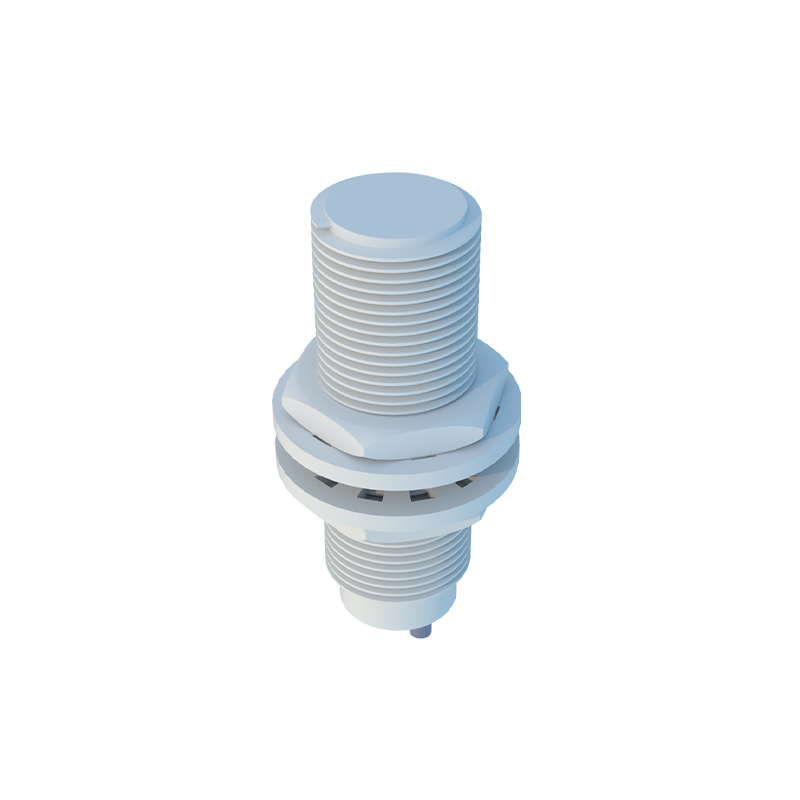
The functions of proximity sensors extend far beyond simple object detection. Their primary role is to provide precise positional feedback. For instance, they can determine if a robotic arm has picked up a component, verify the closure of a safety door, or count items on a conveyor belt. In automated machining centers, they ensure tools are correctly positioned, preventing costly collisions. Another critical function is speed sensing, where sensors monitor the rotation of gears or shafts. Furthermore, they are pivotal in quality control processes, identifying missing parts or verifying assembly completeness. In the food and beverage industry, specific models with hygienic designs detect fill levels in containers. The versatility of these sensors allows them to fulfill roles as limit switches, part verifiers, and safety interlock devices, forming the sensory backbone of modern "smart" factories and enabling concepts like Industry 4.0 and the Industrial Internet of Things (IIoT).
Core Operating Principle: Inductive Sensors
Inductive proximity sensors are the most common type, used specifically for detecting metallic objects. Their operation is based on the principle of electromagnetic induction. Inside the sensor, an oscillator generates a high-frequency alternating magnetic field that radiates from the sensor's active face, typically made of a ferrite core. When a metallic target enters this electromagnetic field, eddy currents are induced on the surface of the target. These eddy currents draw energy from the oscillator, causing a reduction in its oscillation amplitude. An evaluation circuit within the sensor monitors this amplitude change. Once the amplitude drop reaches a predefined threshold—corresponding to the sensor's sensing distance—the circuit triggers a solid-state switch, changing the output state (e.g., from OFF to ON). This entire process occurs without any physical contact, and the sensor returns to its normal state once the target moves away. Key performance parameters include sensing distance, which is standardized (e.g., Sn) and typically reduced for non-ferrous metals, repeatability, and switching frequency.
Operating Principle: Capacitive Sensors
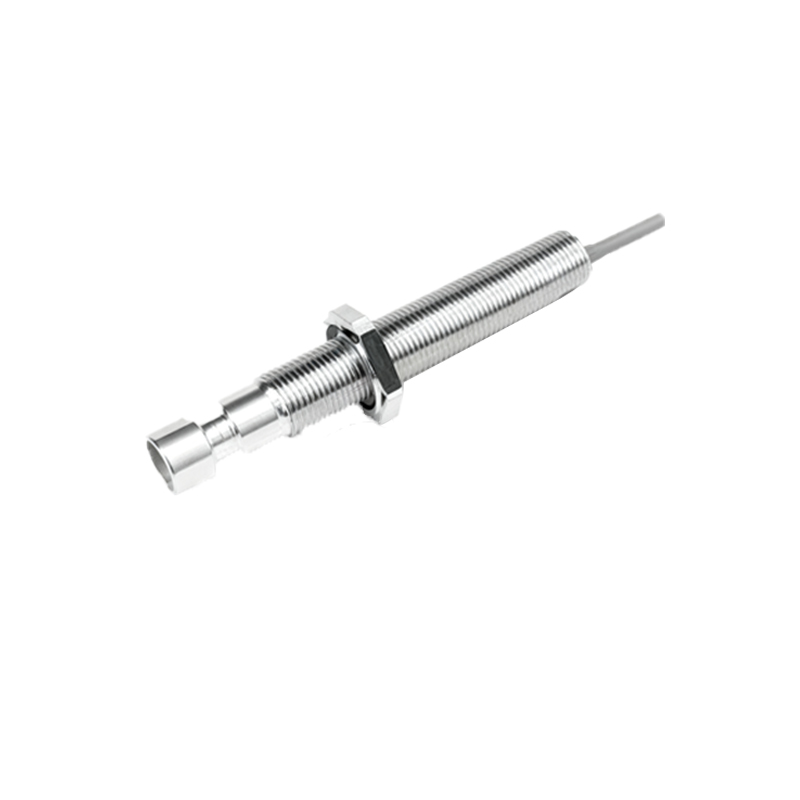
Capacitive proximity sensors offer a broader detection capability, as they can sense both metallic and non-metallic materials, including liquids, plastics, glass, and wood. They operate by generating an electrostatic field. The sensor's active surface acts as one plate of a capacitor, with the target object acting as the other plate, and the air gap serving as the dielectric. An internal oscillator circuit is tuned so that it does not oscillate in the absence of a target. When an object enters the sensing field, it alters the capacitance of the system. This change in capacitance increases the oscillator's amplitude. Similar to the inductive type, a threshold circuit detects this increase and switches the output state. The sensing distance for capacitive sensors can be influenced by the target material's dielectric constant; materials with higher constants (like water) can be detected from a greater distance. This makes them ideal for applications like level detection in tanks, presence detection of plastic bottles, or monitoring powder levels in hoppers. Many capacitive sensors feature a sensitivity adjustment potentiometer to fine-tune their response for specific materials or to ignore interfering backgrounds.
Operating Principle: Ultrasonic Sensors
Ultrasonic proximity sensors utilize sound waves beyond the range of human hearing to detect objects and measure distance. They operate on the time-of-flight principle. The sensor contains a transducer that emits short, high-frequency ultrasonic pulses (typically 40 kHz to 400 kHz). These pulses travel through the air until they strike a target object, which then reflects the sound waves back to the sensor. A receiver in the sensor detects the returning echo. An internal microcontroller precisely measures the time elapsed between the emission of the pulse and the reception of the echo. Since the speed of sound in air is known (approximately 343 m/s at 20°C), the sensor can calculate the distance to the target with high accuracy using the formula: Distance = (Speed of Sound × Time)