Introduction to PID Photoelectric Sensor Line Following
PID photoelectric sensor line following is a sophisticated control technology widely employed in automated guided vehicles (AGVs), mobile robots, and industrial conveyor systems. This system integrates a photoelectric sensor array with a Proportional-Integral-Derivative (PID) control algorithm to enable precise navigation along a predefined path, typically marked by a contrasting line on the floor. The core principle involves the sensor array detecting the position of the line relative to the vehicle's center. The PID controller then processes this positional error data to calculate and execute corrective steering or movement commands. This method ensures high accuracy, stability, and adaptability in dynamic industrial environments, making it a cornerstone for efficient material handling and logistics automation. The technology's reliability stems from the continuous feedback loop, where the sensor provides real-time data, and the PID algorithm dynamically adjusts the output to minimize tracking error.
Working Principle of the Photoelectric Sensor Array
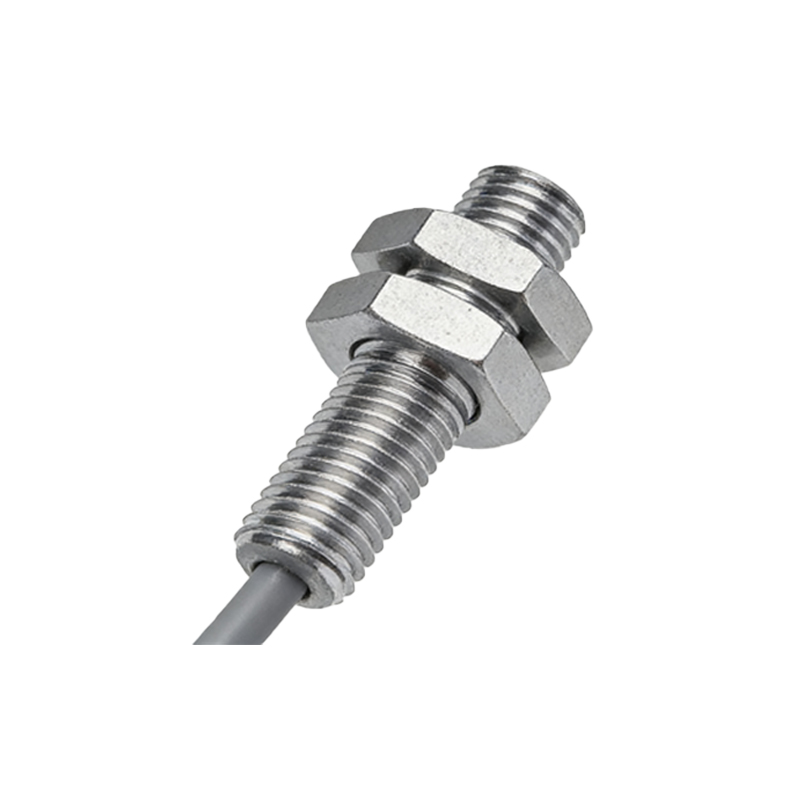
The photoelectric sensor array is the primary sensing component in this system. It typically consists of multiple infrared (IR) or visible light emitter-detector pairs arranged in a linear configuration. Each pair operates by emitting a light beam towards the surface and measuring the intensity of the reflected light. When the beam strikes a high-contrast line, the reflectivity changes significantly compared to the surrounding floor. By analyzing the reflection pattern across the array, the system can determine the exact lateral deviation of the line from the sensor's center point. Modern arrays often utilize digital or analog outputs to provide a detailed error signal. This error signal, representing both the magnitude and direction of the deviation, is the critical input for the PID controller. The sensor's sampling rate, resolution, and immunity to ambient light interference are key parameters that directly influence the overall system performance and robustness.
The Role of the PID Control Algorithm
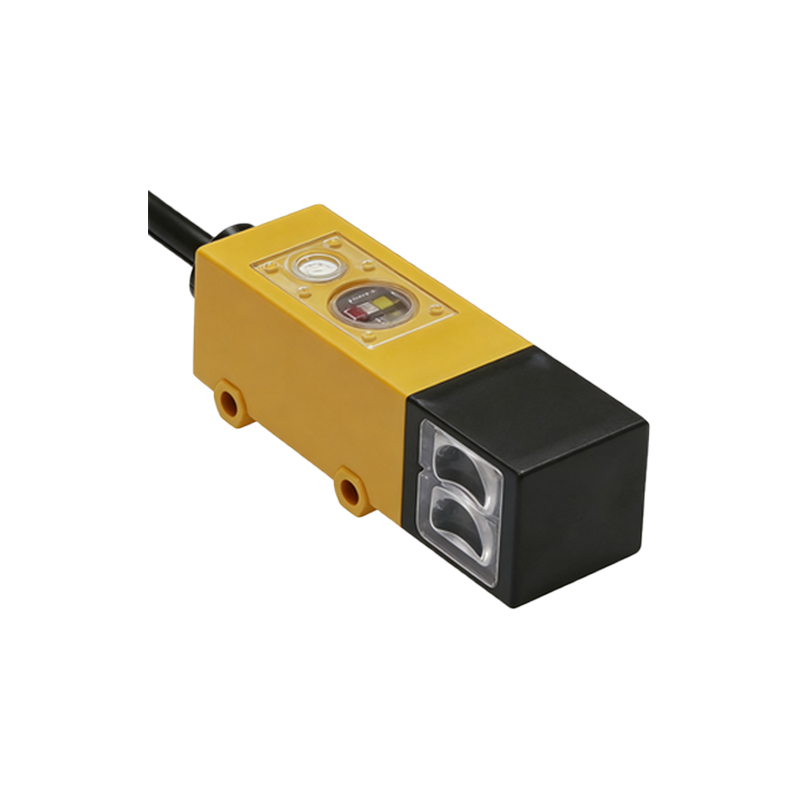
The PID controller is the computational brain that translates sensor error into precise motion control. It operates by calculating three distinct corrective responses based on the error signal: the Proportional (P), Integral (I), and Derivative (D) terms. The Proportional term produces an output proportional to the current error, providing an immediate corrective action. The Integral term sums past errors over time, effectively eliminating steady-state offset or bias that the P term alone cannot correct. The Derivative term predicts future error based on its rate of change, adding damping to the system to prevent overshoot and oscillation. By carefully tuning the three gain constants (Kp, Ki, Kd), engineers can optimize the system's response for specific requirements such as speed, load, and track curvature. A well-tuned PID loop results in smooth, accurate, and responsive line following, even during sharp turns or when encountering minor surface irregularities.
System Integration and Implementation
Implementing a PID photoelectric line-following system requires careful integration of hardware and software components. The hardware setup includes the sensor array mounted at the vehicle's front, a microcontroller or PLC (Programmable Logic Controller) to run the PID algorithm, and motor drivers or steering actuators for executing movement commands. The software implementation involves initializing the sensor, reading input values, executing the PID calculation cycle at a fixed frequency, and outputting control signals. Calibration is a critical step, involving setting sensor thresholds for line detection and tuning the PID parameters through empirical testing or simulation. Engineers must also consider environmental factors such as floor material, lighting conditions, and electromagnetic interference. Proper shielding, filtering algorithms, and periodic maintenance schedules are essential for long-term operational reliability in harsh industrial settings.
Advantages and Performance Characteristics
The primary advantages of PID-based photoelectric line following are its precision, reliability, and cost-effectiveness. It offers sub-millimeter tracking accuracy, which is essential for applications requiring precise alignment, such as in assembly stations or automated storage systems. The system's closed-loop nature ensures continuous self-correction, maintaining performance despite wheel slippage or minor mechanical wear. Compared to other navigation methods like magnetic tape or laser guidance, it often presents a lower initial investment and simpler installation, as it only requires painting or taping a line on the floor. Performance is characterized by metrics such as maximum tracking speed, minimum curve radius, and error convergence time. Modern advancements, including adaptive PID tuning and integration with machine vision for complex path decision-making, further enhance its capabilities, allowing for more flexible and intelligent automation solutions.
Common Challenges and Troubleshooting
Despite its robustness, several challenges can affect system performance. Sensor misalignment or dirt accumulation on lenses can lead to erroneous readings. Variations in floor color or reflectivity, and strong ambient light (especially infrared from sunlight or heaters), can disrupt sensor operation. On the control side, poorly tuned PID parameters can cause instability, manifesting as vehicle wobbling or failure to track curves. Troubleshooting typically begins with verifying sensor output signals and ensuring the line contrast is sufficient. PID tuning issues are often addressed by methodically adjusting the gains: increasing Kp for a faster response but risking oscillation, increasing Ki to eliminate drift, and increasing Kd to smooth the motion. Implementing software filters for sensor noise and scheduling regular cleaning and calibration checks are standard best practices to mitigate these operational challenges.
Future Trends and Applications
The future of PID photoelectric sensor line following is intertwined with broader trends in Industry 4.0 and smart manufacturing. Integration with wireless communication and IoT (Internet of Things) platforms enables remote monitoring, predictive maintenance, and fleet coordination for multiple AGVs. The convergence with AI and machine learning allows for systems that can self-tune PID parameters in real-time based on changing conditions or even learn optimal paths. Emerging applications extend beyond traditional factories into warehouses, hospitals for transport robots, and even agricultural automation. Furthermore, the development of more sophisticated, multi-spectral sensors that are immune to a wider range of environmental interference will push the boundaries of reliability and application scope. This evolution ensures that PID photoelectric line following will remain a vital, albeit increasingly intelligent, component of automated material flow systems.